
Proving a Miracle: Unlocking the Power of Prayer to Heal
Hardcover
• 256 Pages
• USD 32.00
• English
• 9780063420441
No ratings yet
| Publisher | Harper |
|---|---|
| ISBN13 | 9780063420441 |
| ASIN/SKU | 0063420449 |
| Book Format | Hardcover |
| Language | English |
| Pages | 256 |
| List Price | USD 32.00 |
| Publishing Date | 12/05/2026 |
| Dimensions | 10 x 2 x 2.7 inches |
| Weight | 1.43 pounds |
| Book Code | BD00069883 |
Buy this Book
Amazon Stores
Ebook Stores
Other Stores
Discover Proving a Miracle: Unlocking the Power of Prayer to Heal by Joshua W. Brown PhD. This book is published by Harper in Hardcover format, ISBN 9780063420441, ASIN 0063420449, under Christian Books and Bibles, Religious Faith, Christian Living.
Book Description
Diagnosed with terminal brain cancer, a neuroscientist searches for the answer to one of life’s biggest questions: Are miracles real?
After experiencing a violent seizure, Joshua W. Brown was diagnosed with an inoperable glioma—a cancerous brain tumor—just days before his wife gave birth to their first child. As a brain scientist, Josh understood his chances of survival were slim. When science failed him, Josh—the son of a prison chaplain—turned to his faith. He and his wife began to pray, and he discovered a prayer group focused on healing within his church community.
Could prayer really help? Desperate for a miracle, the trained scientist, armed with a healthy dose of skepticism, embarked on a journey of healing that would take him around the globe and lead him to some surprising conclusions: healing can happen outside traditional medicine and in ways that transcend modern scientific explanations. As he navigated his own diagnosis he became convinced that miracles can and do occur regularly—including in his own life: his tumor turned to scar tissue and the seizures ceased.
Combining personal experience and deep research, Proving a Miracle looks at the tangentials of illness and healing, from the placebo effect to the power of positive thinking. Like Lisa Miller’s The Awakened Brain and Eben Alexander’s Proof of Heaven, Proving a Miracle combines the best rigorous thinking about the connection between science and faith. In chronicling his remarkable experience, Josh pushes us to expand our understanding of the mind/body connection to encompass both faith and community, and how these connections can offer hope for healing.
After experiencing a violent seizure, Joshua W. Brown was diagnosed with an inoperable glioma—a cancerous brain tumor—just days before his wife gave birth to their first child. As a brain scientist, Josh understood his chances of survival were slim. When science failed him, Josh—the son of a prison chaplain—turned to his faith. He and his wife began to pray, and he discovered a prayer group focused on healing within his church community.
Could prayer really help? Desperate for a miracle, the trained scientist, armed with a healthy dose of skepticism, embarked on a journey of healing that would take him around the globe and lead him to some surprising conclusions: healing can happen outside traditional medicine and in ways that transcend modern scientific explanations. As he navigated his own diagnosis he became convinced that miracles can and do occur regularly—including in his own life: his tumor turned to scar tissue and the seizures ceased.
Combining personal experience and deep research, Proving a Miracle looks at the tangentials of illness and healing, from the placebo effect to the power of positive thinking. Like Lisa Miller’s The Awakened Brain and Eben Alexander’s Proof of Heaven, Proving a Miracle combines the best rigorous thinking about the connection between science and faith. In chronicling his remarkable experience, Josh pushes us to expand our understanding of the mind/body connection to encompass both faith and community, and how these connections can offer hope for healing.
Author Biography
Joshua W. Brown is a professor of psychological and brain sciences and the former director of the graduate program in neuroscience at Indiana University. He is an internationally recognized expert and leading researcher on the neuroscience of higher cognitive function, and his research has been supported by the National Institutes of Health, the Office of Naval Research, the Air Force Office of Scientific Research, the Intelligence Advanced Research Projects Agency, and the CIA. His work has been published in Science, Neuron, Nature Neuroscience, and more. He is a member of the Society for Neuroscience, the Cognitive Neuroscience Society, and is a Fellow of the Association for Psychological Science. He has a bachelor’s degree from University of California San Diego in mechanical engineering and a Ph.D. from Boston University in cognitive and neural systems. He is the co-founder and chair of the board of the Global Medical Research Institute, which reviews medical evidence regarding claims of healing through prayer and is developing randomized and controlled clinical trials of healing prayer effects.
Editorial Reviews
"Proving a Miracle is a compelling, well-researched challenge to the limits of modern medicine, showing us that true healing often begins where conventional thinking ends. Dr. Brown's work gives scientific and spiritual credibility to what I’ve seen for decades—when you change your brain and align your life, miraculous things happen." - Daniel G. Amen, MD, CEO and founder of Amen Clinics, author of Change Your Brain, Change Your Pain
“Professor Joshua Brown has written a rare and remarkable book—one that combines the rigor of a neuroscientist with the drive and curiosity of a believer seeking truth and healing. Drawing on a wide range of mind-body research, from social support and religious coping to placebo effects and the neuroscience of spiritual practice, he offers a clear and compelling account of how faith can promote healing through our brains and nervous system. Yet what makes this book truly extraordinary is Brown’s willingness to follow the evidence wherever it leads, including into cases of recovery that resist scientific explanation. His story, and the global investigation that follows, provide a thoughtful and empirically grounded exploration of what we can call ‘miracles’ without compromising scientific integrity. This is an important and timely contribution to the growing dialogue between spirituality and medicine, and I recommend it highly.” - Harold G. Koenig, M.D., M.H.Sc., Professor of Psychiatry and Behavioral Sciences, Associate Professor of Medicine, Duke University Medical Center, and editor-in-chief of International Journal of Psychiatry in Medicine
“Can science prove a miracle? That depends, of course, on what is accepted as 'proof.' In this thought-provoking and carefully-reasoned book, Dr. Brown shares his personal healing, which he attributes to prayer, and he invites readers to consider the empirical evidence miracles occur today. Without overstating the case, and being willing to follow the evidence wherever it leads, Proving A Miracle will both strengthen believers in the miraculous and challenge skeptics to consider updating their rejection of the supernatural.” - Sean McDowell, Ph.D., professor of Apologetics at Talbot School of Theology and author of The Fate of the Apostles
“Proving a Miracle is a book I’m genuinely excited for people to read. I’ve known Dr. Joshua Brown for many years, and it’s been a joy to watch how his deep love for Jesus and his passion for scientific integrity have shaped his life’s work. Josh has never been afraid to ask big questions about healing prayer. What I appreciate most is that he writes not just as a neuroscientist, but as someone who has personally experienced God’s healing power and gone on to study it with honesty and courage. This book beautifully weaves together his story, the stories of others, and the growing scientific evidence that prayer really does affect our bodies, minds, and hearts. Josh has a rare gift for making complex ideas accessible, all while pointing people back to the hope we have in Christ. I’m grateful for our long friendship, and I believe many will find fresh faith and encouragement through the pages of Proving a Miracle.” - Dr. Randy Clark, president of Global Awakening Theological Seminary
“Here’s a highly personal yet thoroughly scientific exploration of the miraculous. This investigation by a credentialed neuroscientist probes everything from how our beliefs affect our health to how prayer has led to astounding healings in well-documented cases. Clear and compelling, powerful and persuasive, this eye-opening journey of discovery sparks awe and brings hope. Undoubtedly, believers will be encouraged and skeptics will be challenged.” - Lee Strobel, New York Times bestselling author of Seeing the Supernatural
“Professor Joshua Brown has written a rare and remarkable book—one that combines the rigor of a neuroscientist with the drive and curiosity of a believer seeking truth and healing. Drawing on a wide range of mind-body research, from social support and religious coping to placebo effects and the neuroscience of spiritual practice, he offers a clear and compelling account of how faith can promote healing through our brains and nervous system. Yet what makes this book truly extraordinary is Brown’s willingness to follow the evidence wherever it leads, including into cases of recovery that resist scientific explanation. His story, and the global investigation that follows, provide a thoughtful and empirically grounded exploration of what we can call ‘miracles’ without compromising scientific integrity. This is an important and timely contribution to the growing dialogue between spirituality and medicine, and I recommend it highly.” - Harold G. Koenig, M.D., M.H.Sc., Professor of Psychiatry and Behavioral Sciences, Associate Professor of Medicine, Duke University Medical Center, and editor-in-chief of International Journal of Psychiatry in Medicine
“Can science prove a miracle? That depends, of course, on what is accepted as 'proof.' In this thought-provoking and carefully-reasoned book, Dr. Brown shares his personal healing, which he attributes to prayer, and he invites readers to consider the empirical evidence miracles occur today. Without overstating the case, and being willing to follow the evidence wherever it leads, Proving A Miracle will both strengthen believers in the miraculous and challenge skeptics to consider updating their rejection of the supernatural.” - Sean McDowell, Ph.D., professor of Apologetics at Talbot School of Theology and author of The Fate of the Apostles
“Proving a Miracle is a book I’m genuinely excited for people to read. I’ve known Dr. Joshua Brown for many years, and it’s been a joy to watch how his deep love for Jesus and his passion for scientific integrity have shaped his life’s work. Josh has never been afraid to ask big questions about healing prayer. What I appreciate most is that he writes not just as a neuroscientist, but as someone who has personally experienced God’s healing power and gone on to study it with honesty and courage. This book beautifully weaves together his story, the stories of others, and the growing scientific evidence that prayer really does affect our bodies, minds, and hearts. Josh has a rare gift for making complex ideas accessible, all while pointing people back to the hope we have in Christ. I’m grateful for our long friendship, and I believe many will find fresh faith and encouragement through the pages of Proving a Miracle.” - Dr. Randy Clark, president of Global Awakening Theological Seminary
“Here’s a highly personal yet thoroughly scientific exploration of the miraculous. This investigation by a credentialed neuroscientist probes everything from how our beliefs affect our health to how prayer has led to astounding healings in well-documented cases. Clear and compelling, powerful and persuasive, this eye-opening journey of discovery sparks awe and brings hope. Undoubtedly, believers will be encouraged and skeptics will be challenged.” - Lee Strobel, New York Times bestselling author of Seeing the Supernatural
Book Summary
Proving a Miracle: Unlocking the Power of Prayer to Heal by Joshua W. Brown, PhD, is a deeply personal exploration of the uneasy but fascinating meeting point between science, faith, prayer, and healing. Brown is a cognitive neuroscientist who has spent much of his career studying the brain, decision-making, learning, and human behavior. That background makes his central question especially compelling: Can something described as a miracle be examined with the same intellectual discipline we use to study other unusual medical events? Rather than asking readers to accept miracles simply on faith, Brown sets out to investigate them through scientific evidence, personal experience, medical records, and careful questioning.
The story begins with a crisis that changes Brown's life completely. After experiencing a violent seizure, he is diagnosed with an inoperable glioma, a cancerous brain tumor. The diagnosis arrives only days before his wife is due to give birth to their first child. As a neuroscientist, Brown understands the seriousness of the situation. He knows the medical possibilities and the uncertainty surrounding his future. His scientific training makes the diagnosis impossible for him to dismiss or romanticize. At the same time, however, he is confronted with a deeply human need: the desire to live long enough to see his child grow up.
Faced with circumstances that medicine cannot easily resolve, Brown turns toward something that has been part of his life in a different way: faith. His father was a prison chaplain, so prayer is not an entirely unfamiliar concept to him. Yet his relationship with prayer changes when the question becomes intensely personal. Brown and his wife begin praying, and he becomes involved with a church community that has a particular focus on healing. What begins as an act of desperation gradually becomes the starting point for a much larger intellectual and spiritual journey.
Brown's own medical experience becomes the first and most important case he has to examine. According to the book's published account, the tumor later appeared as scar tissue and his seizures ceased. Brown comes to understand this outcome as a miraculous healing, while also recognizing that such a conclusion requires careful examination. The tension between these two perspectives—his scientific skepticism and his personal conviction—is what gives the book much of its character. He does not stop being a scientist simply because he has experienced something he considers extraordinary. Instead, he becomes more determined to ask difficult questions about what happened.
From this point, Proving a Miracle expands beyond Brown's personal story. He begins investigating other reported cases in which people claim to have experienced extraordinary healing through prayer. The book describes cases involving conditions such as restored sight, recovered hearing, and the apparent reversal of serious medical conditions. Brown examines medical records, clinical information, before-and-after evidence, and peer-reviewed case studies in an attempt to determine what can reasonably be concluded from these accounts.
A key part of the book is Brown's effort to distinguish between faith, hope, belief, and evidence. People naturally want to believe that prayer can heal, particularly when someone they love is seriously ill. But wanting something to be true does not automatically make it scientifically demonstrable. Brown therefore approaches extraordinary claims with questions that are familiar to science: What was the original diagnosis? What changed? Was the improvement medically documented? Could there be another explanation? What evidence exists before and after the claimed healing?
This approach allows the book to explore the complicated relationship between modern medicine and unexplained recovery. Brown does not suggest that every unexpected improvement is a miracle. Nor does he argue that conventional medicine is irrelevant. Instead, he asks whether the scientific community sometimes becomes too quick to dismiss experiences that do not fit comfortably within existing explanations. His larger argument is that unusual cases deserve careful investigation precisely because they may reveal something about human biology, consciousness, or the relationship between mind and body that is not yet fully understood.
The book also examines the placebo effect and positive thinking, recognizing that beliefs can influence how people experience illness and recovery. Brown's neuroscience background becomes particularly important here. The brain is not separate from the rest of the human experience; expectations, emotions, social relationships, and beliefs can influence behavior and bodily processes. This does not automatically prove that prayer causes medical cures, but it does make the relationship between belief and health more complicated than a simple division between "physical" and "mental."
Another major theme is the role of community. Brown's story shows that prayer is rarely presented as an isolated activity. When people pray for someone who is ill, they may also provide companionship, emotional support, encouragement, hope, and a sense that the person is not facing suffering alone. These social dimensions can have real significance for the experience of illness. Brown therefore considers prayer not only as a religious practice but also as part of a broader network of human connection.
As his investigation continues, Brown becomes involved with the Global Medical Research Institute, an organization he co-founded to examine claims of healing through prayer using rigorous medical research. This development reflects the larger purpose of the book: to create a space where extraordinary claims can be investigated without either automatic belief or automatic dismissal.
The title Proving a Miracle is therefore intentionally provocative. Brown recognizes that "proving" a miracle is enormously difficult. Science works by observation, measurement, testing, replication, and comparison, while miracles are generally understood as exceptional events that may not be repeatable under controlled conditions. The book does not eliminate this tension. Instead, it explores what happens when a scientist is willing to take an extraordinary claim seriously enough to investigate it.
At its deepest level, the book is about intellectual humility. Brown's journey suggests that skepticism and faith do not necessarily have to be enemies. A person can demand evidence while remaining open to possibilities that current knowledge cannot completely explain. For Brown, the scientific mindset is not simply about proving people wrong; it is about being willing to follow evidence wherever it leads, even when the destination is uncomfortable or unexpected.
Ultimately, Proving a Miracle is both a memoir and an investigation into one of humanity's oldest questions: Can prayer change the course of illness? Brown does not approach the question as a detached observer. He comes to it as a husband, father, patient, neuroscientist, and believer who has experienced a medical outcome he regards as extraordinary.
The book's lasting message is not simply that miracles exist. It is an invitation to remain curious. Brown asks readers to resist the temptation to close the door too quickly—whether because of unquestioning faith or unquestioning skepticism. His story suggests that science can investigate extraordinary experiences without destroying their meaning, while faith can coexist with a serious commitment to evidence. In the space between those two perspectives, Proving a Miracle finds its central theme: the possibility that healing, belief, community, and the human mind are connected in ways we do not yet completely understand.
The story begins with a crisis that changes Brown's life completely. After experiencing a violent seizure, he is diagnosed with an inoperable glioma, a cancerous brain tumor. The diagnosis arrives only days before his wife is due to give birth to their first child. As a neuroscientist, Brown understands the seriousness of the situation. He knows the medical possibilities and the uncertainty surrounding his future. His scientific training makes the diagnosis impossible for him to dismiss or romanticize. At the same time, however, he is confronted with a deeply human need: the desire to live long enough to see his child grow up.
Faced with circumstances that medicine cannot easily resolve, Brown turns toward something that has been part of his life in a different way: faith. His father was a prison chaplain, so prayer is not an entirely unfamiliar concept to him. Yet his relationship with prayer changes when the question becomes intensely personal. Brown and his wife begin praying, and he becomes involved with a church community that has a particular focus on healing. What begins as an act of desperation gradually becomes the starting point for a much larger intellectual and spiritual journey.
Brown's own medical experience becomes the first and most important case he has to examine. According to the book's published account, the tumor later appeared as scar tissue and his seizures ceased. Brown comes to understand this outcome as a miraculous healing, while also recognizing that such a conclusion requires careful examination. The tension between these two perspectives—his scientific skepticism and his personal conviction—is what gives the book much of its character. He does not stop being a scientist simply because he has experienced something he considers extraordinary. Instead, he becomes more determined to ask difficult questions about what happened.
From this point, Proving a Miracle expands beyond Brown's personal story. He begins investigating other reported cases in which people claim to have experienced extraordinary healing through prayer. The book describes cases involving conditions such as restored sight, recovered hearing, and the apparent reversal of serious medical conditions. Brown examines medical records, clinical information, before-and-after evidence, and peer-reviewed case studies in an attempt to determine what can reasonably be concluded from these accounts.
A key part of the book is Brown's effort to distinguish between faith, hope, belief, and evidence. People naturally want to believe that prayer can heal, particularly when someone they love is seriously ill. But wanting something to be true does not automatically make it scientifically demonstrable. Brown therefore approaches extraordinary claims with questions that are familiar to science: What was the original diagnosis? What changed? Was the improvement medically documented? Could there be another explanation? What evidence exists before and after the claimed healing?
This approach allows the book to explore the complicated relationship between modern medicine and unexplained recovery. Brown does not suggest that every unexpected improvement is a miracle. Nor does he argue that conventional medicine is irrelevant. Instead, he asks whether the scientific community sometimes becomes too quick to dismiss experiences that do not fit comfortably within existing explanations. His larger argument is that unusual cases deserve careful investigation precisely because they may reveal something about human biology, consciousness, or the relationship between mind and body that is not yet fully understood.
The book also examines the placebo effect and positive thinking, recognizing that beliefs can influence how people experience illness and recovery. Brown's neuroscience background becomes particularly important here. The brain is not separate from the rest of the human experience; expectations, emotions, social relationships, and beliefs can influence behavior and bodily processes. This does not automatically prove that prayer causes medical cures, but it does make the relationship between belief and health more complicated than a simple division between "physical" and "mental."
Another major theme is the role of community. Brown's story shows that prayer is rarely presented as an isolated activity. When people pray for someone who is ill, they may also provide companionship, emotional support, encouragement, hope, and a sense that the person is not facing suffering alone. These social dimensions can have real significance for the experience of illness. Brown therefore considers prayer not only as a religious practice but also as part of a broader network of human connection.
As his investigation continues, Brown becomes involved with the Global Medical Research Institute, an organization he co-founded to examine claims of healing through prayer using rigorous medical research. This development reflects the larger purpose of the book: to create a space where extraordinary claims can be investigated without either automatic belief or automatic dismissal.
The title Proving a Miracle is therefore intentionally provocative. Brown recognizes that "proving" a miracle is enormously difficult. Science works by observation, measurement, testing, replication, and comparison, while miracles are generally understood as exceptional events that may not be repeatable under controlled conditions. The book does not eliminate this tension. Instead, it explores what happens when a scientist is willing to take an extraordinary claim seriously enough to investigate it.
At its deepest level, the book is about intellectual humility. Brown's journey suggests that skepticism and faith do not necessarily have to be enemies. A person can demand evidence while remaining open to possibilities that current knowledge cannot completely explain. For Brown, the scientific mindset is not simply about proving people wrong; it is about being willing to follow evidence wherever it leads, even when the destination is uncomfortable or unexpected.
Ultimately, Proving a Miracle is both a memoir and an investigation into one of humanity's oldest questions: Can prayer change the course of illness? Brown does not approach the question as a detached observer. He comes to it as a husband, father, patient, neuroscientist, and believer who has experienced a medical outcome he regards as extraordinary.
The book's lasting message is not simply that miracles exist. It is an invitation to remain curious. Brown asks readers to resist the temptation to close the door too quickly—whether because of unquestioning faith or unquestioning skepticism. His story suggests that science can investigate extraordinary experiences without destroying their meaning, while faith can coexist with a serious commitment to evidence. In the space between those two perspectives, Proving a Miracle finds its central theme: the possibility that healing, belief, community, and the human mind are connected in ways we do not yet completely understand.
Sample Chapters
Sample Chapters will be added soon…
Reader Reviews
No reviews yet.
Proving a Miracle: Unlocking the Power of Prayer to Heal
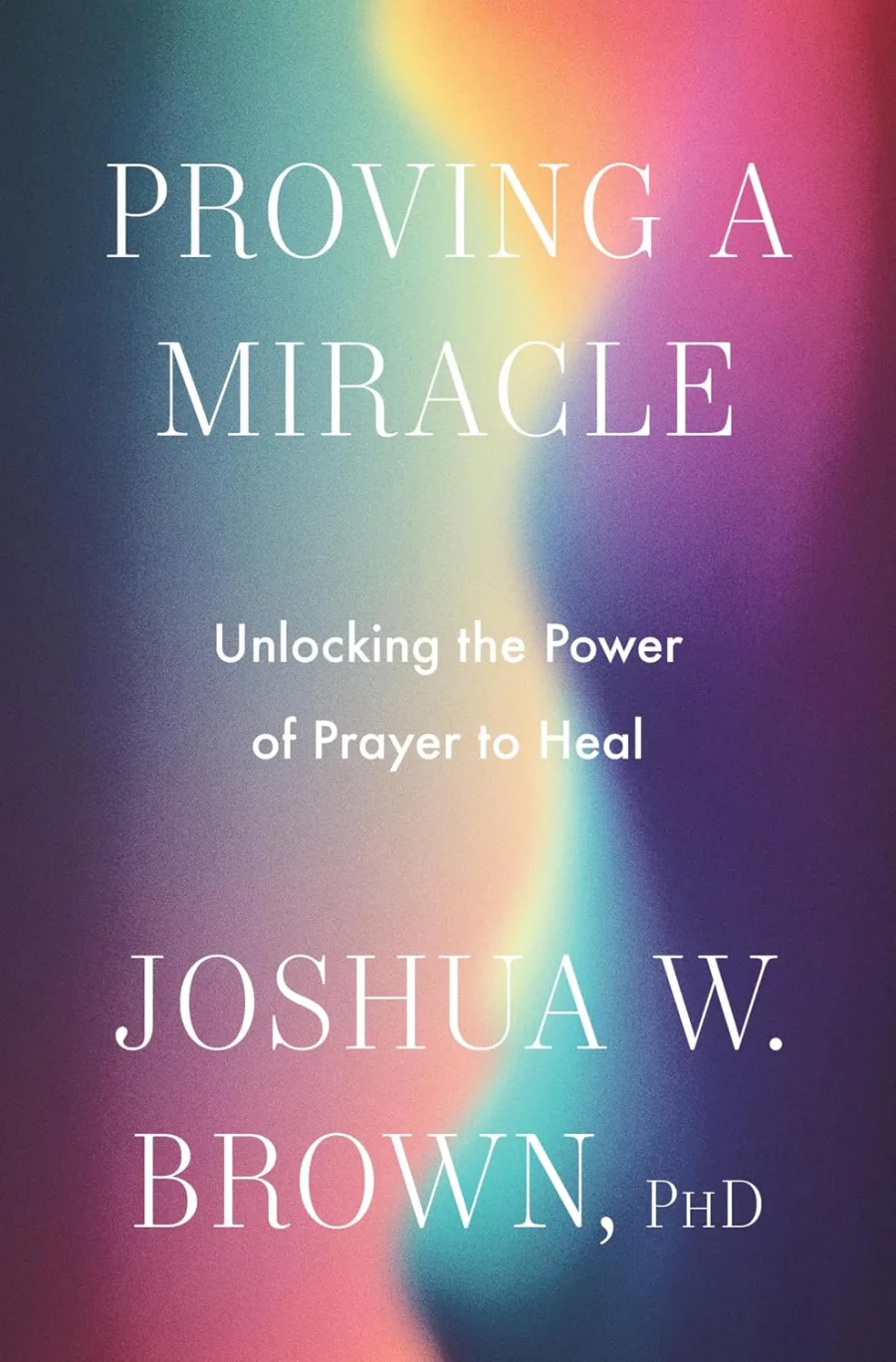
Download Cover Image
Do you want to download the full cover image for Proving a Miracle: Unlocking the Power of Prayer to Heal?