
La revolución de la abundancia: El manifiesto para reclamar tu parte del infinito
Paperback
• 350 Pages
• USD 19.49
• Spanish
• 9786073942232
No ratings yet
| Publisher | Planeta Publishing |
|---|---|
| ISBN13 | 9786073942232 |
| ASIN/SKU | 6073942230 |
| Book Format | Paperback |
| Language | Spanish |
| Pages | 350 |
| List Price | USD 19.49 |
| Publishing Date | 07/07/2026 |
| Dimensions | 5.9 x 0.72 x 9.05 inches |
| Weight | 15 ounces |
| Book Code | BD00069885 |
Buy this Book
Amazon Stores
Ebook Stores
Other Stores
Discover La revolución de la abundancia: El manifiesto para reclamar tu parte del infinito by Ismael Cala. This book is published by Planeta Publishing in Paperback format, ISBN 9786073942232, ASIN 6073942230, under Business and Money, Spiritual Self-Help, Leadership and Motivation.
Book Description
¿Y SI LA ESCASEZ NO FUERA REAL, SINO UNA IDEA APRENDIDA? LA ABUNDANCIA NO ES SUERTE, NI UN PRIVILEGIO PARA UNOS POCOS. ES UN ESTADO INTERNO QUE SE PUEDE APRENDER A DESARROLLAR Y VIVIR.
En La revolución de la abundancia Ismael Cala nos propone un cambio profundo de mentalidad: pasar de vivir desde el miedo, la carencia y la autoexigencia, a una vida guiada por la conciencia, la claridad y la plenitud. A través de una narrativa radical y reflexiva el autor propone un cambio de paradigma que integra espiritualidad práctica, neurociencia y desarrollo personal para ayudarte a reprogramar tus ideas sobre el dinero, el éxito, tu propósito y tu propio valor. La revolución de la abundancia expone cómo las creencias de escasez condicionan nuestra percepción del mundo y cómo, al transformarlas, se abre un espacio natural para una prosperidad más serena, coherente y sostenible.
Este libro no promete resultados instantáneos ni soluciones superficiales, propone algo más poderoso: una transformación real de tu manera de pensar, decidir y vivir. Si estás listo para dejar de sobrevivir y comenzar a prosperar, este libro es para ti.
➜ Ideal para lectores de Robin Sharma, Deepak ChoprayTony Robbins.
ENGLISH DESCRIPTION
WHAT IF SCARCITY WASN’T REAL, BUT JUST A LEARNED IDEA? ABUNDANCE IS NOT LUCK, NOR A PRIVILEGE FOR A FEW. IT IS AN INNER STATE THAT CAN BE LEARNED, DEVELOPED, AND LIVED.
In La revolución de la abundancia, Ismael Cala invites us to a profound mindset shift: moving from a life driven by fear, lack, and self-demand, to one guided by awareness, clarity, and fulfillment. Through a radical and thoughtful narrative, the author proposes a paradigm change that blends practical spirituality, neuroscience, and personal growth to help you reprogram your ideas about money, success, purpose, and self-worth. La revolución de la abundancia shows how scarcity beliefs shape our perception of the world and how, by transforming them, we open a natural space for prosperity that is calmer, more coherent, and sustainable.
This book doesn’t promise instant results or superficial fixes—it offers something far more powerful: a real transformation in the way you think, decide, and live. If you’re ready to stop surviving and start thriving, this book is for you.
➜ Ideal for readers of Robin Sharma, Deepak Chopra and Tony Robbins.
En La revolución de la abundancia Ismael Cala nos propone un cambio profundo de mentalidad: pasar de vivir desde el miedo, la carencia y la autoexigencia, a una vida guiada por la conciencia, la claridad y la plenitud. A través de una narrativa radical y reflexiva el autor propone un cambio de paradigma que integra espiritualidad práctica, neurociencia y desarrollo personal para ayudarte a reprogramar tus ideas sobre el dinero, el éxito, tu propósito y tu propio valor. La revolución de la abundancia expone cómo las creencias de escasez condicionan nuestra percepción del mundo y cómo, al transformarlas, se abre un espacio natural para una prosperidad más serena, coherente y sostenible.
Este libro no promete resultados instantáneos ni soluciones superficiales, propone algo más poderoso: una transformación real de tu manera de pensar, decidir y vivir. Si estás listo para dejar de sobrevivir y comenzar a prosperar, este libro es para ti.
➜ Ideal para lectores de Robin Sharma, Deepak ChoprayTony Robbins.
ENGLISH DESCRIPTION
WHAT IF SCARCITY WASN’T REAL, BUT JUST A LEARNED IDEA? ABUNDANCE IS NOT LUCK, NOR A PRIVILEGE FOR A FEW. IT IS AN INNER STATE THAT CAN BE LEARNED, DEVELOPED, AND LIVED.
In La revolución de la abundancia, Ismael Cala invites us to a profound mindset shift: moving from a life driven by fear, lack, and self-demand, to one guided by awareness, clarity, and fulfillment. Through a radical and thoughtful narrative, the author proposes a paradigm change that blends practical spirituality, neuroscience, and personal growth to help you reprogram your ideas about money, success, purpose, and self-worth. La revolución de la abundancia shows how scarcity beliefs shape our perception of the world and how, by transforming them, we open a natural space for prosperity that is calmer, more coherent, and sustainable.
This book doesn’t promise instant results or superficial fixes—it offers something far more powerful: a real transformation in the way you think, decide, and live. If you’re ready to stop surviving and start thriving, this book is for you.
➜ Ideal for readers of Robin Sharma, Deepak Chopra and Tony Robbins.
Author Biography
Ismael Cala es estratega de vida y negocios; comunicador social; y autor de más de diez bestsellers en temas de liderazgo exponencial, emprendimiento y desarrollo personal. También es experto en Mindfulness Ejecutiva, Innovación, Productividad y Alto Desempeño, Comunicación Asertiva, Coaching & Mentoring; y es embajador del concepto de «Felicidad Corporativa» en América Latina y Estados Unidos. En sus talleres, conferencias y seminarios ha recorrido más de 38 países e impactado en más de 400 organizaciones a nivel mundial. Ha recibido formación personalizada de reconocidos líderes internacionales, como Robin Sharma, John C. Maxwell, Deepak Chopra, Brian Tracy y Tony Robbins; adicionalmente completó el Programa Ejecutivo de Liderazgo Exponencial en una de las universidades más prestigiosas y avanzadas del mundo, Singularity University, en Silicon Valley. Es presidente y Fundador del Grupo CALA y de la Fundación que lleva su nombre. Es, además, Rector de la Universidad Hispana de Mentoría.
Editorial Reviews
Editorial Reviews will be added soon…
Book Summary
La revolución de la abundancia: El manifiesto para reclamar tu parte del infinito by Ismael Cala is a reflective and motivational book about changing the way we understand success, money, purpose, and personal worth. Rather than treating abundance as simply having more possessions or earning more money, Cala presents it as an inner state of consciousness. His central question is provocative but deeply relatable: What if scarcity is not an unavoidable reality, but a belief that we have learned to carry? The book invites readers to examine those beliefs and replace a life driven by fear and insufficiency with one guided by awareness, clarity, confidence, and fulfillment.
The starting point of the book is the familiar feeling that there is never enough. There may not be enough money, time, recognition, security, opportunities, or success. Modern life can reinforce this feeling constantly. People compare themselves with others, worry about the future, compete for limited opportunities, and measure their worth through achievements. Even when they accomplish something important, they can quickly begin chasing the next goal. Cala argues that this way of thinking creates a permanent sense of deficiency. A person can have many things and still experience life psychologically as if something essential is missing.
This is what he calls the mindset of scarcity. According to the book's central premise, scarcity is not only an economic condition; it can also become an emotional and mental habit. When people believe there is never enough, they make decisions from fear. They may hold on to relationships, jobs, possessions, or situations that no longer serve them because they are afraid of losing what little they believe they have. They may also compare themselves constantly with others, interpreting another person's success as evidence of their own failure. Cala encourages readers to recognize these patterns before attempting to change them.
The alternative is abundance consciousness. Importantly, Cala does not present abundance as magical thinking or as a promise that simply imagining wealth will make it appear. The book explicitly moves away from instant formulas and superficial solutions. Instead, abundance begins with an internal transformation that influences how people think, feel, decide, and act. The goal is not to deny real financial or social difficulties but to stop allowing fear and limiting beliefs to become the permanent framework through which life is interpreted.
One of the book's major concerns is the reader's relationship with money. Cala challenges the idea that financial success alone determines prosperity. Money is important, and financial security matters, but the pursuit of money can become unhealthy when it is disconnected from purpose and well-being. A person can earn more and still feel empty, exhausted, anxious, or trapped. True prosperity therefore requires a broader definition of wealth—one that includes emotional well-being, meaningful relationships, personal freedom, purpose, and the ability to live according to one's values.
This leads to an equally important discussion of success. Society often gives people a ready-made definition of achievement: earn more, become more influential, acquire more, and appear successful to others. Cala asks readers to question whether these external measurements genuinely represent the life they want. Success becomes more meaningful when it is aligned with personal values rather than social comparison. Instead of asking only, "How much have I achieved?" the reader is encouraged to consider, "What kind of person am I becoming, and does the life I am building actually reflect what matters to me?"
The book also connects abundance with self-worth. Many people unconsciously believe they must prove their value through productivity, recognition, income, or accomplishment. This creates a difficult cycle: they work harder to feel worthy, achieve something, experience temporary satisfaction, and then establish a new standard that must be reached. Cala encourages readers to separate their inherent value from their achievements. Personal worth should not depend entirely on how much one produces or how others respond.
Another important element is purpose. Abundance, in Cala's framework, is not simply about receiving; it is also about discovering what one can contribute. A meaningful life becomes possible when personal abilities, values, and aspirations are connected to something larger than immediate gratification. Purpose provides direction, while abundance provides the psychological space to pursue that direction without being controlled entirely by fear.
To support this transformation, Cala combines ideas from practical spirituality, neuroscience, leadership, and personal development. This combination reflects the book's attempt to connect inner transformation with practical life. Spirituality gives the reader a broader perspective on meaning and consciousness; neuroscience offers a way of understanding how patterns of thought can influence behavior; leadership provides tools for making purposeful decisions and influencing others; and personal development turns these ideas into daily practices.
The book also emphasizes the importance of identifying emotional blocks and limiting patterns. People do not always recognize the beliefs that shape their decisions. Some may have learned early in life that money is dangerous, success creates conflict, asking for help is weakness, or wanting more is selfish. Others may carry an unconscious fear that they are not capable or deserving of success. Cala encourages readers to bring these assumptions into conscious awareness. Once a belief can be seen clearly, it becomes possible to question whether it still deserves to control one's life.
This process requires self-awareness and intentional action. Abundance is not presented as something that arrives automatically after a change in attitude. The reader must practice new ways of thinking and behaving. Reflection, exercises, and practical tools are used to help identify obstacles, reconsider assumptions, and build a more open and confident mindset. The emphasis is on sustainable transformation rather than temporary motivation.
Cala also addresses the exhausting pressure of self-demand. Many ambitious people believe they must constantly do more to remain valuable. This can produce achievement but also burnout. The abundance mindset offers a different possibility: productivity does not have to come from panic. People can work toward ambitious goals while maintaining awareness of their limits, values, relationships, and well-being. Prosperity becomes more sustainable when it is built without sacrificing the person who is supposed to enjoy it.
Ultimately, La revolución de la abundancia is a call to move from survival to conscious prosperity. Cala asks readers to stop defining abundance exclusively through external accumulation and instead develop an internal sense of possibility. The book's vision of prosperity includes money, but it also includes peace, purpose, confidence, meaningful relationships, clarity, and freedom.
Its deepest message is that the life we experience is influenced not only by what we possess but by the beliefs through which we interpret what is possible. If scarcity teaches us to live defensively, abundance invites us to live deliberately. The transformation begins when we stop asking whether there is enough for everyone and begin examining why we have learned to believe that there is not.
In the end, Cala's "revolution" is primarily an inner revolution. It is a decision to question inherited beliefs, release fear-based patterns, recognize one's own value, and pursue success that is aligned with a deeper sense of purpose. The book does not promise an effortless life or instant financial prosperity. Instead, it offers a more enduring proposition: by changing the way we think, decide, and live, we can develop a healthier relationship with money, achievement, and ourselves—and begin to experience abundance not merely as something we possess, but as a way of being.
The starting point of the book is the familiar feeling that there is never enough. There may not be enough money, time, recognition, security, opportunities, or success. Modern life can reinforce this feeling constantly. People compare themselves with others, worry about the future, compete for limited opportunities, and measure their worth through achievements. Even when they accomplish something important, they can quickly begin chasing the next goal. Cala argues that this way of thinking creates a permanent sense of deficiency. A person can have many things and still experience life psychologically as if something essential is missing.
This is what he calls the mindset of scarcity. According to the book's central premise, scarcity is not only an economic condition; it can also become an emotional and mental habit. When people believe there is never enough, they make decisions from fear. They may hold on to relationships, jobs, possessions, or situations that no longer serve them because they are afraid of losing what little they believe they have. They may also compare themselves constantly with others, interpreting another person's success as evidence of their own failure. Cala encourages readers to recognize these patterns before attempting to change them.
The alternative is abundance consciousness. Importantly, Cala does not present abundance as magical thinking or as a promise that simply imagining wealth will make it appear. The book explicitly moves away from instant formulas and superficial solutions. Instead, abundance begins with an internal transformation that influences how people think, feel, decide, and act. The goal is not to deny real financial or social difficulties but to stop allowing fear and limiting beliefs to become the permanent framework through which life is interpreted.
One of the book's major concerns is the reader's relationship with money. Cala challenges the idea that financial success alone determines prosperity. Money is important, and financial security matters, but the pursuit of money can become unhealthy when it is disconnected from purpose and well-being. A person can earn more and still feel empty, exhausted, anxious, or trapped. True prosperity therefore requires a broader definition of wealth—one that includes emotional well-being, meaningful relationships, personal freedom, purpose, and the ability to live according to one's values.
This leads to an equally important discussion of success. Society often gives people a ready-made definition of achievement: earn more, become more influential, acquire more, and appear successful to others. Cala asks readers to question whether these external measurements genuinely represent the life they want. Success becomes more meaningful when it is aligned with personal values rather than social comparison. Instead of asking only, "How much have I achieved?" the reader is encouraged to consider, "What kind of person am I becoming, and does the life I am building actually reflect what matters to me?"
The book also connects abundance with self-worth. Many people unconsciously believe they must prove their value through productivity, recognition, income, or accomplishment. This creates a difficult cycle: they work harder to feel worthy, achieve something, experience temporary satisfaction, and then establish a new standard that must be reached. Cala encourages readers to separate their inherent value from their achievements. Personal worth should not depend entirely on how much one produces or how others respond.
Another important element is purpose. Abundance, in Cala's framework, is not simply about receiving; it is also about discovering what one can contribute. A meaningful life becomes possible when personal abilities, values, and aspirations are connected to something larger than immediate gratification. Purpose provides direction, while abundance provides the psychological space to pursue that direction without being controlled entirely by fear.
To support this transformation, Cala combines ideas from practical spirituality, neuroscience, leadership, and personal development. This combination reflects the book's attempt to connect inner transformation with practical life. Spirituality gives the reader a broader perspective on meaning and consciousness; neuroscience offers a way of understanding how patterns of thought can influence behavior; leadership provides tools for making purposeful decisions and influencing others; and personal development turns these ideas into daily practices.
The book also emphasizes the importance of identifying emotional blocks and limiting patterns. People do not always recognize the beliefs that shape their decisions. Some may have learned early in life that money is dangerous, success creates conflict, asking for help is weakness, or wanting more is selfish. Others may carry an unconscious fear that they are not capable or deserving of success. Cala encourages readers to bring these assumptions into conscious awareness. Once a belief can be seen clearly, it becomes possible to question whether it still deserves to control one's life.
This process requires self-awareness and intentional action. Abundance is not presented as something that arrives automatically after a change in attitude. The reader must practice new ways of thinking and behaving. Reflection, exercises, and practical tools are used to help identify obstacles, reconsider assumptions, and build a more open and confident mindset. The emphasis is on sustainable transformation rather than temporary motivation.
Cala also addresses the exhausting pressure of self-demand. Many ambitious people believe they must constantly do more to remain valuable. This can produce achievement but also burnout. The abundance mindset offers a different possibility: productivity does not have to come from panic. People can work toward ambitious goals while maintaining awareness of their limits, values, relationships, and well-being. Prosperity becomes more sustainable when it is built without sacrificing the person who is supposed to enjoy it.
Ultimately, La revolución de la abundancia is a call to move from survival to conscious prosperity. Cala asks readers to stop defining abundance exclusively through external accumulation and instead develop an internal sense of possibility. The book's vision of prosperity includes money, but it also includes peace, purpose, confidence, meaningful relationships, clarity, and freedom.
Its deepest message is that the life we experience is influenced not only by what we possess but by the beliefs through which we interpret what is possible. If scarcity teaches us to live defensively, abundance invites us to live deliberately. The transformation begins when we stop asking whether there is enough for everyone and begin examining why we have learned to believe that there is not.
In the end, Cala's "revolution" is primarily an inner revolution. It is a decision to question inherited beliefs, release fear-based patterns, recognize one's own value, and pursue success that is aligned with a deeper sense of purpose. The book does not promise an effortless life or instant financial prosperity. Instead, it offers a more enduring proposition: by changing the way we think, decide, and live, we can develop a healthier relationship with money, achievement, and ourselves—and begin to experience abundance not merely as something we possess, but as a way of being.
Sample Chapters
Sample Chapters will be added soon…
Reader Reviews
No reviews yet.
La revolución de la abundancia: El manifiesto para reclamar tu parte del infinito
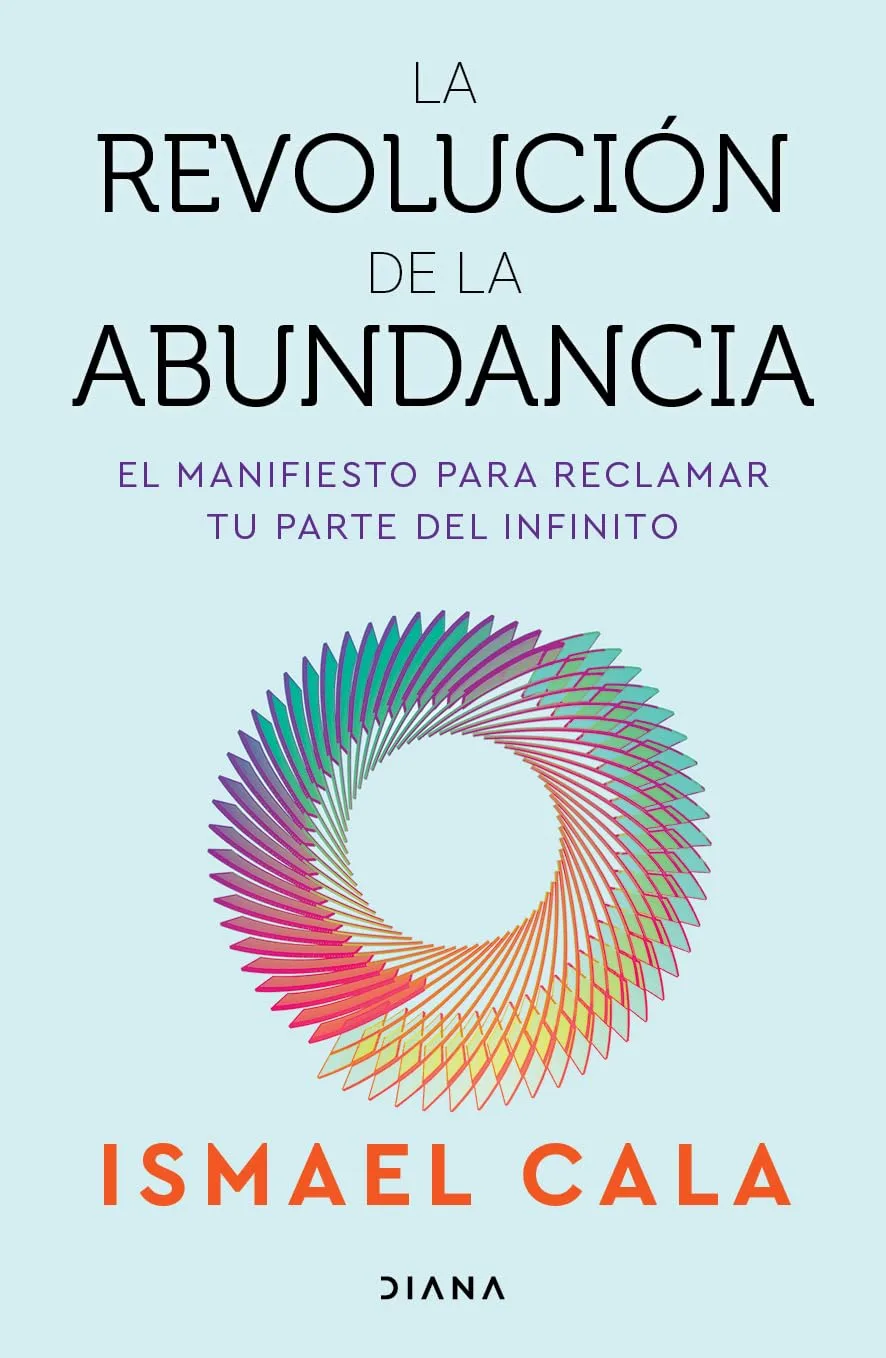
Download Cover Image
Do you want to download the full cover image for La revolución de la abundancia: El manifiesto para reclamar tu parte del infinito?