
The Stones Cry Out: Biblical Archaeology, Prophecy, and the Last Days
Hardcover
• 272 Pages
• USD 29.99
• English
• 9781636415789
No ratings yet
| Publisher | Frontline |
|---|---|
| ISBN13 | 9781636415789 |
| ASIN/SKU | 1636415784 |
| Book Format | Hardcover |
| Language | English |
| Pages | 272 |
| List Price | USD 29.99 |
| Publishing Date | 13/10/2026 |
| Dimensions | 9.02 x 0.04 x 5.98 inches |
| Weight | 1.04 pounds |
| Book Code | BD00069984 |
Buy this Book
Amazon Stores
Ebook Stores
Other Stores
Discover The Stones Cry Out: Biblical Archaeology, Prophecy, and the Last Days by Dinesh D'Souza. This book is published by Frontline in Hardcover format, ISBN 9781636415789, ASIN 1636415784, under Christian Books and Bibles, Christian Prophecies, Christian Social Issues.
Book Description
EVERY STONE PULLED FROM THE GROUND CONFIRMS WHAT THE BIBLE ALREADY SAID.
If it got the past right, with that kind of precision, then its words about the future cannot be ignored.
Dinesh D'Souza first traveled to Israel in 2022. He stood at the Pool of Siloam where Jesus healed a blind man. He walked the Pilgrimage Road that Jesus walked. He looked out from the ruins of King David's palace at those very rooftops. And one question stopped him cold: not theological, but factual.
IS ANY OF THIS ACTUALLY TRUE? Not on the level of faith, on the level of evidence? And if it's true, why isn't anyone shouting it from the rooftops?
He went back. Again and again. Three years of excavations, expeditions, and conversations with archaeologists pulling from the ground things the evening news never covers. What he found cannot be fabricated.
NO ONE FABRICATES FOOTNOTES. Two minor officials appear once in the Book of Jeremiah: they throw the prophet into a muddy cistern and vanish from the text. Twenty-six hundred years later, their personal clay seals come out of the ground in Jerusalem. If the people nobody remembers are real, everything else is real too.
That is how this book works. Not from the general to the specific. From evidence to evidence, until the verdict becomes impossible to dispute:
The seal of King Hezekiah
The seal of the prophet Isaiah, found inches away
The stone bearing the name of Pontius Pilate
The ossuary of the high priest Caiaphas
The house in Nazareth where Jesus grew up
The site of His execution and burial
Nineteen chapters. Thousands of years of biblical history. One conclusion: the Bible is historically accurate, and it can be proven.
Then D'Souza asks the question the final chapter was written to answer.
IF THE BIBLE IS RIGHT ABOUT EVERYTHING THAT HAS ALREADY HAPPENED, WHAT DOES THAT TELL US ABOUT WHAT IS STILL TO COME?
While he was documenting the past, the prophecies about the future were already coming true:
Israel exists again, for the first time in two thousand years, exactly as Isaiah and Ezekiel foretold
The gospel has reached every nation on earth
For the first time in human history, every person on the planet can witness the same event at the same moment
Everything that was predicted is happening now.
The stones proved the past. The same Word describes what comes next, and in the final chapter, D'Souza shows that the prophecies that once seemed distant are already being fulfilled through signs unfolding around us, examined with the same evidentiary precision he brought to every artifact.
IF THE BIBLE IS RIGHT ABOUT THE PAST, AND IT IS, THEN ITS WORDS ABOUT THE FUTURE CANNOT BE IGNORED.
If it got the past right, with that kind of precision, then its words about the future cannot be ignored.
Dinesh D'Souza first traveled to Israel in 2022. He stood at the Pool of Siloam where Jesus healed a blind man. He walked the Pilgrimage Road that Jesus walked. He looked out from the ruins of King David's palace at those very rooftops. And one question stopped him cold: not theological, but factual.
IS ANY OF THIS ACTUALLY TRUE? Not on the level of faith, on the level of evidence? And if it's true, why isn't anyone shouting it from the rooftops?
He went back. Again and again. Three years of excavations, expeditions, and conversations with archaeologists pulling from the ground things the evening news never covers. What he found cannot be fabricated.
NO ONE FABRICATES FOOTNOTES. Two minor officials appear once in the Book of Jeremiah: they throw the prophet into a muddy cistern and vanish from the text. Twenty-six hundred years later, their personal clay seals come out of the ground in Jerusalem. If the people nobody remembers are real, everything else is real too.
That is how this book works. Not from the general to the specific. From evidence to evidence, until the verdict becomes impossible to dispute:
The seal of King Hezekiah
The seal of the prophet Isaiah, found inches away
The stone bearing the name of Pontius Pilate
The ossuary of the high priest Caiaphas
The house in Nazareth where Jesus grew up
The site of His execution and burial
Nineteen chapters. Thousands of years of biblical history. One conclusion: the Bible is historically accurate, and it can be proven.
Then D'Souza asks the question the final chapter was written to answer.
IF THE BIBLE IS RIGHT ABOUT EVERYTHING THAT HAS ALREADY HAPPENED, WHAT DOES THAT TELL US ABOUT WHAT IS STILL TO COME?
While he was documenting the past, the prophecies about the future were already coming true:
Israel exists again, for the first time in two thousand years, exactly as Isaiah and Ezekiel foretold
The gospel has reached every nation on earth
For the first time in human history, every person on the planet can witness the same event at the same moment
Everything that was predicted is happening now.
The stones proved the past. The same Word describes what comes next, and in the final chapter, D'Souza shows that the prophecies that once seemed distant are already being fulfilled through signs unfolding around us, examined with the same evidentiary precision he brought to every artifact.
IF THE BIBLE IS RIGHT ABOUT THE PAST, AND IT IS, THEN ITS WORDS ABOUT THE FUTURE CANNOT BE IGNORED.
Author Biography
Dinesh D'Souza was born in Mumbai, India, and came to the United States as a foreign exchange student at the age of seventeen. He has never entirely stopped being an outsider, and that posture, the one that asks rather than assumes, that investigates rather than accepts, has defined everything he has done since. He graduated from Dartmouth College, worked in the Reagan White House as a policy analyst, and went on to become one of the most widely read voices in American political and cultural commentary, with books that reached the top of the New York Times bestseller list and documentary films that were seen by millions.
What that biography does not capture is what it cost him. A federal conviction in 2014, a presidential pardon in 2018, and years of public controversy have given D'Souza something that credentials alone cannot provide: a personal understanding of what it means to have your framework for the world challenged at the foundation, and to rebuild it not from sentiment but from evidence.
The Stones Cry Out is not the book he set out to write. It is the book that three years of excavations, expeditions, and encounters with physical evidence in the soil of Israel demanded. In a career built on argument, it may be the most personal thing he has produced: because it is the account of a man who went looking for proof and found something larger than proof.
IT IS, IN THE END, A BOOK ABOUT WHAT HAPPENS WHEN THE GROUND BENEATH YOUR FEET STARTS TALKING.
What that biography does not capture is what it cost him. A federal conviction in 2014, a presidential pardon in 2018, and years of public controversy have given D'Souza something that credentials alone cannot provide: a personal understanding of what it means to have your framework for the world challenged at the foundation, and to rebuild it not from sentiment but from evidence.
The Stones Cry Out is not the book he set out to write. It is the book that three years of excavations, expeditions, and encounters with physical evidence in the soil of Israel demanded. In a career built on argument, it may be the most personal thing he has produced: because it is the account of a man who went looking for proof and found something larger than proof.
IT IS, IN THE END, A BOOK ABOUT WHAT HAPPENS WHEN THE GROUND BENEATH YOUR FEET STARTS TALKING.
Editorial Reviews
There is a particular kind of discomfort that comes from watching events you were told would never happen unfold in real time. In recent years, a country that had not existed for two millennia reappeared on the map. A coalition of nations hostile to that country began forming in ways that track, with uncomfortable precision, the geographic descriptions of a text written more than two thousand years ago. Technologies emerged that, for the first time in history, made it possible for every person on earth to witness the same event simultaneously: something that previous generations of readers had simply filed away as metaphor, because the literal reading was physically impossible. It is no longer impossible.
Most books about biblical archaeology stay safely in the past. Most books about end-times prophecy stay safely in the realm of interpretation. This book refuses that division. It treats the past and the future as a single continuous argument, and it makes that argument from physical evidence, not from theological assertion.
Dinesh D'Souza came to this project not as a minister or a seminary scholar but as an investigator. His background is in documentary filmmaking and political analysis: disciplines that value getting it right over simply feeling right. When he traveled to Israel for the first time in 2022, he brought that same skepticism with him. What he encountered in the soil of the Holy Land, in the clay seals, the stone inscriptions, the royal archives, the ruins of houses and roads and pools that turn out to be exactly where the Bible said they would be, began to reorganize his framework for thinking about historical evidence. Three years of subsequent research, excavations, and expeditions produced this book. It is the work of someone who needed to be convinced, and was.
That journey of verification runs through every chapter of the first eighteen. But it is the nineteenth chapter, the final one, that gives the entire investigation its weight. In it, D'Souza examines the end-time prophecies of Ezekiel: the coalition of nations described in chapters 38 and 39, including Persia (modern Iran), Libya, Sudan, and Turkey, and asks whether the conditions for their fulfillment are now in place. He addresses the question of the rebuilt temple in Jerusalem. And he arrives where eighteen chapters of evidence have been pointing:
"Through the Bible and through the stones, God is crying out to us to prepare for those times."
What eighteen chapters of careful, Scripture-grounded investigation build is what makes this final chapter feel less like a conclusion and more like a confirmation of everything God has been saying all along. D'Souza arrives at these conclusions through Christian apologetics, biblical archaeology, and historical documentation that spans from Abraham to the apostles. By the time the reader reaches the signposts of the end times, they have already followed the evidence through the clay tablets of Babylon, the ruins of Jericho, the copper mines of Edom, the personal seal of a prophet, and the stone that named a Roman governor whose existence was once disputed. The pattern is not coincidental. It is the same pattern, applied now to the present moment.
This book is for the believer who has felt the sting of not being able to defend what they know to be true. It is for the skeptic who is willing to follow evidence wherever it leads, even when it leads somewhere inconvenient. And it is for anyone who has watched the news in recent years with the quiet, unsettling sense that something larger is unfolding, and wanted a framework grounded in more than opinion.
THE STONES HAVE BEEN CRYING OUT FOR A LONG TIME. THIS BOOK FINALLY LISTENS.
Most books about biblical archaeology stay safely in the past. Most books about end-times prophecy stay safely in the realm of interpretation. This book refuses that division. It treats the past and the future as a single continuous argument, and it makes that argument from physical evidence, not from theological assertion.
Dinesh D'Souza came to this project not as a minister or a seminary scholar but as an investigator. His background is in documentary filmmaking and political analysis: disciplines that value getting it right over simply feeling right. When he traveled to Israel for the first time in 2022, he brought that same skepticism with him. What he encountered in the soil of the Holy Land, in the clay seals, the stone inscriptions, the royal archives, the ruins of houses and roads and pools that turn out to be exactly where the Bible said they would be, began to reorganize his framework for thinking about historical evidence. Three years of subsequent research, excavations, and expeditions produced this book. It is the work of someone who needed to be convinced, and was.
That journey of verification runs through every chapter of the first eighteen. But it is the nineteenth chapter, the final one, that gives the entire investigation its weight. In it, D'Souza examines the end-time prophecies of Ezekiel: the coalition of nations described in chapters 38 and 39, including Persia (modern Iran), Libya, Sudan, and Turkey, and asks whether the conditions for their fulfillment are now in place. He addresses the question of the rebuilt temple in Jerusalem. And he arrives where eighteen chapters of evidence have been pointing:
"Through the Bible and through the stones, God is crying out to us to prepare for those times."
What eighteen chapters of careful, Scripture-grounded investigation build is what makes this final chapter feel less like a conclusion and more like a confirmation of everything God has been saying all along. D'Souza arrives at these conclusions through Christian apologetics, biblical archaeology, and historical documentation that spans from Abraham to the apostles. By the time the reader reaches the signposts of the end times, they have already followed the evidence through the clay tablets of Babylon, the ruins of Jericho, the copper mines of Edom, the personal seal of a prophet, and the stone that named a Roman governor whose existence was once disputed. The pattern is not coincidental. It is the same pattern, applied now to the present moment.
This book is for the believer who has felt the sting of not being able to defend what they know to be true. It is for the skeptic who is willing to follow evidence wherever it leads, even when it leads somewhere inconvenient. And it is for anyone who has watched the news in recent years with the quiet, unsettling sense that something larger is unfolding, and wanted a framework grounded in more than opinion.
THE STONES HAVE BEEN CRYING OUT FOR A LONG TIME. THIS BOOK FINALLY LISTENS.
Book Summary
Book Summary will be added soon…
Sample Chapters
Sample Chapters will be added soon…
Reader Reviews
No reviews yet.
The Stones Cry Out: Biblical Archaeology, Prophecy, and the Last Days
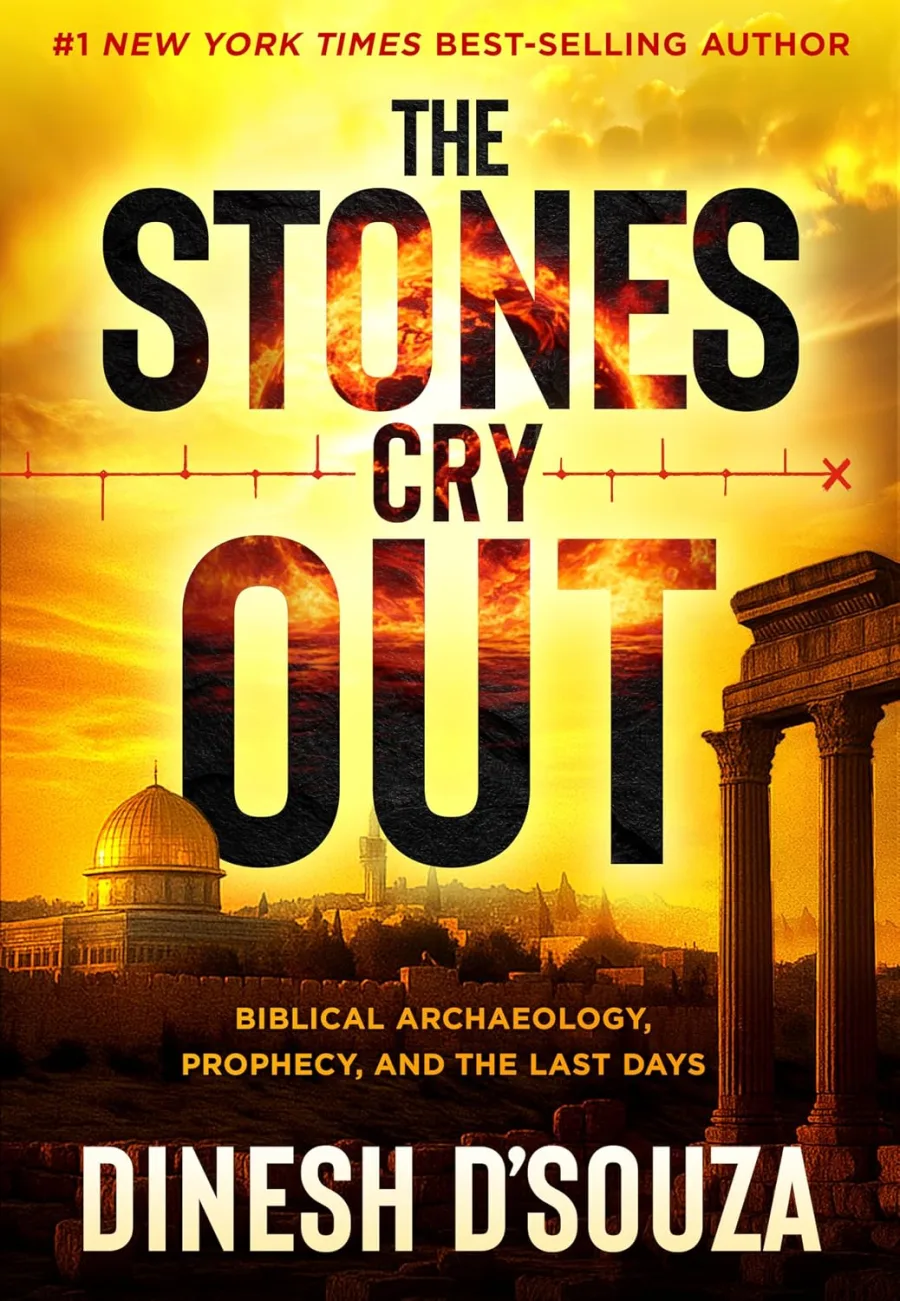
Download Cover Image
Do you want to download the full cover image for The Stones Cry Out: Biblical Archaeology, Prophecy, and the Last Days?