
The Castle in the Glen: A Novel
eBook
• 424 Pages
• USD 16.99
• English
• 9781662527203
No ratings yet
| Publisher | Lake Union Publishing |
|---|---|
| ISBN13 | 9781662527203 |
| ASIN/SKU | B0GF3FGLWJ |
| Book Format | eBook |
| Language | English |
| Pages | 424 |
| List Price | USD 16.99 |
| Publishing Date | 04/08/2026 |
| Book Code | BD00069995 |
Buy this Book
Amazon Stores
Ebook Stores
Other Stores
Discover The Castle in the Glen: A Novel by Rhys Bowen. This book is published by Lake Union Publishing in eBook format, ISBN 9781662527203, ASIN B0GF3FGLWJ, under Mystery, Thriller and Suspense, Amateur Sleuth Mysteries, Amateur Sleuths.
Book Description
A ghostwriter plunges into danger as she unravels the dark secrets of a powerful Scottish family in a thrilling novel of romance and mystery by the bestselling author of Mrs. Endicott’s Splendid Adventure.
Australian writer Emma Callander has been recruited to complete the final historical mystery in a series by celebrated author Iris Blackburn. It’s 1965, and Iris’s memory is fading. She’s certain that only Emma can do justice to her novel about a murder on the Isle of Skye. When Emma ventures to Scotland for research, she discovers the story is not fiction at all but rather a true crime, unsolved for more than fifty years.
It was 1904 when a couple’s suspicious drowning led to the disappearance of a mysterious young woman the locals called the Wild Girl. To this day the mystery is unforgettable, especially among the descendants of an aristocratic family who’ll do anything to keep their secrets buried. From the misty Highlands to a medieval castle, Emma and Tony Gordon, Iris’s handsome lawyer, work ever more closely to uncover them.
But while Iris may be known for her fiendishly clever twists, there’s one not even Emma could have seen coming.
Australian writer Emma Callander has been recruited to complete the final historical mystery in a series by celebrated author Iris Blackburn. It’s 1965, and Iris’s memory is fading. She’s certain that only Emma can do justice to her novel about a murder on the Isle of Skye. When Emma ventures to Scotland for research, she discovers the story is not fiction at all but rather a true crime, unsolved for more than fifty years.
It was 1904 when a couple’s suspicious drowning led to the disappearance of a mysterious young woman the locals called the Wild Girl. To this day the mystery is unforgettable, especially among the descendants of an aristocratic family who’ll do anything to keep their secrets buried. From the misty Highlands to a medieval castle, Emma and Tony Gordon, Iris’s handsome lawyer, work ever more closely to uncover them.
But while Iris may be known for her fiendishly clever twists, there’s one not even Emma could have seen coming.
Author Biography
Rhys Bowen is the New York Times bestselling author of two historical mystery series as well as several internationally bestselling historical novels, two of which were nominated for Edgar Award
Rhys was born in Bath, England and educated at London University but now divides her time between California and Arizona. Her books have been nominated for every major mystery award and she has won twenty of them to date, including five Agathas.
She currently writes two historical mystery series, each very different in tone. The Molly Murphy mysteries feature an Irish immigrant woman in turn-of-the-century New York City. These books are multi-layered, complex stories with a strong sense of time and place and have won many awards including Agatha and Anthony. There are 19 books so far in this series plus three Kindle stories, Rhys’s daughter, Clare Broyles, now cowrites the series with her
Then there is Lady Georgie, She's 35th in line to the throne of England, but she's flat broke and struggling to survive in the Great Depression. These books are lighter and funnier than Molly's adventures. They poke gentle fun at the British class system--about which Rhys knows a lot, having married into an upper class family rather like Georgie's.
As a child Rhys spent time with relatives in Wales. Those childhood experiences colored her first mystery series, about Constable Evans in the mountains of Snowdonia.
Her books have been translated into over 30 languages
Rhys was born in Bath, England and educated at London University but now divides her time between California and Arizona. Her books have been nominated for every major mystery award and she has won twenty of them to date, including five Agathas.
She currently writes two historical mystery series, each very different in tone. The Molly Murphy mysteries feature an Irish immigrant woman in turn-of-the-century New York City. These books are multi-layered, complex stories with a strong sense of time and place and have won many awards including Agatha and Anthony. There are 19 books so far in this series plus three Kindle stories, Rhys’s daughter, Clare Broyles, now cowrites the series with her
Then there is Lady Georgie, She's 35th in line to the throne of England, but she's flat broke and struggling to survive in the Great Depression. These books are lighter and funnier than Molly's adventures. They poke gentle fun at the British class system--about which Rhys knows a lot, having married into an upper class family rather like Georgie's.
As a child Rhys spent time with relatives in Wales. Those childhood experiences colored her first mystery series, about Constable Evans in the mountains of Snowdonia.
Her books have been translated into over 30 languages
Editorial Reviews
Editorial Reviews will be added soon…
Book Summary
Rhys Bowen’s The Castle in the Glen is an atmospheric historical mystery about forgotten crimes, buried family secrets, the complicated nature of memory, and the strange ways in which stories can preserve truths that people would rather keep hidden. Set primarily in the 1960s, with a second story reaching back into the past, the novel combines mystery, romance, literary intrigue, and the haunting landscape of the Scottish Highlands. At its heart is Emma Callander, a young Australian writer who unexpectedly finds herself investigating a crime that may have been concealed for more than half a century.
Emma is living in London in 1964, trying to establish herself as a writer while working for a publishing company. Although she has already published a novel, she has not found the confidence or success she hoped for. She is also increasingly homesick for Australia and is considering returning home. Her uncertain professional and personal life changes dramatically when she is introduced to Iris Blackburn, a famous and highly successful Australian author whose Inspector Melrose mysteries have earned her a devoted readership.
Iris is elderly and beginning to suffer from serious memory problems. She has started what she intends to be the final novel in her celebrated series, but she knows that she may no longer be capable of completing it herself. She therefore asks Emma to take over the unfinished manuscript as a ghostwriter. Emma is initially overwhelmed by the request. Iris is an established literary figure, and Emma cannot understand why such an accomplished author would choose her. Nevertheless, the opportunity is too important to reject, and she agrees to read the manuscript before deciding whether she can finish it.
The unfinished novel introduces the second layer of Bowen’s story. It is a mystery set on the Isle of Skye, involving Inspector James Melrose and a disturbing crime from the past. As Emma reads, she becomes increasingly absorbed in the fictional world. The manuscript concerns a mysterious young woman known locally as the “Wild Girl,” as well as the suspicious deaths of a couple whose relationship had become entangled with an aristocratic Scottish family. What initially appears to be an imaginative historical mystery gradually begins to feel disturbingly authentic.
Emma soon discovers that Iris has not simply invented the central crime. The events in the manuscript appear to be based on a real unsolved case. Decades earlier, a couple died in circumstances officially regarded as drowning, while other important figures connected with the affair disappeared or became surrounded by rumor. Among them was the enigmatic young woman known as the Wild Girl. The tragedy has never been satisfactorily explained, and its memory continues to trouble the descendants of the powerful family involved.
This discovery changes Emma’s assignment completely. She is no longer simply trying to understand how Iris’s fictional detective should solve a fictional murder. She is trying to determine what really happened in a crime that may have inspired the novel.
To complete the manuscript, Emma travels to Scotland and visits the Isle of Skye. Bowen makes the island much more than a backdrop. Its misty landscapes, dramatic coastline, ancient buildings, remote roads, villages, and deeply rooted traditions create an atmosphere in which the past never seems entirely past. Emma begins to understand why Iris chose this particular setting for her final mystery. The island has its own memories, loyalties, prejudices, and silences.
Emma also begins speaking with people who know the history of the old case. Some are descendants of those involved, while others have inherited stories through generations of local gossip. She gradually realizes that the official version of events is not necessarily the truth. Different people remember the same events differently, and some are remarkably unwilling to discuss what happened.
The deeper Emma goes, the more complicated the mystery becomes. There are old resentments, questions about class and privilege, romantic entanglements, and family loyalties. The aristocratic family at the center of the story has every reason to protect its reputation, and Emma discovers that powerful people can sometimes preserve secrets simply because everyone around them has learned not to ask questions.
At the same time, Emma is not investigating alone. Tony Gordon, Iris’s handsome lawyer, becomes an important companion and ally. Their relationship develops gradually rather than through an exaggerated romance. Tony helps Emma navigate the practical and legal aspects of her arrangement with Iris, but he also becomes involved in the mystery itself. There is an understated attraction between them, giving the novel a warm personal dimension alongside its darker investigation.
Emma’s work also forces her to confront questions about herself. She begins the novel uncertain about her future as a writer and unsure whether London is truly where she belongs. Working with Iris gives her an extraordinary opportunity, but it also exposes her to the responsibilities and moral complications of borrowing another writer’s voice. Iris’s fading memory makes the situation particularly poignant. The older woman is not simply an author who needs assistance; she is someone trying to preserve the final piece of a creative life before memory takes more of it away.
As Emma investigates the old crime, the distinction between fiction and reality becomes increasingly blurred. She begins to recognize details from Iris’s manuscript in the real world, while people she meets seem to react uneasily to the story. Her questions attract attention, and eventually it becomes clear that someone does not want the old mystery reopened.
The novel builds its suspense quietly rather than relying only on constant action. Bowen allows Emma to gather clues, listen to contradictory accounts, examine the landscape, and gradually understand the relationships that existed decades earlier. There are suspects, red herrings, old romances, unexplained disappearances, and family secrets. Just when Emma believes she has understood the truth, another piece of information forces her to reconsider.
One of the novel’s most effective ideas is that a mystery can survive because people remember it imperfectly. Iris’s fading memory and the island’s collective memory mirror each other. Both contain fragments of truth, but neither offers a complete picture. Emma’s task therefore becomes more than solving a crime. She must reconstruct a story from damaged memories, deliberate omissions, and evidence that has survived only indirectly.
The closer Emma comes to the truth, the greater the danger becomes. What began as a literary assignment turns into a personal investigation, and Emma realizes that the people who protected the secret in the past may still have reasons to protect it. The final revelations connect the old mystery to the present in ways Emma could not initially have imagined. Bowen saves a major twist for the closing stages, transforming the reader’s understanding of both the manuscript and the people connected to it.
Ultimately, The Castle in the Glen is about much more than discovering who was responsible for an old crime. It explores how families protect their reputations, how communities preserve uncomfortable histories, and how writers transform real suffering into stories. Emma’s journey also becomes a journey toward confidence: as she learns to investigate the past, she becomes more certain of her own voice and her own future.
With its story-within-a-story structure, evocative Scottish setting, restrained romance, and long-buried mystery, Bowen creates a novel that feels both intimate and suspenseful. The castle, the island, the unfinished manuscript, and the memories of those who came before all become parts of the same larger question: how much truth can remain hidden when someone is finally brave enough to look for it?
In the end, Emma discovers that stories are sometimes dangerous precisely because they contain more truth than their creators—or their readers—realize. And the mystery that began as Iris Blackburn’s unfinished fiction ultimately reveals itself as something far more personal, complicated, and unsettling.
Emma is living in London in 1964, trying to establish herself as a writer while working for a publishing company. Although she has already published a novel, she has not found the confidence or success she hoped for. She is also increasingly homesick for Australia and is considering returning home. Her uncertain professional and personal life changes dramatically when she is introduced to Iris Blackburn, a famous and highly successful Australian author whose Inspector Melrose mysteries have earned her a devoted readership.
Iris is elderly and beginning to suffer from serious memory problems. She has started what she intends to be the final novel in her celebrated series, but she knows that she may no longer be capable of completing it herself. She therefore asks Emma to take over the unfinished manuscript as a ghostwriter. Emma is initially overwhelmed by the request. Iris is an established literary figure, and Emma cannot understand why such an accomplished author would choose her. Nevertheless, the opportunity is too important to reject, and she agrees to read the manuscript before deciding whether she can finish it.
The unfinished novel introduces the second layer of Bowen’s story. It is a mystery set on the Isle of Skye, involving Inspector James Melrose and a disturbing crime from the past. As Emma reads, she becomes increasingly absorbed in the fictional world. The manuscript concerns a mysterious young woman known locally as the “Wild Girl,” as well as the suspicious deaths of a couple whose relationship had become entangled with an aristocratic Scottish family. What initially appears to be an imaginative historical mystery gradually begins to feel disturbingly authentic.
Emma soon discovers that Iris has not simply invented the central crime. The events in the manuscript appear to be based on a real unsolved case. Decades earlier, a couple died in circumstances officially regarded as drowning, while other important figures connected with the affair disappeared or became surrounded by rumor. Among them was the enigmatic young woman known as the Wild Girl. The tragedy has never been satisfactorily explained, and its memory continues to trouble the descendants of the powerful family involved.
This discovery changes Emma’s assignment completely. She is no longer simply trying to understand how Iris’s fictional detective should solve a fictional murder. She is trying to determine what really happened in a crime that may have inspired the novel.
To complete the manuscript, Emma travels to Scotland and visits the Isle of Skye. Bowen makes the island much more than a backdrop. Its misty landscapes, dramatic coastline, ancient buildings, remote roads, villages, and deeply rooted traditions create an atmosphere in which the past never seems entirely past. Emma begins to understand why Iris chose this particular setting for her final mystery. The island has its own memories, loyalties, prejudices, and silences.
Emma also begins speaking with people who know the history of the old case. Some are descendants of those involved, while others have inherited stories through generations of local gossip. She gradually realizes that the official version of events is not necessarily the truth. Different people remember the same events differently, and some are remarkably unwilling to discuss what happened.
The deeper Emma goes, the more complicated the mystery becomes. There are old resentments, questions about class and privilege, romantic entanglements, and family loyalties. The aristocratic family at the center of the story has every reason to protect its reputation, and Emma discovers that powerful people can sometimes preserve secrets simply because everyone around them has learned not to ask questions.
At the same time, Emma is not investigating alone. Tony Gordon, Iris’s handsome lawyer, becomes an important companion and ally. Their relationship develops gradually rather than through an exaggerated romance. Tony helps Emma navigate the practical and legal aspects of her arrangement with Iris, but he also becomes involved in the mystery itself. There is an understated attraction between them, giving the novel a warm personal dimension alongside its darker investigation.
Emma’s work also forces her to confront questions about herself. She begins the novel uncertain about her future as a writer and unsure whether London is truly where she belongs. Working with Iris gives her an extraordinary opportunity, but it also exposes her to the responsibilities and moral complications of borrowing another writer’s voice. Iris’s fading memory makes the situation particularly poignant. The older woman is not simply an author who needs assistance; she is someone trying to preserve the final piece of a creative life before memory takes more of it away.
As Emma investigates the old crime, the distinction between fiction and reality becomes increasingly blurred. She begins to recognize details from Iris’s manuscript in the real world, while people she meets seem to react uneasily to the story. Her questions attract attention, and eventually it becomes clear that someone does not want the old mystery reopened.
The novel builds its suspense quietly rather than relying only on constant action. Bowen allows Emma to gather clues, listen to contradictory accounts, examine the landscape, and gradually understand the relationships that existed decades earlier. There are suspects, red herrings, old romances, unexplained disappearances, and family secrets. Just when Emma believes she has understood the truth, another piece of information forces her to reconsider.
One of the novel’s most effective ideas is that a mystery can survive because people remember it imperfectly. Iris’s fading memory and the island’s collective memory mirror each other. Both contain fragments of truth, but neither offers a complete picture. Emma’s task therefore becomes more than solving a crime. She must reconstruct a story from damaged memories, deliberate omissions, and evidence that has survived only indirectly.
The closer Emma comes to the truth, the greater the danger becomes. What began as a literary assignment turns into a personal investigation, and Emma realizes that the people who protected the secret in the past may still have reasons to protect it. The final revelations connect the old mystery to the present in ways Emma could not initially have imagined. Bowen saves a major twist for the closing stages, transforming the reader’s understanding of both the manuscript and the people connected to it.
Ultimately, The Castle in the Glen is about much more than discovering who was responsible for an old crime. It explores how families protect their reputations, how communities preserve uncomfortable histories, and how writers transform real suffering into stories. Emma’s journey also becomes a journey toward confidence: as she learns to investigate the past, she becomes more certain of her own voice and her own future.
With its story-within-a-story structure, evocative Scottish setting, restrained romance, and long-buried mystery, Bowen creates a novel that feels both intimate and suspenseful. The castle, the island, the unfinished manuscript, and the memories of those who came before all become parts of the same larger question: how much truth can remain hidden when someone is finally brave enough to look for it?
In the end, Emma discovers that stories are sometimes dangerous precisely because they contain more truth than their creators—or their readers—realize. And the mystery that began as Iris Blackburn’s unfinished fiction ultimately reveals itself as something far more personal, complicated, and unsettling.
Sample Chapters
Sample Chapters will be added soon…
Reader Reviews
No reviews yet.
The Castle in the Glen: A Novel
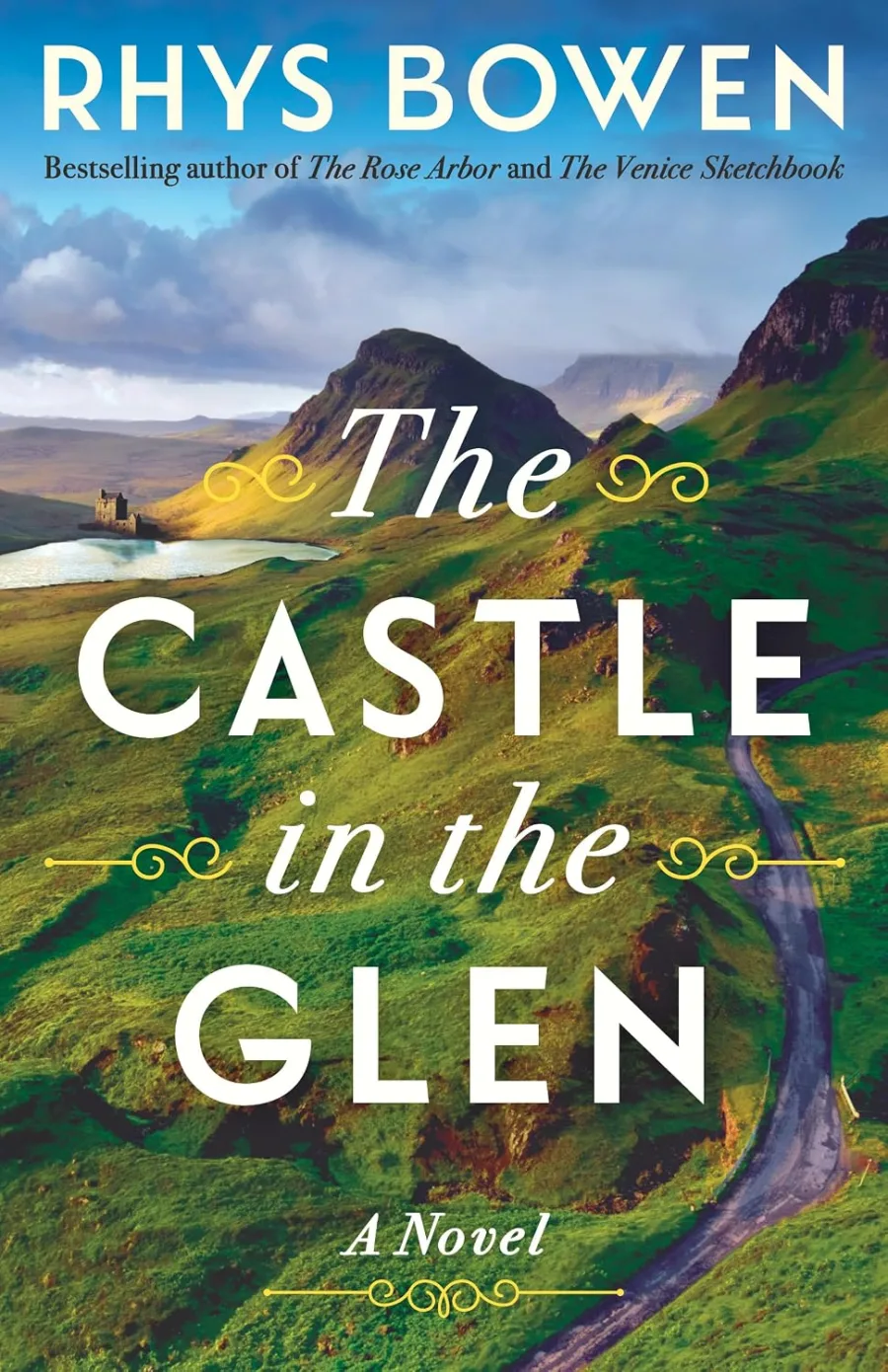
Download Cover Image
Do you want to download the full cover image for The Castle in the Glen: A Novel?