
Crown Me Yours (Heartstring Duet Book 2)
eBook
• 255 Pages
• USD 8.99
• English
• 9780316617635
No ratings yet
| Publisher | Requited |
|---|---|
| ISBN13 | 9780316617635 |
| ASIN/SKU | B0H8N3K7X2 |
| Book Format | eBook |
| Language | English |
| Pages | 255 |
| List Price | USD 8.99 |
| Publishing Date | 23/07/2026 |
| Book Code | BD00069996 |
Buy this Book
Amazon Stores
Ebook Stores
Other Stores
Discover Crown Me Yours (Heartstring Duet Book 2) by Liv Zander. This book is published by Requited in eBook format, ISBN 9780316617635, ASIN B0H8N3K7X2, under Literature and Fiction, Mythology and Folk Tales, Fairy Tale Fantasy.
Book Description
THE UNFORGETTABLE FINALE TO THE #1 BESTSELLING DUET THAT WILL WRECK YOU, HEAL YOU, AND HAUNT YOU.
Wed him. Bed him. Slit his throat.
I killed the king. Crowned myself in his blood, But the curse still festers.
To break it, I need Death, on his knees, a ring on his finger. My blade at his throat.
The god fights me to the grave, evades my touch, mocks my wanting.
He would rather tear himself apart than let me close enough to end this. But I didn't come this far to lose. I came to crown him mine.
Welcome to your wedding, my love.
Darkly seductive, exquisitely written, and deeply emotional, the Heartstring Duet is a breathtaking tale of forbidden love, impossible choices, and hard-won hope that will break your heart and put it back together again.
Crown Me Yours is book two in the dark fantasy romance Heartstring Duet. The world contains deception, mystery, violence, dark elements, and mature content. What this book doesn’t contain is a hero (because villains do it better). You can find more detailed information at Liv Zander's website.
Wed him. Bed him. Slit his throat.
I killed the king. Crowned myself in his blood, But the curse still festers.
To break it, I need Death, on his knees, a ring on his finger. My blade at his throat.
The god fights me to the grave, evades my touch, mocks my wanting.
He would rather tear himself apart than let me close enough to end this. But I didn't come this far to lose. I came to crown him mine.
Welcome to your wedding, my love.
Darkly seductive, exquisitely written, and deeply emotional, the Heartstring Duet is a breathtaking tale of forbidden love, impossible choices, and hard-won hope that will break your heart and put it back together again.
Crown Me Yours is book two in the dark fantasy romance Heartstring Duet. The world contains deception, mystery, violence, dark elements, and mature content. What this book doesn’t contain is a hero (because villains do it better). You can find more detailed information at Liv Zander's website.
Author Biography
Liv has an unhealthy love for sexy villains. To cure herself of her poor choice in men, she's currently undergoing therapy, but who can afford that these days? To fund her co-pays, she's writing deliciously dark fantasy romance about the men who would burn the world to the ground for their women. Is that counter-productive? Probably, but it's also a lot of fun.
When she's not joking around, she can be found procrastinating in her office with a mug of coffee or a glass of wine (depending on time of day and how miserable the writing is going). Oh, she also loves skulls. And ravens. And skulls.
When she's not joking around, she can be found procrastinating in her office with a mug of coffee or a glass of wine (depending on time of day and how miserable the writing is going). Oh, she also loves skulls. And ravens. And skulls.
Editorial Reviews
Editorial Reviews will be added soon…
Book Summary
Crown Me Yours by Liv Zander is the second and final book in the Heartstring Duet, following Crown Me Dead. It continues the dark, strange, and deeply emotional story of Elara, a former gravedigger who has become the unwilling queen of Issoria, and Vale, the immortal being who embodies Death itself. Where the first book is driven by horror, decay, curses, and shocking revelations, the second turns more toward love, grief, mortality, and the difficult question of whether a temporary life can still be worth choosing. It remains a dark fantasy romance, but beneath the disturbing imagery is a surprisingly tender story about two people trying to understand what it means to love when one of them can never truly die.
At the beginning of the novel, Elara has already done what seemed impossible. She killed the king and took his crown, but the act did not free her from the ancient curse threatening Issoria. Instead, she discovers that the curse can only be broken through Death himself. The strange condition is that she must first marry him, become intimately bound to him, and ultimately kill him. In other words, Elara must accomplish the seemingly impossible task of loving and destroying the same being. Vale, however, has no intention of making this easy. He is powerful, ancient, and deeply resistant to Elara's attempts to draw close to him. He understands the danger of allowing himself to love a mortal, because he knows exactly what mortality means.
Elara approaches Vale with determination rather than fear. She has spent her life surrounded by death, first through her work as a gravedigger and later through the horrors that have overtaken her kingdom. Death is not an abstract idea to her. It is something she has seen, touched, and buried. Yet Vale is different. He is not merely another corpse or another person destined to die. He is Death itself, an immortal being who has existed outside the ordinary human experience of time. Their relationship therefore begins as a battle of wills. Elara wants to get close enough to fulfill the curse, while Vale tries to keep emotional distance between them. Their attraction makes the situation even more complicated because neither can easily separate desire from danger.
Their forced marriage gradually changes the nature of their relationship. What begins as manipulation and necessity becomes something much more genuine. Elara discovers that Vale is not simply the frightening, detached god she imagined him to be. Beneath his coldness is someone capable of enormous feeling, but also someone terrified of what those feelings will cost him. Vale has watched mortals appear, love, grow old, and disappear countless times. He knows that if he allows himself to love Elara completely, he will eventually have to experience her death. His resistance is therefore not simply arrogance or cruelty. It comes from fear. He understands grief too well to believe that love can exist without eventually bringing pain.
Elara, however, refuses to accept Vale's view that avoiding love is the best way to avoid suffering. She gradually teaches him something that becomes the emotional center of the novel: the fact that life ends does not make the life itself meaningless. Human beings do not receive eternity. They receive moments. They receive ordinary days, relationships, laughter, arguments, children, memories, and small experiences that disappear almost as soon as they happen. Elara begins to show Vale the value of these temporary things. Through her, the god of Death starts to understand that mortality is not simply a flaw in existence. It is also what gives life urgency and meaning.
While their relationship deepens, Issoria continues to suffer from the consequences of the curse. The kingdom is affected by supernatural decay, and the threat surrounding the crown remains unresolved. Elara is therefore forced to balance two very different responsibilities. She is a woman falling in love with an immortal being, but she is also a queen whose decisions affect an entire kingdom. Her personal desire and her duty repeatedly collide. The closer she gets to Vale, the more difficult it becomes to remember that she was originally supposed to destroy him. The curse that brought them together begins to feel almost secondary to the relationship they have created.
The novel also explores the way powerful institutions manipulate stories to maintain control. Prophecy, religion, kingship, and the interpretation of ancient events all become important. Elara discovers that the official version of the past is not necessarily the truth. Those who benefit from the existing order have shaped the story to protect crowns and justify power. This adds a political dimension to what initially appears to be a supernatural romance. Elara's struggle is not only against a curse but also against the structures that have told people what they are supposed to believe about their rulers, their gods, and their own fate.
As Elara and Vale become more deeply connected, the story shifts from the question of whether they will fall in love to the much harder question of what they will do with that love. Vale's greatest fear eventually becomes unavoidable. Elara is mortal. No matter how powerful their bond becomes, she cannot escape the natural limits of her body. Their love therefore carries an inevitable sadness from the beginning. The novel does not treat this as a problem that can simply be solved with a magical loophole. Instead, it asks whether love remains worthwhile when both people know that loss is unavoidable.
This becomes especially painful as the story moves toward its final stages. Elara experiences the ordinary joys of a life that Vale once considered too fragile to embrace. Domestic moments, family, companionship, and the passage of time become more important than grand battles or supernatural victories. Vale, who once existed outside ordinary human concerns, begins to value precisely the things he had previously dismissed as temporary. He learns to appreciate the smallness of human existence rather than seeing it only as a tragedy. The god of Death begins, in effect, to learn how to live.
The ending is deliberately emotional and unconventional. Elara eventually grows old and dies, forcing Vale to experience the loss he feared from the moment he allowed himself to love her. The story does not erase the pain of mortality or provide a simple magical solution that makes death irrelevant. Instead, Vale must live with grief and with the knowledge that choosing Elara was still worth the suffering. Her death becomes the final proof of the lesson she tried to teach him: avoiding love does not protect anyone from pain, but refusing to live because life will end means missing everything that makes existence meaningful.
In this way, Crown Me Yours becomes much more than a dark fantasy romance. It is ultimately a meditation on life and death and on the strange bargain human beings make by loving people they cannot keep forever. Elara teaches Vale that grief is not evidence that love was a mistake; grief is the price of having loved deeply. Their relationship is passionate and unconventional, but its deepest message is simple and profoundly human: we cannot control how long we have, but we can choose what we do with the time we are given. The novel ends not by defeating death, but by accepting it—and by suggesting that a finite life filled with love can be more meaningful than an eternity spent safely alone.
At the beginning of the novel, Elara has already done what seemed impossible. She killed the king and took his crown, but the act did not free her from the ancient curse threatening Issoria. Instead, she discovers that the curse can only be broken through Death himself. The strange condition is that she must first marry him, become intimately bound to him, and ultimately kill him. In other words, Elara must accomplish the seemingly impossible task of loving and destroying the same being. Vale, however, has no intention of making this easy. He is powerful, ancient, and deeply resistant to Elara's attempts to draw close to him. He understands the danger of allowing himself to love a mortal, because he knows exactly what mortality means.
Elara approaches Vale with determination rather than fear. She has spent her life surrounded by death, first through her work as a gravedigger and later through the horrors that have overtaken her kingdom. Death is not an abstract idea to her. It is something she has seen, touched, and buried. Yet Vale is different. He is not merely another corpse or another person destined to die. He is Death itself, an immortal being who has existed outside the ordinary human experience of time. Their relationship therefore begins as a battle of wills. Elara wants to get close enough to fulfill the curse, while Vale tries to keep emotional distance between them. Their attraction makes the situation even more complicated because neither can easily separate desire from danger.
Their forced marriage gradually changes the nature of their relationship. What begins as manipulation and necessity becomes something much more genuine. Elara discovers that Vale is not simply the frightening, detached god she imagined him to be. Beneath his coldness is someone capable of enormous feeling, but also someone terrified of what those feelings will cost him. Vale has watched mortals appear, love, grow old, and disappear countless times. He knows that if he allows himself to love Elara completely, he will eventually have to experience her death. His resistance is therefore not simply arrogance or cruelty. It comes from fear. He understands grief too well to believe that love can exist without eventually bringing pain.
Elara, however, refuses to accept Vale's view that avoiding love is the best way to avoid suffering. She gradually teaches him something that becomes the emotional center of the novel: the fact that life ends does not make the life itself meaningless. Human beings do not receive eternity. They receive moments. They receive ordinary days, relationships, laughter, arguments, children, memories, and small experiences that disappear almost as soon as they happen. Elara begins to show Vale the value of these temporary things. Through her, the god of Death starts to understand that mortality is not simply a flaw in existence. It is also what gives life urgency and meaning.
While their relationship deepens, Issoria continues to suffer from the consequences of the curse. The kingdom is affected by supernatural decay, and the threat surrounding the crown remains unresolved. Elara is therefore forced to balance two very different responsibilities. She is a woman falling in love with an immortal being, but she is also a queen whose decisions affect an entire kingdom. Her personal desire and her duty repeatedly collide. The closer she gets to Vale, the more difficult it becomes to remember that she was originally supposed to destroy him. The curse that brought them together begins to feel almost secondary to the relationship they have created.
The novel also explores the way powerful institutions manipulate stories to maintain control. Prophecy, religion, kingship, and the interpretation of ancient events all become important. Elara discovers that the official version of the past is not necessarily the truth. Those who benefit from the existing order have shaped the story to protect crowns and justify power. This adds a political dimension to what initially appears to be a supernatural romance. Elara's struggle is not only against a curse but also against the structures that have told people what they are supposed to believe about their rulers, their gods, and their own fate.
As Elara and Vale become more deeply connected, the story shifts from the question of whether they will fall in love to the much harder question of what they will do with that love. Vale's greatest fear eventually becomes unavoidable. Elara is mortal. No matter how powerful their bond becomes, she cannot escape the natural limits of her body. Their love therefore carries an inevitable sadness from the beginning. The novel does not treat this as a problem that can simply be solved with a magical loophole. Instead, it asks whether love remains worthwhile when both people know that loss is unavoidable.
This becomes especially painful as the story moves toward its final stages. Elara experiences the ordinary joys of a life that Vale once considered too fragile to embrace. Domestic moments, family, companionship, and the passage of time become more important than grand battles or supernatural victories. Vale, who once existed outside ordinary human concerns, begins to value precisely the things he had previously dismissed as temporary. He learns to appreciate the smallness of human existence rather than seeing it only as a tragedy. The god of Death begins, in effect, to learn how to live.
The ending is deliberately emotional and unconventional. Elara eventually grows old and dies, forcing Vale to experience the loss he feared from the moment he allowed himself to love her. The story does not erase the pain of mortality or provide a simple magical solution that makes death irrelevant. Instead, Vale must live with grief and with the knowledge that choosing Elara was still worth the suffering. Her death becomes the final proof of the lesson she tried to teach him: avoiding love does not protect anyone from pain, but refusing to live because life will end means missing everything that makes existence meaningful.
In this way, Crown Me Yours becomes much more than a dark fantasy romance. It is ultimately a meditation on life and death and on the strange bargain human beings make by loving people they cannot keep forever. Elara teaches Vale that grief is not evidence that love was a mistake; grief is the price of having loved deeply. Their relationship is passionate and unconventional, but its deepest message is simple and profoundly human: we cannot control how long we have, but we can choose what we do with the time we are given. The novel ends not by defeating death, but by accepting it—and by suggesting that a finite life filled with love can be more meaningful than an eternity spent safely alone.
Sample Chapters
Sample Chapters will be added soon…
Reader Reviews
No reviews yet.
Crown Me Yours (Heartstring Duet Book 2)
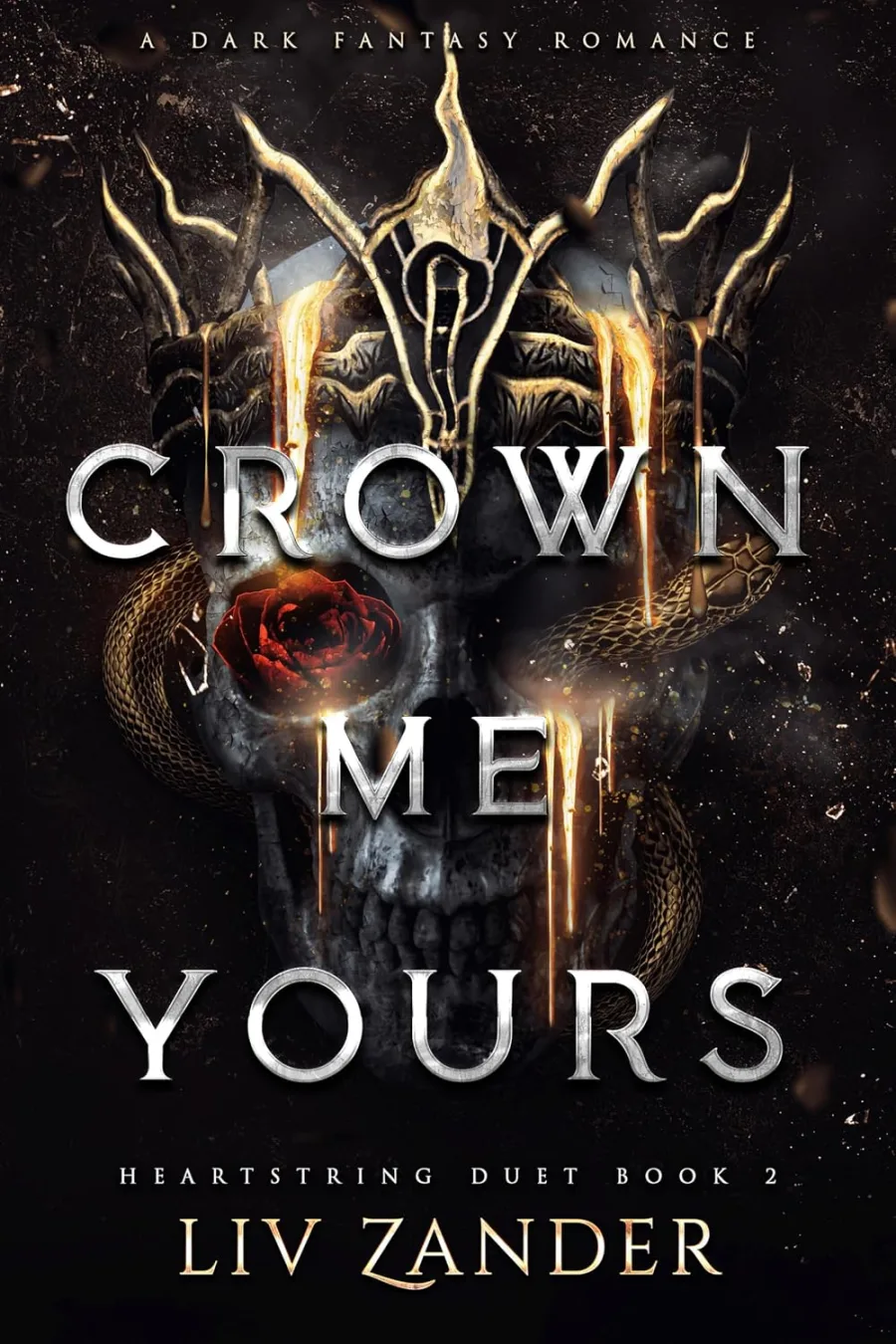
Download Cover Image
Do you want to download the full cover image for Crown Me Yours (Heartstring Duet Book 2)?