
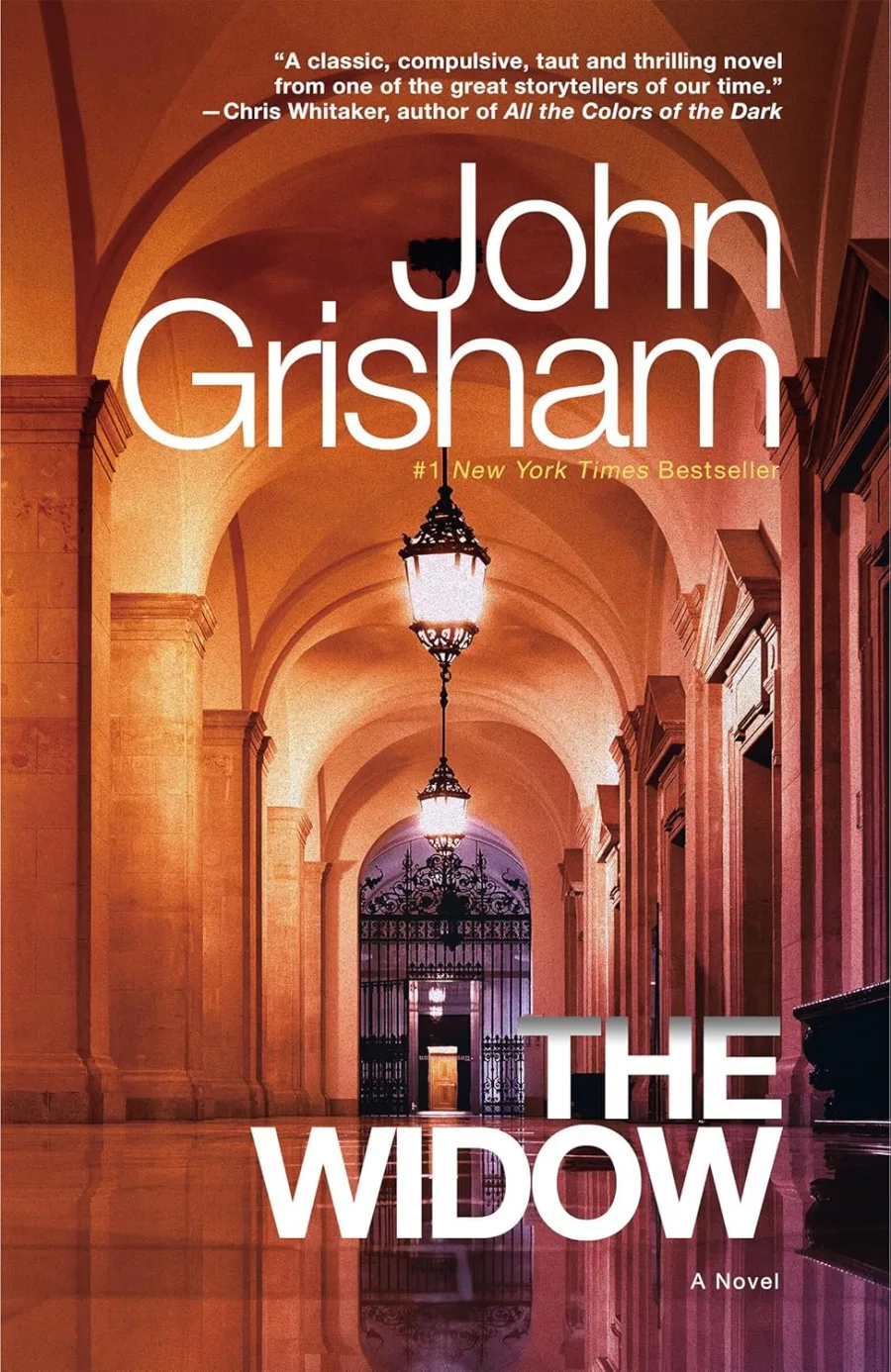
The Widow: A Novel
Paperback
• 416 Pages
• USD 20.00
• English
• 9780593685297
No ratings yet
| Publisher | Vintage |
|---|---|
| ISBN13 | 9780593685297 |
| ASIN/SKU | 0593685296 |
| Book Format | Paperback |
| Language | English |
| Pages | 416 |
| List Price | USD 20.00 |
| Publishing Date | 04/08/2026 |
| Dimensions | 5.13 x 0.86 x 7.98 inches |
| Weight | 10.4 ounces |
| Book Code | BD00070007 |
Buy this Book
Amazon Stores
Ebook Stores
Other Stores
Discover The Widow: A Novel by John Grisham. This book is published by Vintage in Paperback format, ISBN 9780593685297, ASIN 0593685296, under Mystery, Thriller and Suspense, Legal Thrillers, Suspense Thrillers.
Book Description
#1 NEW YORK TIMES BESTSELLER • John Grisham is the acclaimed master of the legal thriller. Now, he’s back with his first-ever whodunit, even more suspenseful than his courtroom dramas, as a small-time lawyer accused of murder races to find the real killer to clear his name.
“A classic, compulsive, taut and thrilling novel from one of the great storytellers of our time. The Widow is John Grisham at his irresistible, unforgettable best.”—Chris Whitaker, author of All the Colors of the Dark
Simon Latch is a lawyer in rural Virginia, making just enough to pay his bills while his marriage slowly falls apart. Then into his office walks Eleanor Barnett, an elderly widow in need of a new will. Apparently, her husband left her a small fortune, and no one knows about it.
Once he hooks the richest client of his career, Simon works quietly to keep her wealth under the radar. But soon her story begins to crack. When she is hospitalized after a car accident, Simon realizes that nothing is as it seems, and he finds himself on trial for a crime he swears he didn’t commit: murder.
Simon knows he’s innocent. But he also knows the circumstantial evidence is against him, and he could spend the rest of his life behind bars. To save himself, he must find the real killer….
Don’t miss John Grisham’s forthcoming thriller, The French Illusion!
“A classic, compulsive, taut and thrilling novel from one of the great storytellers of our time. The Widow is John Grisham at his irresistible, unforgettable best.”—Chris Whitaker, author of All the Colors of the Dark
Simon Latch is a lawyer in rural Virginia, making just enough to pay his bills while his marriage slowly falls apart. Then into his office walks Eleanor Barnett, an elderly widow in need of a new will. Apparently, her husband left her a small fortune, and no one knows about it.
Once he hooks the richest client of his career, Simon works quietly to keep her wealth under the radar. But soon her story begins to crack. When she is hospitalized after a car accident, Simon realizes that nothing is as it seems, and he finds himself on trial for a crime he swears he didn’t commit: murder.
Simon knows he’s innocent. But he also knows the circumstantial evidence is against him, and he could spend the rest of his life behind bars. To save himself, he must find the real killer….
Don’t miss John Grisham’s forthcoming thriller, The French Illusion!
Author Biography
John Grisham is the author of more than fifty consecutive #1 bestsellers, which have been translated into nearly fifty languages. His recent books include The Boys From Biloxi, The Judge's List, Sooley, and his third Jake Brigance novel, A Time for Mercy, which is being developed by HBO as a limited series.
Grisham is a two-time winner of the Harper Lee Prize for Legal Fiction and was honored with the Library of Congress Creative Achievement Award for Fiction.
When he's not writing, Grisham serves on the board of directors of the Innocence Project and of Centurion Ministries, two national organizations dedicated to exonerating those who have been wrongfully convicted. Much of his fiction explores deep-seated problems in our criminal justice system.
John lives on a farm in central Virginia.
Grisham is a two-time winner of the Harper Lee Prize for Legal Fiction and was honored with the Library of Congress Creative Achievement Award for Fiction.
When he's not writing, Grisham serves on the board of directors of the Innocence Project and of Centurion Ministries, two national organizations dedicated to exonerating those who have been wrongfully convicted. Much of his fiction explores deep-seated problems in our criminal justice system.
John lives on a farm in central Virginia.
Editorial Reviews
“A classic, compulsive, taut and thrilling novel from one of the great storytellers of our time. The Widow is John Grisham at his irresistible, unforgettable best. No one does it better.”—Chris Whitaker, New York Times bestselling author of All the Colors of the Dark
“A captivating legal whodunit . . . [Grisham’s] nuanced portrait of Latch demonstrates his gift for constructing morally flawed yet sympathetic characters. The author’s fans will be galvanized by this impressive return to form.”—Publishers Weekly
“A captivating legal whodunit . . . [Grisham’s] nuanced portrait of Latch demonstrates his gift for constructing morally flawed yet sympathetic characters. The author’s fans will be galvanized by this impressive return to form.”—Publishers Weekly
Book Summary
John Grisham’s The Widow is a gripping legal thriller and murder mystery centered on Simon Latch, a small-town lawyer whose ordinary and increasingly miserable life is transformed when an elderly widow walks into his office with an extraordinary secret. Simon has spent eighteen years practicing law in rural Virginia, handling bankruptcies, minor criminal cases, personal injury claims, and simple wills. The work has become repetitive and exhausting, while his personal life is falling apart. His marriage is failing, his finances are in serious trouble, and his gambling has made his problems even worse. He is a tired man who desperately wants a way out, and that desperation becomes the weakness that drives the entire story. Grisham presents the novel as his first whodunit, combining his familiar courtroom suspense with a murder mystery.
The turning point comes when eighty-five-year-old Eleanor “Netty” Barnett visits Simon to prepare a new will. At first, she appears to be an ordinary elderly woman with a modest lifestyle. But she soon reveals that she may be extraordinarily wealthy. According to Netty, her late husband secretly accumulated a fortune worth about twenty million dollars, including millions in stocks and cash. Almost nobody knows about the money. Simon immediately realizes that this could be the most important client he has ever had. For a lawyer struggling with debt and a collapsing marriage, the discovery seems like a chance to change his life completely. The official description of the novel emphasizes this contrast: Netty needs a lawyer, while Simon desperately needs a payday.
Simon should approach the situation professionally, but instead he begins making compromises. He becomes fascinated by Netty’s supposed fortune and starts thinking about how he might benefit from it. He keeps her wealth secret and works on a new will designed to give him a significant role in managing her estate. His actions are not initially those of a cold-blooded criminal. Instead, they grow out of small decisions that seem easy to justify. Simon tells himself that he is simply protecting his client and taking advantage of an opportunity that has finally come his way. But with every secret he keeps and every ethical line he crosses, he moves farther away from the responsible lawyer he should be.
Netty herself is an unusual and increasingly mysterious character. She has a complicated relationship with the people around her, particularly the members of her late husband’s family. Her story about the fortune sounds convincing enough to Simon at first, but there are details that do not quite fit together. As he digs deeper, he discovers that Netty has not been completely honest about her circumstances. The question of whether her fortune actually exists becomes one of the central mysteries of the novel. Simon, however, is so emotionally invested in the possibility of becoming wealthy that he does not want to look too closely at the warning signs.
The situation becomes much more dangerous after Netty is involved in a car accident and is taken to the hospital. What initially appears to be an unfortunate accident soon turns into something much more sinister. Netty becomes seriously ill, and eventually it is determined that she has been poisoned. Suddenly, the wealthy client Simon had hoped would rescue him from his financial troubles is dead—or dying—and the circumstances point toward murder. Even worse for Simon, the evidence begins to connect him to the crime. He had been unusually involved in Netty’s affairs, had access to her, had financial motives, and had behaved in ways that look suspicious when viewed from the outside.
Simon insists that he did not kill Netty, but innocence does not automatically protect him. The authorities build a case based largely on circumstances, and Simon soon finds himself facing the possibility of spending the rest of his life in prison. His legal knowledge, which once seemed like a source of security, now becomes painfully important. He understands exactly how dangerous the evidence against him can be. He also realizes that the truth may not be enough if he cannot prove it. The novel therefore turns into a race against time in which Simon must defend himself while also trying to discover who actually killed Netty.
One of the most interesting aspects of the story is that Simon is not presented as a completely innocent hero. He may not be the murderer, but he has made serious mistakes. His greed, dishonesty, and willingness to manipulate the situation have helped create the circumstances in which he now finds himself. This moral complexity gives the novel much of its tension. Readers are encouraged to sympathize with Simon because he is being accused of something he did not do, but they are also forced to recognize that his own poor choices contributed to his downfall. Grisham uses Simon to show how easily desperation can turn into moral compromise.
As the investigation develops, Simon begins to understand that Netty’s supposed fortune may have been part of a much larger deception. The mystery becomes not only “Who killed the widow?” but also “What was Netty really hiding?” The closer Simon comes to the truth, the more he realizes that he may have been manipulated from the beginning. The fortune that seemed to offer him an escape from his problems may never have been what he thought it was. His obsession with money prevented him from asking the questions he should have asked as a lawyer.
The search for the real killer eventually leads toward the hospital and the disturbing possibility that Netty’s death was connected to a much broader pattern. Simon begins uncovering evidence that points away from himself and toward another person involved in the hospital environment. The real killer has been able to exploit vulnerable patients while allowing suspicion to fall elsewhere. This discovery gives Simon his best chance of clearing his name, but proving the truth becomes increasingly difficult because the case against him has already taken on a life of its own.
The courtroom portions of the story highlight one of Grisham’s recurring concerns: the difference between truth and what can actually be proved in court. Simon knows that the justice system depends on evidence, but he also sees how easily circumstantial evidence, public opinion, and preconceived ideas can overwhelm the truth. His own questionable behavior makes matters worse because prosecutors can use his greed and secret dealings to construct a convincing story about motive. The tragedy is that Simon's unethical behavior does not make him guilty of murder, yet it makes him look exactly like the kind of person who could have committed the crime.
Eventually, the hidden truth begins to emerge. The supposed fortune is revealed to be far more complicated than Simon believed, and the investigation uncovers the real murderer. Simon’s conviction is ultimately overturned when evidence exposes the person actually responsible for the poisoning. The resolution makes clear that Simon was saved not because he had behaved perfectly, but because the truth about the murder could finally be established. His ordeal forces him to confront the consequences of his greed and the damage caused by his willingness to take shortcuts.
At its heart, The Widow is more than a murder mystery. It is a story about greed, desperation, deception, and the frightening consequences of compromising one’s principles. Simon begins the novel wanting only a little financial relief, but the promise of sudden wealth causes him to make decisions that eventually threaten his freedom and his life. Netty’s mysterious fortune becomes a trap, and the lawyer who thought he had finally found his lucky break discovers that his greatest opportunity may actually be his greatest danger. Grisham ultimately reminds readers that truth can be difficult to uncover when appearances, money, and self-interest get in the way. The novel’s greatest lesson is simple but powerful: one bad decision may not destroy a life immediately, but a series of small compromises can eventually create a disaster from which escape becomes almost impossible.
The turning point comes when eighty-five-year-old Eleanor “Netty” Barnett visits Simon to prepare a new will. At first, she appears to be an ordinary elderly woman with a modest lifestyle. But she soon reveals that she may be extraordinarily wealthy. According to Netty, her late husband secretly accumulated a fortune worth about twenty million dollars, including millions in stocks and cash. Almost nobody knows about the money. Simon immediately realizes that this could be the most important client he has ever had. For a lawyer struggling with debt and a collapsing marriage, the discovery seems like a chance to change his life completely. The official description of the novel emphasizes this contrast: Netty needs a lawyer, while Simon desperately needs a payday.
Simon should approach the situation professionally, but instead he begins making compromises. He becomes fascinated by Netty’s supposed fortune and starts thinking about how he might benefit from it. He keeps her wealth secret and works on a new will designed to give him a significant role in managing her estate. His actions are not initially those of a cold-blooded criminal. Instead, they grow out of small decisions that seem easy to justify. Simon tells himself that he is simply protecting his client and taking advantage of an opportunity that has finally come his way. But with every secret he keeps and every ethical line he crosses, he moves farther away from the responsible lawyer he should be.
Netty herself is an unusual and increasingly mysterious character. She has a complicated relationship with the people around her, particularly the members of her late husband’s family. Her story about the fortune sounds convincing enough to Simon at first, but there are details that do not quite fit together. As he digs deeper, he discovers that Netty has not been completely honest about her circumstances. The question of whether her fortune actually exists becomes one of the central mysteries of the novel. Simon, however, is so emotionally invested in the possibility of becoming wealthy that he does not want to look too closely at the warning signs.
The situation becomes much more dangerous after Netty is involved in a car accident and is taken to the hospital. What initially appears to be an unfortunate accident soon turns into something much more sinister. Netty becomes seriously ill, and eventually it is determined that she has been poisoned. Suddenly, the wealthy client Simon had hoped would rescue him from his financial troubles is dead—or dying—and the circumstances point toward murder. Even worse for Simon, the evidence begins to connect him to the crime. He had been unusually involved in Netty’s affairs, had access to her, had financial motives, and had behaved in ways that look suspicious when viewed from the outside.
Simon insists that he did not kill Netty, but innocence does not automatically protect him. The authorities build a case based largely on circumstances, and Simon soon finds himself facing the possibility of spending the rest of his life in prison. His legal knowledge, which once seemed like a source of security, now becomes painfully important. He understands exactly how dangerous the evidence against him can be. He also realizes that the truth may not be enough if he cannot prove it. The novel therefore turns into a race against time in which Simon must defend himself while also trying to discover who actually killed Netty.
One of the most interesting aspects of the story is that Simon is not presented as a completely innocent hero. He may not be the murderer, but he has made serious mistakes. His greed, dishonesty, and willingness to manipulate the situation have helped create the circumstances in which he now finds himself. This moral complexity gives the novel much of its tension. Readers are encouraged to sympathize with Simon because he is being accused of something he did not do, but they are also forced to recognize that his own poor choices contributed to his downfall. Grisham uses Simon to show how easily desperation can turn into moral compromise.
As the investigation develops, Simon begins to understand that Netty’s supposed fortune may have been part of a much larger deception. The mystery becomes not only “Who killed the widow?” but also “What was Netty really hiding?” The closer Simon comes to the truth, the more he realizes that he may have been manipulated from the beginning. The fortune that seemed to offer him an escape from his problems may never have been what he thought it was. His obsession with money prevented him from asking the questions he should have asked as a lawyer.
The search for the real killer eventually leads toward the hospital and the disturbing possibility that Netty’s death was connected to a much broader pattern. Simon begins uncovering evidence that points away from himself and toward another person involved in the hospital environment. The real killer has been able to exploit vulnerable patients while allowing suspicion to fall elsewhere. This discovery gives Simon his best chance of clearing his name, but proving the truth becomes increasingly difficult because the case against him has already taken on a life of its own.
The courtroom portions of the story highlight one of Grisham’s recurring concerns: the difference between truth and what can actually be proved in court. Simon knows that the justice system depends on evidence, but he also sees how easily circumstantial evidence, public opinion, and preconceived ideas can overwhelm the truth. His own questionable behavior makes matters worse because prosecutors can use his greed and secret dealings to construct a convincing story about motive. The tragedy is that Simon's unethical behavior does not make him guilty of murder, yet it makes him look exactly like the kind of person who could have committed the crime.
Eventually, the hidden truth begins to emerge. The supposed fortune is revealed to be far more complicated than Simon believed, and the investigation uncovers the real murderer. Simon’s conviction is ultimately overturned when evidence exposes the person actually responsible for the poisoning. The resolution makes clear that Simon was saved not because he had behaved perfectly, but because the truth about the murder could finally be established. His ordeal forces him to confront the consequences of his greed and the damage caused by his willingness to take shortcuts.
At its heart, The Widow is more than a murder mystery. It is a story about greed, desperation, deception, and the frightening consequences of compromising one’s principles. Simon begins the novel wanting only a little financial relief, but the promise of sudden wealth causes him to make decisions that eventually threaten his freedom and his life. Netty’s mysterious fortune becomes a trap, and the lawyer who thought he had finally found his lucky break discovers that his greatest opportunity may actually be his greatest danger. Grisham ultimately reminds readers that truth can be difficult to uncover when appearances, money, and self-interest get in the way. The novel’s greatest lesson is simple but powerful: one bad decision may not destroy a life immediately, but a series of small compromises can eventually create a disaster from which escape becomes almost impossible.
Sample Chapters
Sample Chapters will be added soon…
Reader Reviews
No reviews yet.
The Widow: A Novel
Download Cover Image
Do you want to download the full cover image for The Widow: A Novel?