
The Oxford Detective Society
eBook
• 280 Pages
• USD 16.99
• English
• 9781662538414
No ratings yet
| Publisher | Thomas & Mercer |
|---|---|
| ISBN13 | 9781662538414 |
| ASIN/SKU | B0FZWD5R37 |
| Book Format | eBook |
| Language | English |
| Pages | 280 |
| List Price | USD 16.99 |
| Publishing Date | 01/08/2026 |
| Book Code | BD00070009 |
Buy this Book
Amazon Stores
Ebook Stores
Other Stores
Discover The Oxford Detective Society by Faith Martin. This book is published by Thomas and Mercer in eBook format, ISBN 9781662538414, ASIN B0FZWD5R37, under Literature and Fiction, Books, Bookstores and Libraries Fiction, Women Sleuths.
Book Description
As the Oxford Detective Society tackle their first case, someone is determined that a long-buried mystery should stay hidden…
Oxford biographer Lyssa Moore is delighted to be commissioned to write about Amelia ‘Monty’ Montrose, the 1960s music icon who died mysteriously at her birthday party in 1966. But as Lyssa delves into Monty’s past, she discovers the wild child portrayed by the press was hiding far more than anyone knew.
And someone is taking a very keen interest in Lyssa’s research. Her flat has been broken into, her phone is acting strangely, and she has a feeling she is being followed. Is Lyssa getting too close to a dangerous truth—was there more to Monty’s death than a tragic accident?
With the help of her cat Bibbie and her Oxford friends, who form the Oxford Detective Society, Lyssa must uncover what really happened sixty years ago. Because in Oxfordshire’s country houses and picture-perfect gardens, the past refuses to stay buried…
From multimillion-copy bestseller Faith Martin comes the start of a brand-new, incredibly gripping murder mystery series, perfect for fans of LJ Ross, Emylia Hall and Rachel McLean.
Oxford biographer Lyssa Moore is delighted to be commissioned to write about Amelia ‘Monty’ Montrose, the 1960s music icon who died mysteriously at her birthday party in 1966. But as Lyssa delves into Monty’s past, she discovers the wild child portrayed by the press was hiding far more than anyone knew.
And someone is taking a very keen interest in Lyssa’s research. Her flat has been broken into, her phone is acting strangely, and she has a feeling she is being followed. Is Lyssa getting too close to a dangerous truth—was there more to Monty’s death than a tragic accident?
With the help of her cat Bibbie and her Oxford friends, who form the Oxford Detective Society, Lyssa must uncover what really happened sixty years ago. Because in Oxfordshire’s country houses and picture-perfect gardens, the past refuses to stay buried…
From multimillion-copy bestseller Faith Martin comes the start of a brand-new, incredibly gripping murder mystery series, perfect for fans of LJ Ross, Emylia Hall and Rachel McLean.
Author Biography
Faith Martin has been writing for over 30 years, and JOFFE BOOKS have reissued all of her popular, multi-million bestselling DI Hillary Greene novels in new updated editions, and are set to publish the new novels in this continuing series. Box sets are available. JOFFE have also reissued all her modern but classic-style whodunits featuring amateur sleuth/travelling cook Jenny Starling and vicar's wife Monica Noble. Her latest Hillary Greene novel, MURDER UNDER THE SUN has topped the New Release charts at No1 and is now available to order. I would be very grateful if you could leave an honest review of this book on US and UK amazon sites as I know my readers find this very helpful. Many thanks.
HARPERCOLLINS HQ, have published her series of 1960's-set Ryder & Loveday novels and she is currently busy writing a new series for HQ, set in the 1920's, which feature locked-roomed mysteries, the first of which, MURDER BY CANDLELIGHT and THE LAST WORD IS DEATH are now available.
HARPERCOLLINS HQ, have published her series of 1960's-set Ryder & Loveday novels and she is currently busy writing a new series for HQ, set in the 1920's, which feature locked-roomed mysteries, the first of which, MURDER BY CANDLELIGHT and THE LAST WORD IS DEATH are now available.
Editorial Reviews
I’ve been a huge fan of Faith Martin’s for many years and I am over the moon to be launching her brilliant mystery The Oxford Detective Society. Meet Lyssa Moore: skilled biographer, cat lover, and reluctant amateur sleuth? I flew through this pitch-perfect cozy mystery from our modern-day Agatha Christie and I can’t wait for readers to fall for this incredibly charming and utterly compelling novel.
—Maisie Lawrence, Editor
—Maisie Lawrence, Editor
Book Summary
The Oxford Detective Society by Faith Martin introduces Lyssa Moore, a talented biographer and ghostwriter living in Oxford who has built her reputation on careful research and honest storytelling. She is not a professional detective, nor does she set out looking for a crime to solve. Her work is usually about reconstructing the lives of other people, separating fact from gossip and trying to understand the real person behind the public image. That changes when she receives an unusual commission: to write the biography of Amelia “Monty” Montrose, a glamorous young woman who became associated with the British music scene of the 1960s and died under mysterious circumstances decades earlier.
Monty had once been portrayed as a wealthy, beautiful, reckless young woman who lived the kind of exciting life that seemed perfectly suited to the 1960s. She was closely connected with a successful rock band and, in particular, with its charismatic lead singer. To the outside world, she appeared to be a classic celebrity figure of the era: privileged, adventurous, and surrounded by music, parties, romance, and wealth. Yet Lyssa soon discovers that this familiar image is incomplete. The more she investigates Monty’s life, the more she realizes that the woman described by newspapers and people who remembered the period may have had very little resemblance to the real person. Monty had private struggles, complicated relationships, and secrets that were never properly understood.
The central mystery begins with Monty’s death in the 1960s. She died at a relatively young age, and the circumstances surrounding her death have never completely satisfied those who knew her story. The accepted explanation leaves room for doubt, and Lyssa begins to wonder whether what happened was really an accident, suicide, or something more deliberate. Because more than half a century has passed, there is no conventional crime scene for her to examine and no living suspect waiting to be questioned. Instead, Lyssa has to reconstruct the past through memories, family stories, old possessions, documents, and conversations with people connected to Monty and the people who surrounded her.
This becomes one of the novel’s most interesting features. Lyssa essentially investigates the past by interviewing people who inherited memories of it. Some actually knew Monty, while others know her through parents, grandparents, family friends, or stories that have been repeated for generations. But memories are unreliable. People remember events differently, sometimes because they genuinely recall them differently and sometimes because they have reasons for hiding or changing the truth. As Lyssa patiently talks to one person after another, apparently small details begin to connect. A story that initially seems harmless may reveal a contradiction, while a forgotten object or family document can suddenly give an old event a completely different meaning.
Lyssa’s investigation also reveals that Monty’s death cannot be separated from the people around her. The glamorous world of 1960s music had its own rivalries, ambitions, romances, resentments, and opportunities for people to profit from fame. Monty was connected to several individuals whose lives were changed by the success of the band and its singer. As Lyssa digs deeper, she begins to recognize that different people have different versions of what happened. Some want Monty remembered sympathetically, while others have reasons for protecting the reputation of people who were close to her. The biography therefore becomes much more than a straightforward account of a famous woman’s life. It becomes an attempt to recover a truth that several people have spent decades misunderstanding or deliberately concealing.
At the same time, Lyssa discovers that her research is attracting unwanted attention. Her flat is broken into, her phone behaves strangely, and she develops the uncomfortable feeling that someone is watching her. The danger becomes increasingly difficult to dismiss as coincidence. Someone appears to know what she is researching and how far she has progressed. This gives the old mystery a frightening new dimension: if Monty’s death happened so long ago, why would anyone in the present still care enough to interfere with Lyssa’s work? Her investigation has apparently touched something that someone desperately wants to remain buried.
Lyssa is not completely alone. Her Oxford friends and neighbours gradually become involved in her investigation, and their informal discussions eventually lead to the playful name “the Oxford Detective Society.” The group gives the story much of its cosy character. Lyssa can return from an interview and discuss what she has discovered with people she trusts, testing theories and considering possibilities that she might otherwise overlook. Her cat, Bibbie, is another charming presence in her life. The friendships also give the mystery a warmer human dimension, balancing the darker aspects of the investigation.
Yet the story remains primarily Lyssa’s investigation. Her greatest strength is not physical courage or detective training but her ability to listen. She understands that a biography is built from fragments, and she is willing to sit patiently with people until they reveal something important. This makes her approach different from that of a traditional police detective. She is interested not only in discovering what happened but also in understanding why people behaved as they did. In this sense, the novel becomes a study of memory, grief, reputation, and the ways people reshape the past to make it easier to live with.
The 1960s setting of the original mystery adds another layer to the story. Through the memories of the people Lyssa interviews, the novel recreates a world of changing social attitudes, popular music, celebrity culture, country houses, parties, and youthful rebellion. But beneath the nostalgic surface lies a more complicated reality. The glamorous image of the decade hides personal pain, unequal relationships, family tensions, and people whose lives were permanently affected by the choices made during those years.
As Lyssa gets closer to the truth, the mystery becomes increasingly personal and dangerous. The threats against her suggest that someone is willing to go to considerable lengths to prevent the past from being examined too closely. Eventually, the various strands of Monty’s story begin to come together, allowing Lyssa to challenge the accepted version of her death and understand what really happened. The resolution also demonstrates how a tragedy can become distorted over time, especially when the people involved have their own motives, regrets, and secrets.
At its heart, The Oxford Detective Society is a gentle but suspenseful mystery about the difference between the person we remember and the person who actually lived. Faith Martin combines a contemporary Oxford setting with a mystery rooted in the 1960s, creating a story in which the past continually reaches into the present. Lyssa’s search for the truth about Monty is also a search for justice: not necessarily legal justice after so many years, but the simpler human justice of allowing someone to be remembered accurately. The novel establishes Lyssa and her circle of friends as an appealing amateur-detective team while leaving plenty of room for future mysteries.
Monty had once been portrayed as a wealthy, beautiful, reckless young woman who lived the kind of exciting life that seemed perfectly suited to the 1960s. She was closely connected with a successful rock band and, in particular, with its charismatic lead singer. To the outside world, she appeared to be a classic celebrity figure of the era: privileged, adventurous, and surrounded by music, parties, romance, and wealth. Yet Lyssa soon discovers that this familiar image is incomplete. The more she investigates Monty’s life, the more she realizes that the woman described by newspapers and people who remembered the period may have had very little resemblance to the real person. Monty had private struggles, complicated relationships, and secrets that were never properly understood.
The central mystery begins with Monty’s death in the 1960s. She died at a relatively young age, and the circumstances surrounding her death have never completely satisfied those who knew her story. The accepted explanation leaves room for doubt, and Lyssa begins to wonder whether what happened was really an accident, suicide, or something more deliberate. Because more than half a century has passed, there is no conventional crime scene for her to examine and no living suspect waiting to be questioned. Instead, Lyssa has to reconstruct the past through memories, family stories, old possessions, documents, and conversations with people connected to Monty and the people who surrounded her.
This becomes one of the novel’s most interesting features. Lyssa essentially investigates the past by interviewing people who inherited memories of it. Some actually knew Monty, while others know her through parents, grandparents, family friends, or stories that have been repeated for generations. But memories are unreliable. People remember events differently, sometimes because they genuinely recall them differently and sometimes because they have reasons for hiding or changing the truth. As Lyssa patiently talks to one person after another, apparently small details begin to connect. A story that initially seems harmless may reveal a contradiction, while a forgotten object or family document can suddenly give an old event a completely different meaning.
Lyssa’s investigation also reveals that Monty’s death cannot be separated from the people around her. The glamorous world of 1960s music had its own rivalries, ambitions, romances, resentments, and opportunities for people to profit from fame. Monty was connected to several individuals whose lives were changed by the success of the band and its singer. As Lyssa digs deeper, she begins to recognize that different people have different versions of what happened. Some want Monty remembered sympathetically, while others have reasons for protecting the reputation of people who were close to her. The biography therefore becomes much more than a straightforward account of a famous woman’s life. It becomes an attempt to recover a truth that several people have spent decades misunderstanding or deliberately concealing.
At the same time, Lyssa discovers that her research is attracting unwanted attention. Her flat is broken into, her phone behaves strangely, and she develops the uncomfortable feeling that someone is watching her. The danger becomes increasingly difficult to dismiss as coincidence. Someone appears to know what she is researching and how far she has progressed. This gives the old mystery a frightening new dimension: if Monty’s death happened so long ago, why would anyone in the present still care enough to interfere with Lyssa’s work? Her investigation has apparently touched something that someone desperately wants to remain buried.
Lyssa is not completely alone. Her Oxford friends and neighbours gradually become involved in her investigation, and their informal discussions eventually lead to the playful name “the Oxford Detective Society.” The group gives the story much of its cosy character. Lyssa can return from an interview and discuss what she has discovered with people she trusts, testing theories and considering possibilities that she might otherwise overlook. Her cat, Bibbie, is another charming presence in her life. The friendships also give the mystery a warmer human dimension, balancing the darker aspects of the investigation.
Yet the story remains primarily Lyssa’s investigation. Her greatest strength is not physical courage or detective training but her ability to listen. She understands that a biography is built from fragments, and she is willing to sit patiently with people until they reveal something important. This makes her approach different from that of a traditional police detective. She is interested not only in discovering what happened but also in understanding why people behaved as they did. In this sense, the novel becomes a study of memory, grief, reputation, and the ways people reshape the past to make it easier to live with.
The 1960s setting of the original mystery adds another layer to the story. Through the memories of the people Lyssa interviews, the novel recreates a world of changing social attitudes, popular music, celebrity culture, country houses, parties, and youthful rebellion. But beneath the nostalgic surface lies a more complicated reality. The glamorous image of the decade hides personal pain, unequal relationships, family tensions, and people whose lives were permanently affected by the choices made during those years.
As Lyssa gets closer to the truth, the mystery becomes increasingly personal and dangerous. The threats against her suggest that someone is willing to go to considerable lengths to prevent the past from being examined too closely. Eventually, the various strands of Monty’s story begin to come together, allowing Lyssa to challenge the accepted version of her death and understand what really happened. The resolution also demonstrates how a tragedy can become distorted over time, especially when the people involved have their own motives, regrets, and secrets.
At its heart, The Oxford Detective Society is a gentle but suspenseful mystery about the difference between the person we remember and the person who actually lived. Faith Martin combines a contemporary Oxford setting with a mystery rooted in the 1960s, creating a story in which the past continually reaches into the present. Lyssa’s search for the truth about Monty is also a search for justice: not necessarily legal justice after so many years, but the simpler human justice of allowing someone to be remembered accurately. The novel establishes Lyssa and her circle of friends as an appealing amateur-detective team while leaving plenty of room for future mysteries.
Sample Chapters
Sample Chapters will be added soon…
Reader Reviews
No reviews yet.
The Oxford Detective Society
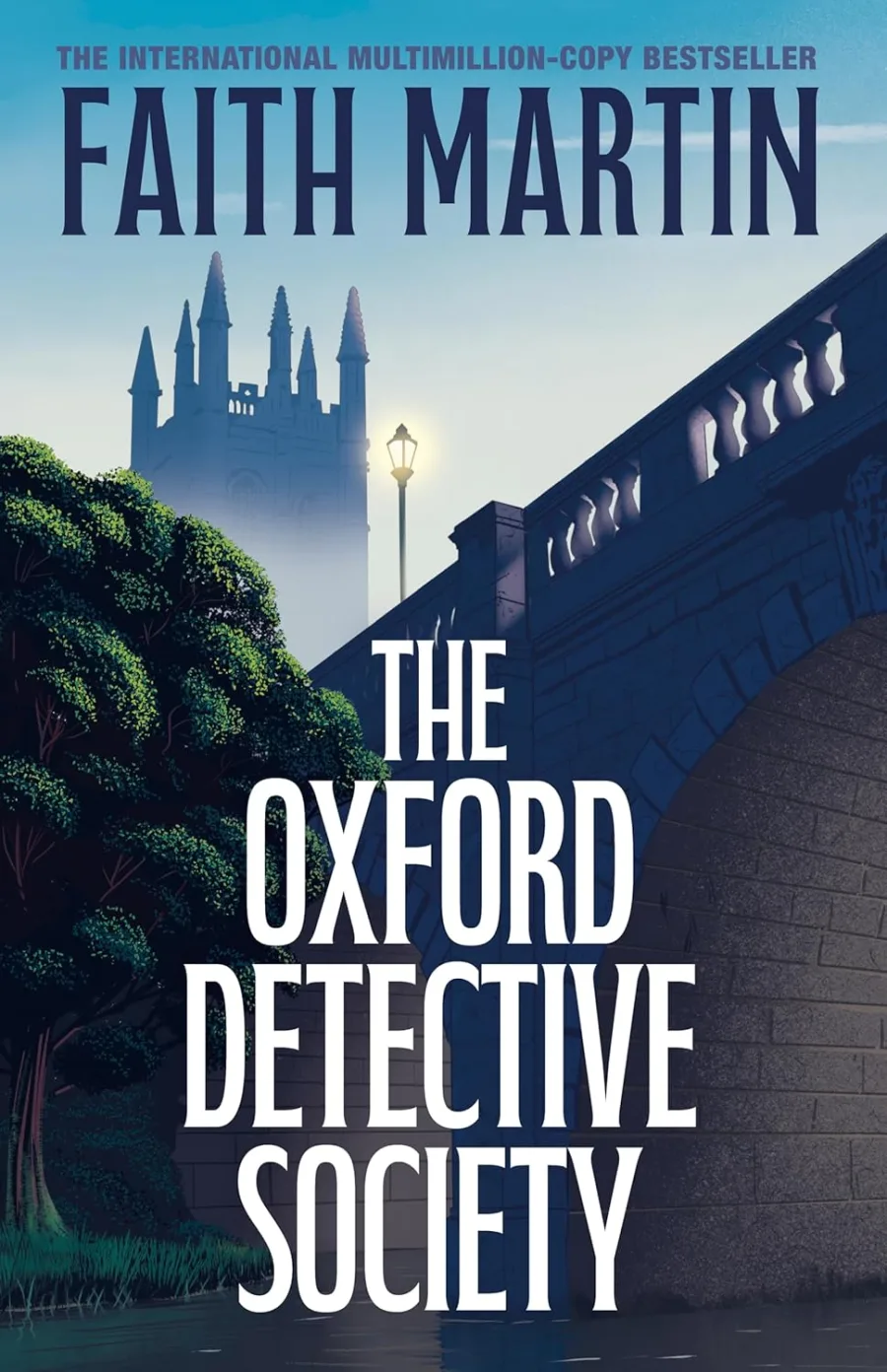
Download Cover Image
Do you want to download the full cover image for The Oxford Detective Society?