
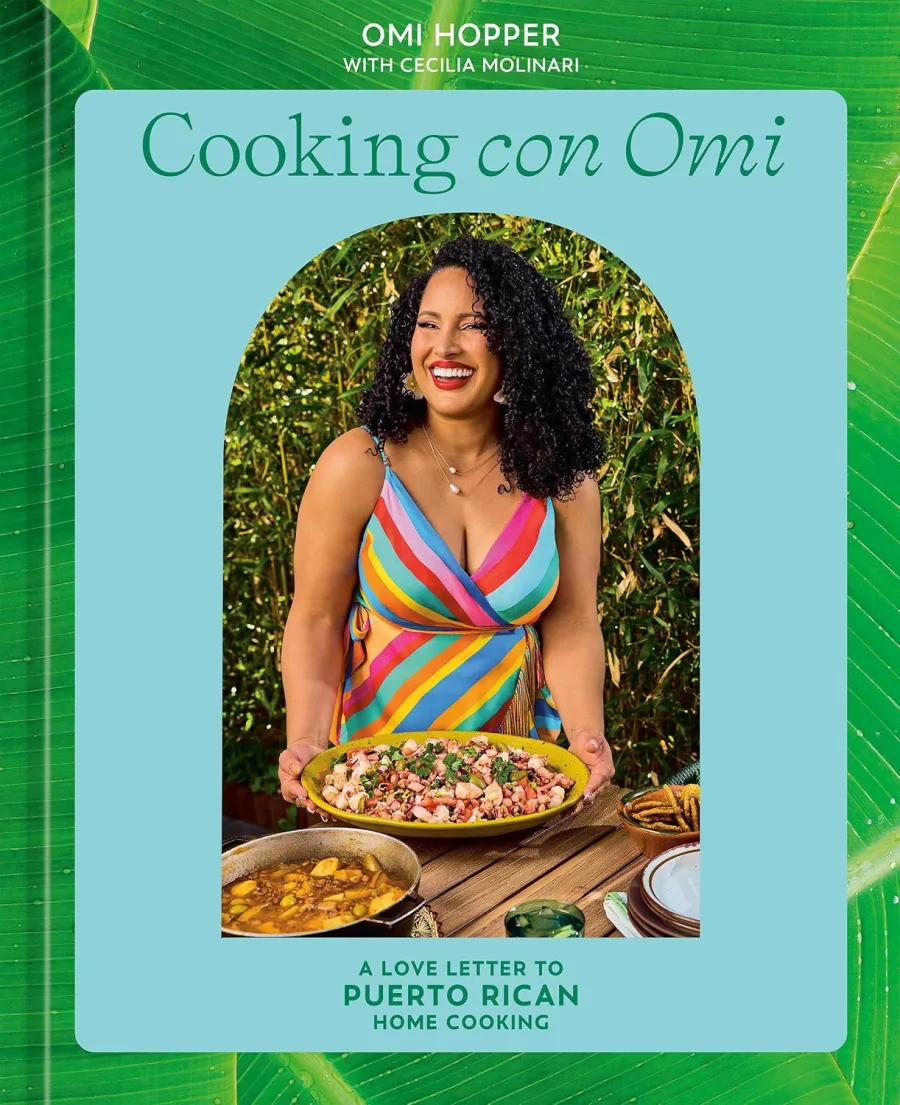
Cooking con Omi: A Love Letter to Puerto Rican Home Cooking
Hardcover
• 256 Pages
• USD 32.99
• English
• 9780593837689
No ratings yet
| Publisher | Ten Speed Press |
|---|---|
| ISBN13 | 9780593837689 |
| ASIN/SKU | 0593837681 |
| Book Format | Hardcover |
| Language | English |
| Pages | 256 |
| List Price | USD 32.99 |
| Publishing Date | 11/08/2026 |
| Dimensions | 7.66 x 0.92 x 9.4 inches |
| Weight | 2.06 pounds |
| Book Code | BD00070149 |
Buy this Book
Amazon Stores
Ebook Stores
Other Stores
Discover Cooking con Omi: A Love Letter to Puerto Rican Home Cooking by Omi Hopper. This book is published by Ten Speed Press in Hardcover format, ISBN 9780593837689, ASIN 0593837681, under Cookbooks, Food and Wine, Latin American Cooking, Food and Wine, Caribbean and West Indian Cooking and Wine.
Book Description
A love letter to Puerto Rican cooking through 100 recipes interwoven with stories, histories, and traditions that shine with joy and a celebratory spirit, from TikTok star and Next Level Chef runner-up Omi Hopper
“Omi is truly an incredible cook—trust me, I saw it firsthand. It’s so exciting to see her passion put into every page of Cooking con Omi. You’re in for quite the treat!”—Gordon Ramsay
Growing up in Puerto Rico, food had as much of an impact on Omi Hopper’s life as the culture. When her family moved to the mainland, Omi began to lose her connection with the island. So, she started cookingconomi to tie her life as a wife and mother to her desire to keep her culture alive and thriving.
Cooking con Omi is a celebration of Puerto Rican cooking with 100 classic and US-influenced Latino dishes that capture the vibrant, warm, and lively essence of Puerto Rican culture, including:
· Tostadas Francesas de Pasta de Guayaba y Queso / Guava and Cheese French Toast
· Guanimes en Coco con Bacalao Guisado / Coconut Dumplings with Stewed Codfish
· Mofongo / Mashed Plantain with Garlic and Pork Crackling
· Sanocho / Hearty Meat and Vegetable Stew
· Pernil / Roasted Pork
· Flancocho de Chocolate y Dulce de Leche / Chocolate and Dulce de Leche Flancocho
· Bizcocho Nube de Parcha / Passionfruit Cloud Cake
For Omi, cooking is not a task or a chore, but a memory-making experience. It’s the crush of garlic in a pilón, the scent of sizzling sofrito, the bubbling of the caldero alongside the music and laughter of a full house of loved ones settling down to eat. Each section includes an introduction from Omi, sidebars about the origin of ingredients, headnotes with the stories behind each recipe, vibrant full-color photography, and an overall message of love and unity Omi communicates through her food.
Ultimately, Cooking con Omi is a culinary record about the power of food to keep tradition alive. For some, it will be a chance to visit Puerto Rico through these mouthwatering dishes; for others, it will be a way back home.
“Omi is truly an incredible cook—trust me, I saw it firsthand. It’s so exciting to see her passion put into every page of Cooking con Omi. You’re in for quite the treat!”—Gordon Ramsay
Growing up in Puerto Rico, food had as much of an impact on Omi Hopper’s life as the culture. When her family moved to the mainland, Omi began to lose her connection with the island. So, she started cookingconomi to tie her life as a wife and mother to her desire to keep her culture alive and thriving.
Cooking con Omi is a celebration of Puerto Rican cooking with 100 classic and US-influenced Latino dishes that capture the vibrant, warm, and lively essence of Puerto Rican culture, including:
· Tostadas Francesas de Pasta de Guayaba y Queso / Guava and Cheese French Toast
· Guanimes en Coco con Bacalao Guisado / Coconut Dumplings with Stewed Codfish
· Mofongo / Mashed Plantain with Garlic and Pork Crackling
· Sanocho / Hearty Meat and Vegetable Stew
· Pernil / Roasted Pork
· Flancocho de Chocolate y Dulce de Leche / Chocolate and Dulce de Leche Flancocho
· Bizcocho Nube de Parcha / Passionfruit Cloud Cake
For Omi, cooking is not a task or a chore, but a memory-making experience. It’s the crush of garlic in a pilón, the scent of sizzling sofrito, the bubbling of the caldero alongside the music and laughter of a full house of loved ones settling down to eat. Each section includes an introduction from Omi, sidebars about the origin of ingredients, headnotes with the stories behind each recipe, vibrant full-color photography, and an overall message of love and unity Omi communicates through her food.
Ultimately, Cooking con Omi is a culinary record about the power of food to keep tradition alive. For some, it will be a chance to visit Puerto Rico through these mouthwatering dishes; for others, it will be a way back home.
Author Biography
Omallys “Omi” Hopper is the creator behind the popular platform Cooking Con Omi, where she celebrates the vibrant flavors and traditions of Puerto Rican cuisine. Born in Río Grande, Puerto Rico and raised in Providence, Rhode Island, Omi’s passion for cooking blossomed during the COVID-19 pandemic when she began sharing her family’s recipes online. Her authentic approach and infectious personality quickly earned her a devoted following across TikTok, Instagram, and YouTube, now reaching nearly one million fans.
A former professional makeup artist turned culinary storyteller, Omi has appeared on Univision’s “Despierta América”, CBS Mornings, The Today Show, and was a semifinalist on Gordon Ramsay’s hit competition Next Level Chef. She was honored as a trailblazer at the National Puerto Rican Day Parade and continues to champion Puerto Rican food culture through her content, products like Sofrito Fresquecito, and now her debut cookbook.
Cooking con Omi is Omi’s heartfelt tribute to the dishes that shaped her life, a collection of 100 recipes interwoven with stories, traditions, and the joy of gathering around the table. Omi lives in Rhode Island with her husband and four sons, where she continues to share her love for food, family, and heritage.
A former professional makeup artist turned culinary storyteller, Omi has appeared on Univision’s “Despierta América”, CBS Mornings, The Today Show, and was a semifinalist on Gordon Ramsay’s hit competition Next Level Chef. She was honored as a trailblazer at the National Puerto Rican Day Parade and continues to champion Puerto Rican food culture through her content, products like Sofrito Fresquecito, and now her debut cookbook.
Cooking con Omi is Omi’s heartfelt tribute to the dishes that shaped her life, a collection of 100 recipes interwoven with stories, traditions, and the joy of gathering around the table. Omi lives in Rhode Island with her husband and four sons, where she continues to share her love for food, family, and heritage.
Editorial Reviews
“Omi is truly an incredible cook—trust me, I saw it firsthand. It’s so exciting to see her passion put into every page of Cooking con Omi. You’re in for quite the treat!”—Gordon Ramsay, Michelin-starred chef, restaurateur, author, and television personality
“Omi brings such amazing heart and soul to her cooking! Her joyful spirit resonates in every recipe, story, and photograph. A true light in this world, Cooking con Omi celebrates Puerto Rican cuisine in such an incredibly thoughtful, beautiful way.”—Nyesha Arrington, chef, television personality, and restaurateur
“Omi’s warmth and personal story are woven into every dish in Cooking con Omi. Her cooking lingers not just because of the flavors, but because each recipe tells a story—one baked with charm, heritage, and her own remarkable journey.”—David Begnaud, CBS news contributor and host of Beg-Knows America
“From the moment I saw Omi, I was struck by how talented, personable, and genuinely awesome she is. What a pleasant surprise to discover that the honest, vibrant energy you see online and on TV is exactly the same in person. Needless to say, I am absolutely thrilled about Cooking con Omi. Experiencing Omi’s way of celebrating Puerto Rican cuisine—and the island she so deeply loves—through her food is an absolute treat. I will devour every page and savor her essence in every dish and every word.”—Roselyn Sánchez, actress and singer-songwriter
“The heart of Cooking con Omi is rooted in Omi’s Puerto Rican heritage. Blended with her culinary vision, her cooking, and her essence, Omi is always authentic.”—Ivy Queen, rapper, singer, and actress
“There are books that teach you how to cook and others that take you on a journey. Cooking con Omi does both with warmth and technique, and Omi fills her recipes with flavor and love for our culture. This book deserves a permanent place in every kitchen.”—Raúl Correa Soto, chef and restaurateur of BACOA Finca + Fogón and Aldeana
“Completely unpretentious, every dish welcomes food lovers to the table, speaking to family, love, and truly wanting to make others happy. Fans and newbies will enjoy the story of Hopper’s foodie rise through social media and the reminder that new beginnings are possible at nearly any stage of life.”—Booklist
“Omi brings such amazing heart and soul to her cooking! Her joyful spirit resonates in every recipe, story, and photograph. A true light in this world, Cooking con Omi celebrates Puerto Rican cuisine in such an incredibly thoughtful, beautiful way.”—Nyesha Arrington, chef, television personality, and restaurateur
“Omi’s warmth and personal story are woven into every dish in Cooking con Omi. Her cooking lingers not just because of the flavors, but because each recipe tells a story—one baked with charm, heritage, and her own remarkable journey.”—David Begnaud, CBS news contributor and host of Beg-Knows America
“From the moment I saw Omi, I was struck by how talented, personable, and genuinely awesome she is. What a pleasant surprise to discover that the honest, vibrant energy you see online and on TV is exactly the same in person. Needless to say, I am absolutely thrilled about Cooking con Omi. Experiencing Omi’s way of celebrating Puerto Rican cuisine—and the island she so deeply loves—through her food is an absolute treat. I will devour every page and savor her essence in every dish and every word.”—Roselyn Sánchez, actress and singer-songwriter
“The heart of Cooking con Omi is rooted in Omi’s Puerto Rican heritage. Blended with her culinary vision, her cooking, and her essence, Omi is always authentic.”—Ivy Queen, rapper, singer, and actress
“There are books that teach you how to cook and others that take you on a journey. Cooking con Omi does both with warmth and technique, and Omi fills her recipes with flavor and love for our culture. This book deserves a permanent place in every kitchen.”—Raúl Correa Soto, chef and restaurateur of BACOA Finca + Fogón and Aldeana
“Completely unpretentious, every dish welcomes food lovers to the table, speaking to family, love, and truly wanting to make others happy. Fans and newbies will enjoy the story of Hopper’s foodie rise through social media and the reminder that new beginnings are possible at nearly any stage of life.”—Booklist
Book Summary
Cooking con Omi: A Love Letter to Puerto Rican Home Cooking by Omi Hopper is much more than a collection of recipes. It is a warm and deeply personal celebration of Puerto Rican food, family, memory, culture, and belonging. Through 100 recipes, Hopper brings together traditional Puerto Rican dishes and creative, U.S.-influenced Latino recipes while sharing the stories and emotions connected to the food. The book grew out of her own experience of being raised in Puerto Rico and later moving to the mainland, where she felt herself becoming more distant from the island and the culture that had shaped her. Cooking became her way of finding that connection again and, at the same time, passing it on to her own family.
For Hopper, food is closely tied to identity. Her memories of Puerto Rico are not simply memories of particular meals but of sounds, smells, people, celebrations, and family gatherings. The image of garlic being crushed in a pilón, sofrito sizzling in a pan, and a caldero bubbling on the stove represents an entire way of life. Food brings people into the same room, starts conversations, creates traditions, and gives families something they can share across generations. This is why Hopper sees cooking as a memory-making experience rather than a daily chore. Every recipe carries something of the person who prepared it and the people who sat around the table to enjoy it.
The book begins from this emotional connection and gradually opens the door to the wider world of Puerto Rican home cooking. Rather than presenting the cuisine as something distant or complicated, Hopper makes it feel welcoming and approachable. Her recipes are rooted in familiar ingredients and traditional techniques, but she also shows how food changes when people move, adapt, and make new homes. The result is a cookbook that respects tradition without suggesting that tradition must remain frozen in time. Puerto Rican food, in Hopper's telling, is alive. It can travel, change, absorb new influences, and still remain connected to where it came from.
Among the recipes are dishes that represent some of the best-known flavors of Puerto Rican cooking. Mofongo, made with mashed plantains, garlic, and pork cracklings, reflects the satisfying richness of the island's cooking. Pernil brings the slow-roasted comfort of seasoned pork to the table, while sancocho offers the kind of hearty meat and vegetable stew that feels especially suited to a large family meal. There are also dishes featuring salted cod, including guanimes with coconut and stewed codfish, along with other preparations that show how one important ingredient can appear in several different forms.
Hopper also makes room for foods that demonstrate the playful and creative side of her cooking. Breakfast recipes include guava and cheese French toast inspired by the flavors of a traditional pastelillo, as well as a piña colada French toast casserole that transforms the familiar tropical drink into a comforting morning dish. These recipes show how Hopper takes flavors associated with Puerto Rico and reimagines them in ways that are accessible to contemporary home cooks. Her cooking does not treat creativity as a rejection of tradition. Instead, creativity becomes another way of keeping tradition alive.
The book's range extends beyond everyday meals. Hopper includes Puerto Rican street foods, drinks, desserts, and dishes suitable for larger gatherings. Recipes such as alcapurrias bring the experience of island street food into the home, while desserts such as chocolate and dulce de leche flancocho and passionfruit cloud cake provide a sweeter expression of the same generous spirit. The variety is important because Puerto Rican cooking is not presented as one narrow style of food. It encompasses ordinary family meals, celebrations, snacks, special occasions, and the little treats that become part of childhood memories.
Another important part of the book is the personal storytelling that accompanies the recipes. Hopper includes introductions, recipe headnotes, and explanations of ingredients and their origins, allowing readers to understand not only how a dish is prepared but why it matters. One example is the attention given to salted cod and its connection to Hopper's grandfather. These stories make the recipes feel less like instructions printed on a page and more like pieces of family history being handed from one generation to another.
The photographs and step-by-step guidance add another welcoming element. The book contains vibrant full-color photography, including photographs accompanying the recipes, and provides ingredients in both volume and weight measurements. The visual approach makes the food especially inviting while also helping readers understand how the dishes should look as they come together. Hopper's kitchen wisdom and practical tips further reinforce the idea that cooking should be enjoyable rather than intimidating.
At a deeper level, Cooking con Omi is about what happens when a person realizes that culture can be lost if it is not actively remembered and shared. Hopper's move away from Puerto Rico created a distance between her and the place she came from, but cooking gave her a way to cross that distance. By preparing the foods she grew up with, she could reconnect with her childhood, her family, and the island. By teaching those recipes to her children and sharing them with a wider audience, she could make sure those traditions continued beyond her own generation. The cookbook therefore becomes a form of cultural preservation.
Yet the book never feels like a solemn history lesson. Its tone is joyful, generous, and full of affection. Hopper wants people to cook, eat, laugh, experiment, and bring others to the table. Her message is that food becomes most meaningful when it is shared. Whether someone has Puerto Rican roots or has never tasted these dishes before, the recipes offer an invitation to participate in the culture through food.
Ultimately, Cooking con Omi is a love letter in the truest sense. It is Hopper's way of honoring Puerto Rico, her family, her memories, and the traditions that helped shape her. At the same time, it is an invitation for readers to create their own memories in the kitchen. The book shows that recipes can be more than instructions for making dinner: they can carry history, preserve identity, bring families closer, and help people find their way back to a place they may have thought they had left behind. For some readers, the cookbook offers a delicious introduction to Puerto Rican culture; for others, it may feel like returning home.
For Hopper, food is closely tied to identity. Her memories of Puerto Rico are not simply memories of particular meals but of sounds, smells, people, celebrations, and family gatherings. The image of garlic being crushed in a pilón, sofrito sizzling in a pan, and a caldero bubbling on the stove represents an entire way of life. Food brings people into the same room, starts conversations, creates traditions, and gives families something they can share across generations. This is why Hopper sees cooking as a memory-making experience rather than a daily chore. Every recipe carries something of the person who prepared it and the people who sat around the table to enjoy it.
The book begins from this emotional connection and gradually opens the door to the wider world of Puerto Rican home cooking. Rather than presenting the cuisine as something distant or complicated, Hopper makes it feel welcoming and approachable. Her recipes are rooted in familiar ingredients and traditional techniques, but she also shows how food changes when people move, adapt, and make new homes. The result is a cookbook that respects tradition without suggesting that tradition must remain frozen in time. Puerto Rican food, in Hopper's telling, is alive. It can travel, change, absorb new influences, and still remain connected to where it came from.
Among the recipes are dishes that represent some of the best-known flavors of Puerto Rican cooking. Mofongo, made with mashed plantains, garlic, and pork cracklings, reflects the satisfying richness of the island's cooking. Pernil brings the slow-roasted comfort of seasoned pork to the table, while sancocho offers the kind of hearty meat and vegetable stew that feels especially suited to a large family meal. There are also dishes featuring salted cod, including guanimes with coconut and stewed codfish, along with other preparations that show how one important ingredient can appear in several different forms.
Hopper also makes room for foods that demonstrate the playful and creative side of her cooking. Breakfast recipes include guava and cheese French toast inspired by the flavors of a traditional pastelillo, as well as a piña colada French toast casserole that transforms the familiar tropical drink into a comforting morning dish. These recipes show how Hopper takes flavors associated with Puerto Rico and reimagines them in ways that are accessible to contemporary home cooks. Her cooking does not treat creativity as a rejection of tradition. Instead, creativity becomes another way of keeping tradition alive.
The book's range extends beyond everyday meals. Hopper includes Puerto Rican street foods, drinks, desserts, and dishes suitable for larger gatherings. Recipes such as alcapurrias bring the experience of island street food into the home, while desserts such as chocolate and dulce de leche flancocho and passionfruit cloud cake provide a sweeter expression of the same generous spirit. The variety is important because Puerto Rican cooking is not presented as one narrow style of food. It encompasses ordinary family meals, celebrations, snacks, special occasions, and the little treats that become part of childhood memories.
Another important part of the book is the personal storytelling that accompanies the recipes. Hopper includes introductions, recipe headnotes, and explanations of ingredients and their origins, allowing readers to understand not only how a dish is prepared but why it matters. One example is the attention given to salted cod and its connection to Hopper's grandfather. These stories make the recipes feel less like instructions printed on a page and more like pieces of family history being handed from one generation to another.
The photographs and step-by-step guidance add another welcoming element. The book contains vibrant full-color photography, including photographs accompanying the recipes, and provides ingredients in both volume and weight measurements. The visual approach makes the food especially inviting while also helping readers understand how the dishes should look as they come together. Hopper's kitchen wisdom and practical tips further reinforce the idea that cooking should be enjoyable rather than intimidating.
At a deeper level, Cooking con Omi is about what happens when a person realizes that culture can be lost if it is not actively remembered and shared. Hopper's move away from Puerto Rico created a distance between her and the place she came from, but cooking gave her a way to cross that distance. By preparing the foods she grew up with, she could reconnect with her childhood, her family, and the island. By teaching those recipes to her children and sharing them with a wider audience, she could make sure those traditions continued beyond her own generation. The cookbook therefore becomes a form of cultural preservation.
Yet the book never feels like a solemn history lesson. Its tone is joyful, generous, and full of affection. Hopper wants people to cook, eat, laugh, experiment, and bring others to the table. Her message is that food becomes most meaningful when it is shared. Whether someone has Puerto Rican roots or has never tasted these dishes before, the recipes offer an invitation to participate in the culture through food.
Ultimately, Cooking con Omi is a love letter in the truest sense. It is Hopper's way of honoring Puerto Rico, her family, her memories, and the traditions that helped shape her. At the same time, it is an invitation for readers to create their own memories in the kitchen. The book shows that recipes can be more than instructions for making dinner: they can carry history, preserve identity, bring families closer, and help people find their way back to a place they may have thought they had left behind. For some readers, the cookbook offers a delicious introduction to Puerto Rican culture; for others, it may feel like returning home.
Sample Chapters
Sample Chapters will be added soon…
Reader Reviews
No reviews yet.
Cooking con Omi: A Love Letter to Puerto Rican Home Cooking
Download Cover Image
Do you want to download the full cover image for Cooking con Omi: A Love Letter to Puerto Rican Home Cooking?