
How to Win Friends and Influence People
Paperback
• 320 Pages
• USD 19.99
• English
• 9780671027032
No ratings yet
| Publisher | Gallery Books |
|---|---|
| ISBN13 | 9780671027032 |
| ASIN/SKU | 0671027034 |
| Book Format | Paperback |
| Language | English |
| Pages | 320 |
| List Price | USD 19.99 |
| Publishing Date | 01/10/1998 |
| Dimensions | 5.31 x 1 x 8.25 inches |
| Weight | 8 ounces |
| Book Code | BD00070260 |
Buy this Book
Amazon Stores
Ebook Stores
Other Stores
Discover How to Win Friends and Influence People by Dale Carnegie. This book is published by Gallery Books in Paperback format, ISBN 9780671027032, ASIN 0671027034, under Self-Help, Interpersonal Relations, Communication and Social Skills.
Book Description
Updated in 2022 for today’s readers, Dale Carnegie’s timeless bestseller How to Win Friends and Influence People is a classic that has improved and transformed the professional and personal and lives of millions.
One of the best-known motivational guides in history, Dale Carnegie’s groundbreaking book has sold tens of millions of copies, been translated into almost every known language, and has helped countless people succeed.
Originally published during the depths of the Great Depression—and equally valuable during booming economies or hard times—Carnegie’s rock-solid, time-tested advice has carried countless people up the ladder of success in their professional and personal lives.
How to Win Friends and Influence People teaches you:
-How to communicate effectively
-How to make people like you
-How to increase your ability to get things done
-How to get others to see your side
-How to become a more effective leader
-How to successfully navigate almost any social situation
-And so much more!
Achieve your maximum potential with this updated version of a classic—a must-read for the 21st century.
One of the best-known motivational guides in history, Dale Carnegie’s groundbreaking book has sold tens of millions of copies, been translated into almost every known language, and has helped countless people succeed.
Originally published during the depths of the Great Depression—and equally valuable during booming economies or hard times—Carnegie’s rock-solid, time-tested advice has carried countless people up the ladder of success in their professional and personal lives.
How to Win Friends and Influence People teaches you:
-How to communicate effectively
-How to make people like you
-How to increase your ability to get things done
-How to get others to see your side
-How to become a more effective leader
-How to successfully navigate almost any social situation
-And so much more!
Achieve your maximum potential with this updated version of a classic—a must-read for the 21st century.
Author Biography
Dale Carnegie (1888-1955) described himself as a "simple country boy" from Missouri but was also a pioneer of the self-improvement genre. Since the 1936 publication of his first book, How to Win Friends and Influence People, he has touched millions of readers and his classic works continue to impact lives to this day.
Image by Dale Carnegie Created in vector format by Scewing (Heritage Auctions) [Public domain], via Wikimedia Commons
Image by Dale Carnegie Created in vector format by Scewing (Heritage Auctions) [Public domain], via Wikimedia Commons
Editorial Reviews
Editorial Reviews will be added soon…
Book Summary
How to Win Friends and Influence People by Dale Carnegie is one of the most influential books ever written about communication, relationships, persuasion, and personal effectiveness. First published in 1936, the book has remained popular because its central lessons are remarkably simple: people want to feel appreciated, respected, understood, and important, and meaningful relationships are built by giving those things sincerely rather than demanding them. Carnegie does not present influence as a way to manipulate people into doing whatever we want. Instead, he argues that lasting influence comes from understanding human nature, showing genuine interest in others, avoiding unnecessary criticism, listening carefully, and helping people feel that their ideas matter. The book is therefore both a guide to interpersonal skills and a practical philosophy of dealing with people more thoughtfully.
The book begins with one of Carnegie's most important observations: people are primarily concerned with themselves. This is not necessarily presented as a criticism. Carnegie argues that every person experiences life from their own perspective and naturally thinks about their needs, ambitions, worries, and desires. If we want to communicate effectively, we must understand this basic fact. One of the easiest mistakes people make is to talk about what interests them while assuming that others will automatically care. Carnegie suggests that successful communication begins when we reverse this habit and become genuinely interested in what matters to other people.
The first major principle of the book is to avoid criticism, condemnation, and complaints. Carnegie explains that criticism rarely produces the result we want because people tend to defend themselves when they feel attacked. Even when criticism is factually correct, the person receiving it may become resentful rather than motivated to change. Human beings have a strong desire to protect their self-image. When someone feels that their dignity or competence is being questioned, they are likely to justify their behavior rather than examine it honestly. Carnegie therefore recommends approaching mistakes with understanding rather than immediate judgment.
This does not mean that problems should be ignored. Instead, Carnegie encourages readers to look at the situation from the other person's point of view. Before criticizing someone, we should ask why they behaved as they did. Perhaps they were acting from fear, ignorance, pressure, or a different set of priorities. Understanding does not mean approving of everything someone does. It simply creates a more productive foundation for communication. A person who feels respected is generally more open to correction than someone who feels humiliated.
The second major principle is to give honest and sincere appreciation. Carnegie makes a strong distinction between appreciation and flattery. Flattery is superficial praise designed to obtain something. Genuine appreciation recognizes something meaningful in another person. Everyone has a desire to feel valued, and sincere recognition can strengthen relationships in ways that criticism cannot. A manager who notices an employee's effort, a parent who recognizes a child's improvement, or a friend who expresses gratitude for someone's support can make the other person feel seen.
Carnegie's point is not that people should constantly compliment one another. Instead, he encourages readers to develop the habit of noticing good qualities and expressing gratitude honestly. This changes the way we look at other people. Instead of searching for mistakes, we begin noticing effort, progress, generosity, creativity, and courage. Such appreciation can become a source of encouragement and can help relationships become warmer and more cooperative.
The third principle is to arouse in the other person an eager want. This is one of Carnegie's most famous ideas. If we want someone to do something, we should not focus only on what we want. We should consider what the other person wants and show how the proposed action connects with their interests. In other words, effective persuasion begins with understanding the other person's motivation.
For example, if someone wants to convince a colleague to support a project, simply explaining why the project matters to the speaker may not be enough. The colleague may be more interested in professional recognition, reduced workload, new opportunities, or solving a particular problem. By understanding those interests, the speaker can explain the proposal in a way that is meaningful to the other person. Carnegie is essentially teaching readers to replace self-centered persuasion with empathy.
The second section of the book turns toward the practical skills needed to become more likable. One of the best-known principles is becoming genuinely interested in other people. Carnegie argues that people can often create stronger relationships simply by paying attention. Asking questions, remembering details, listening to stories, and showing curiosity can make another person feel valued. Genuine interest is powerful because it does not require cleverness or extraordinary charisma. It requires attention.
Carnegie also emphasizes the importance of smiling. A smile communicates friendliness and openness before any words are spoken. The point is not that people should force themselves to smile constantly. Rather, a warm expression can influence the emotional atmosphere of an interaction. Carnegie believes that attitude is communicated through small signals, and a person who approaches others with genuine warmth is more likely to create positive relationships.
Another famous principle is to remember that a person's name is to that person the sweetest and most important sound in any language. Names matter because they are closely connected to identity. Remembering someone's name communicates that we noticed them as an individual rather than treating them as interchangeable with everyone else. Carnegie recommends making a conscious effort to remember and use people's names naturally. The underlying lesson is broader than memorization: people want to feel recognized as individuals.
Perhaps the most important communication principle in the book is be a good listener. Carnegie argues that people often become poor listeners because they are busy preparing their own response. While another person is speaking, they may be thinking about what they want to say next rather than actually hearing what is being said. Genuine listening requires patience. It means allowing people to explain themselves, asking relevant questions, and resisting the urge to immediately redirect the conversation toward ourselves.
Carnegie observes that people enjoy talking about themselves because their own experiences are naturally important to them. A person who listens attentively can therefore become a more effective conversationalist without dominating the conversation. This is a useful paradox in the book: the person who says less can sometimes become more interesting because they give others space to speak. Listening also provides information. When we understand another person's concerns, goals, and emotions, we are better equipped to communicate effectively.
Another principle is to talk in terms of the other person's interests. Carnegie repeatedly returns to the idea that communication becomes easier when we stop asking only what we want to say and start asking what the other person wants to hear. This principle applies to friendships, sales, management, parenting, negotiations, and everyday conversation. Effective communication is not simply the transfer of information. It is the creation of relevance.
Carnegie also advises readers to make the other person feel important—and do it sincerely. This principle connects many of the earlier ideas. People want recognition, but they also want their dignity respected. Making someone feel important does not mean treating them as superior or constantly flattering them. It means recognizing their perspective, listening to their opinions, appreciating their contribution, and acknowledging their individuality. Sincere respect can accomplish what pressure and authority often cannot.
The next major section of the book focuses on winning people to our way of thinking. Carnegie begins with an important warning: arguing rarely changes people's minds. When someone loses an argument, they may technically accept that they were wrong, but they can still feel resentment toward the person who defeated them. Winning the argument may therefore mean losing the relationship.
Instead, Carnegie recommends avoiding arguments whenever possible. When disagreement occurs, the goal should be understanding rather than victory. This is especially useful because people often become more committed to their positions when they feel challenged publicly. A respectful conversation allows people to reconsider their views without feeling humiliated.
Closely related is the principle of never telling someone directly that they are wrong. Carnegie does not mean that facts are irrelevant. Rather, he suggests that correction should be approached with humility. Saying "You're wrong" immediately puts the other person into a defensive position. A better approach may be to ask questions, acknowledge the parts of their argument that make sense, and introduce alternative evidence gradually. This creates room for the other person to change their mind without feeling defeated.
Carnegie also recommends beginning in a friendly way. When people anticipate hostility, they prepare themselves for conflict. A calm and respectful opening lowers resistance. This principle can be especially valuable in difficult conversations. The objective is not to avoid disagreement but to create conditions in which disagreement can be productive.
Another important lesson is to begin by emphasizing areas of agreement. People are more receptive when they recognize common ground. Carnegie argues that a conversation should not immediately become a list of differences. If two people agree about the ultimate goal, they can focus on how to reach it rather than treating each other as enemies. This principle is particularly useful in negotiation and conflict resolution.
Carnegie further suggests allowing the other person to feel that the idea is theirs. People naturally value ideas that they believe they have contributed to. Instead of forcing a solution onto someone, it can be more effective to ask questions that allow them to discover or develop the solution themselves. This is not merely a persuasion trick. In collaborative environments, people are often more committed to plans they have helped create.
The book also teaches readers to try honestly to see things from the other person's point of view. Empathy is one of Carnegie's recurring themes. Before deciding that someone is unreasonable, we should consider what the situation looks like from their position. What pressures are they facing? What are they afraid of losing? What outcome are they hoping for? These questions can transform a conflict because they replace judgment with understanding.
In the final major section, Carnegie discusses leadership and changing people without causing resentment. One of his most practical recommendations is to begin with praise before offering criticism. When someone has made a mistake, acknowledging what they have done well can make corrective feedback easier to accept. Carnegie also suggests criticizing indirectly rather than humiliating someone publicly.
He recommends talking about one's own mistakes before criticizing another person's mistakes. This is an important lesson in humility. People are generally more receptive to correction from someone who acknowledges their own imperfections. A manager who says, in effect, "I have made this mistake myself" creates a very different emotional atmosphere from one who presents themselves as flawless.
Carnegie also encourages leaders to ask questions instead of giving direct orders. Rather than saying, "Do this," a leader might ask, "Could we approach it this way?" Questions can encourage participation and give people a sense of ownership. This is especially useful when the goal is not simply short-term compliance but long-term cooperation.
Another principle is to let the other person save face. Public humiliation can damage relationships far beyond the original mistake. Even when someone has performed poorly, destroying their dignity rarely improves future performance. Carnegie believes that effective leadership corrects mistakes while preserving the person's sense of worth. This is one of the book's most humane ideas: improvement does not require humiliation.
The final lessons emphasize encouragement and giving people a reputation to live up to. Carnegie suggests that when we believe someone is capable of improvement and communicate that belief, they may become more motivated to meet the positive expectations placed upon them. Likewise, making a person's faults seem easy to correct can reduce discouragement. Instead of telling someone that they are fundamentally bad at something, we can help them believe that improvement is possible.
At its deepest level, How to Win Friends and Influence People is not really about "winning" people in the competitive sense. The title can sound manipulative to modern readers, but Carnegie's most enduring advice is actually about reducing unnecessary conflict and increasing human understanding. His central insight is that people are emotional beings who care deeply about dignity, recognition, belonging, and respect. If we ignore those needs, even technically correct communication can fail. If we acknowledge them sincerely, cooperation becomes much easier.
The book's lasting popularity comes from the practicality of its principles. Carnegie does not ask readers to become completely different personalities. Instead, he asks them to make small changes: listen more carefully, criticize less, appreciate sincerely, remember names, smile, ask questions, admit mistakes, respect different perspectives, and consider what other people want. These habits may appear ordinary, but practiced consistently, they can transform everyday relationships.
For readers searching for a summary of How to Win Friends and Influence People, the book's main message can be expressed in one sentence: people respond best to those who make them feel understood, respected, appreciated, and important. Carnegie believes that influence built on fear or authority is temporary, while influence built on trust and goodwill is much more durable. The goal is not to manipulate people into obedience but to communicate in a way that makes cooperation natural.
Ultimately, Dale Carnegie's How to Win Friends and Influence People is a timeless guide to human relationships because it focuses on something that has not changed despite enormous changes in technology and society: people still want to be heard, valued, respected, and understood. The book teaches that successful communication begins not with talking but with listening; not with demanding but with understanding; not with criticism but with appreciation. Its most valuable lesson is perhaps the simplest one: if we want better relationships, we must become genuinely interested in the people around us. When we learn to see others not as obstacles, customers, employees, competitors, or strangers but as human beings with their own hopes, fears, and desires, influence becomes less about control and more about connection. That is the central reason Carnegie's book has remained relevant for generations and continues to be widely read by people looking to improve their communication skills, relationships, leadership abilities, and personal effectiveness.
The book begins with one of Carnegie's most important observations: people are primarily concerned with themselves. This is not necessarily presented as a criticism. Carnegie argues that every person experiences life from their own perspective and naturally thinks about their needs, ambitions, worries, and desires. If we want to communicate effectively, we must understand this basic fact. One of the easiest mistakes people make is to talk about what interests them while assuming that others will automatically care. Carnegie suggests that successful communication begins when we reverse this habit and become genuinely interested in what matters to other people.
The first major principle of the book is to avoid criticism, condemnation, and complaints. Carnegie explains that criticism rarely produces the result we want because people tend to defend themselves when they feel attacked. Even when criticism is factually correct, the person receiving it may become resentful rather than motivated to change. Human beings have a strong desire to protect their self-image. When someone feels that their dignity or competence is being questioned, they are likely to justify their behavior rather than examine it honestly. Carnegie therefore recommends approaching mistakes with understanding rather than immediate judgment.
This does not mean that problems should be ignored. Instead, Carnegie encourages readers to look at the situation from the other person's point of view. Before criticizing someone, we should ask why they behaved as they did. Perhaps they were acting from fear, ignorance, pressure, or a different set of priorities. Understanding does not mean approving of everything someone does. It simply creates a more productive foundation for communication. A person who feels respected is generally more open to correction than someone who feels humiliated.
The second major principle is to give honest and sincere appreciation. Carnegie makes a strong distinction between appreciation and flattery. Flattery is superficial praise designed to obtain something. Genuine appreciation recognizes something meaningful in another person. Everyone has a desire to feel valued, and sincere recognition can strengthen relationships in ways that criticism cannot. A manager who notices an employee's effort, a parent who recognizes a child's improvement, or a friend who expresses gratitude for someone's support can make the other person feel seen.
Carnegie's point is not that people should constantly compliment one another. Instead, he encourages readers to develop the habit of noticing good qualities and expressing gratitude honestly. This changes the way we look at other people. Instead of searching for mistakes, we begin noticing effort, progress, generosity, creativity, and courage. Such appreciation can become a source of encouragement and can help relationships become warmer and more cooperative.
The third principle is to arouse in the other person an eager want. This is one of Carnegie's most famous ideas. If we want someone to do something, we should not focus only on what we want. We should consider what the other person wants and show how the proposed action connects with their interests. In other words, effective persuasion begins with understanding the other person's motivation.
For example, if someone wants to convince a colleague to support a project, simply explaining why the project matters to the speaker may not be enough. The colleague may be more interested in professional recognition, reduced workload, new opportunities, or solving a particular problem. By understanding those interests, the speaker can explain the proposal in a way that is meaningful to the other person. Carnegie is essentially teaching readers to replace self-centered persuasion with empathy.
The second section of the book turns toward the practical skills needed to become more likable. One of the best-known principles is becoming genuinely interested in other people. Carnegie argues that people can often create stronger relationships simply by paying attention. Asking questions, remembering details, listening to stories, and showing curiosity can make another person feel valued. Genuine interest is powerful because it does not require cleverness or extraordinary charisma. It requires attention.
Carnegie also emphasizes the importance of smiling. A smile communicates friendliness and openness before any words are spoken. The point is not that people should force themselves to smile constantly. Rather, a warm expression can influence the emotional atmosphere of an interaction. Carnegie believes that attitude is communicated through small signals, and a person who approaches others with genuine warmth is more likely to create positive relationships.
Another famous principle is to remember that a person's name is to that person the sweetest and most important sound in any language. Names matter because they are closely connected to identity. Remembering someone's name communicates that we noticed them as an individual rather than treating them as interchangeable with everyone else. Carnegie recommends making a conscious effort to remember and use people's names naturally. The underlying lesson is broader than memorization: people want to feel recognized as individuals.
Perhaps the most important communication principle in the book is be a good listener. Carnegie argues that people often become poor listeners because they are busy preparing their own response. While another person is speaking, they may be thinking about what they want to say next rather than actually hearing what is being said. Genuine listening requires patience. It means allowing people to explain themselves, asking relevant questions, and resisting the urge to immediately redirect the conversation toward ourselves.
Carnegie observes that people enjoy talking about themselves because their own experiences are naturally important to them. A person who listens attentively can therefore become a more effective conversationalist without dominating the conversation. This is a useful paradox in the book: the person who says less can sometimes become more interesting because they give others space to speak. Listening also provides information. When we understand another person's concerns, goals, and emotions, we are better equipped to communicate effectively.
Another principle is to talk in terms of the other person's interests. Carnegie repeatedly returns to the idea that communication becomes easier when we stop asking only what we want to say and start asking what the other person wants to hear. This principle applies to friendships, sales, management, parenting, negotiations, and everyday conversation. Effective communication is not simply the transfer of information. It is the creation of relevance.
Carnegie also advises readers to make the other person feel important—and do it sincerely. This principle connects many of the earlier ideas. People want recognition, but they also want their dignity respected. Making someone feel important does not mean treating them as superior or constantly flattering them. It means recognizing their perspective, listening to their opinions, appreciating their contribution, and acknowledging their individuality. Sincere respect can accomplish what pressure and authority often cannot.
The next major section of the book focuses on winning people to our way of thinking. Carnegie begins with an important warning: arguing rarely changes people's minds. When someone loses an argument, they may technically accept that they were wrong, but they can still feel resentment toward the person who defeated them. Winning the argument may therefore mean losing the relationship.
Instead, Carnegie recommends avoiding arguments whenever possible. When disagreement occurs, the goal should be understanding rather than victory. This is especially useful because people often become more committed to their positions when they feel challenged publicly. A respectful conversation allows people to reconsider their views without feeling humiliated.
Closely related is the principle of never telling someone directly that they are wrong. Carnegie does not mean that facts are irrelevant. Rather, he suggests that correction should be approached with humility. Saying "You're wrong" immediately puts the other person into a defensive position. A better approach may be to ask questions, acknowledge the parts of their argument that make sense, and introduce alternative evidence gradually. This creates room for the other person to change their mind without feeling defeated.
Carnegie also recommends beginning in a friendly way. When people anticipate hostility, they prepare themselves for conflict. A calm and respectful opening lowers resistance. This principle can be especially valuable in difficult conversations. The objective is not to avoid disagreement but to create conditions in which disagreement can be productive.
Another important lesson is to begin by emphasizing areas of agreement. People are more receptive when they recognize common ground. Carnegie argues that a conversation should not immediately become a list of differences. If two people agree about the ultimate goal, they can focus on how to reach it rather than treating each other as enemies. This principle is particularly useful in negotiation and conflict resolution.
Carnegie further suggests allowing the other person to feel that the idea is theirs. People naturally value ideas that they believe they have contributed to. Instead of forcing a solution onto someone, it can be more effective to ask questions that allow them to discover or develop the solution themselves. This is not merely a persuasion trick. In collaborative environments, people are often more committed to plans they have helped create.
The book also teaches readers to try honestly to see things from the other person's point of view. Empathy is one of Carnegie's recurring themes. Before deciding that someone is unreasonable, we should consider what the situation looks like from their position. What pressures are they facing? What are they afraid of losing? What outcome are they hoping for? These questions can transform a conflict because they replace judgment with understanding.
In the final major section, Carnegie discusses leadership and changing people without causing resentment. One of his most practical recommendations is to begin with praise before offering criticism. When someone has made a mistake, acknowledging what they have done well can make corrective feedback easier to accept. Carnegie also suggests criticizing indirectly rather than humiliating someone publicly.
He recommends talking about one's own mistakes before criticizing another person's mistakes. This is an important lesson in humility. People are generally more receptive to correction from someone who acknowledges their own imperfections. A manager who says, in effect, "I have made this mistake myself" creates a very different emotional atmosphere from one who presents themselves as flawless.
Carnegie also encourages leaders to ask questions instead of giving direct orders. Rather than saying, "Do this," a leader might ask, "Could we approach it this way?" Questions can encourage participation and give people a sense of ownership. This is especially useful when the goal is not simply short-term compliance but long-term cooperation.
Another principle is to let the other person save face. Public humiliation can damage relationships far beyond the original mistake. Even when someone has performed poorly, destroying their dignity rarely improves future performance. Carnegie believes that effective leadership corrects mistakes while preserving the person's sense of worth. This is one of the book's most humane ideas: improvement does not require humiliation.
The final lessons emphasize encouragement and giving people a reputation to live up to. Carnegie suggests that when we believe someone is capable of improvement and communicate that belief, they may become more motivated to meet the positive expectations placed upon them. Likewise, making a person's faults seem easy to correct can reduce discouragement. Instead of telling someone that they are fundamentally bad at something, we can help them believe that improvement is possible.
At its deepest level, How to Win Friends and Influence People is not really about "winning" people in the competitive sense. The title can sound manipulative to modern readers, but Carnegie's most enduring advice is actually about reducing unnecessary conflict and increasing human understanding. His central insight is that people are emotional beings who care deeply about dignity, recognition, belonging, and respect. If we ignore those needs, even technically correct communication can fail. If we acknowledge them sincerely, cooperation becomes much easier.
The book's lasting popularity comes from the practicality of its principles. Carnegie does not ask readers to become completely different personalities. Instead, he asks them to make small changes: listen more carefully, criticize less, appreciate sincerely, remember names, smile, ask questions, admit mistakes, respect different perspectives, and consider what other people want. These habits may appear ordinary, but practiced consistently, they can transform everyday relationships.
For readers searching for a summary of How to Win Friends and Influence People, the book's main message can be expressed in one sentence: people respond best to those who make them feel understood, respected, appreciated, and important. Carnegie believes that influence built on fear or authority is temporary, while influence built on trust and goodwill is much more durable. The goal is not to manipulate people into obedience but to communicate in a way that makes cooperation natural.
Ultimately, Dale Carnegie's How to Win Friends and Influence People is a timeless guide to human relationships because it focuses on something that has not changed despite enormous changes in technology and society: people still want to be heard, valued, respected, and understood. The book teaches that successful communication begins not with talking but with listening; not with demanding but with understanding; not with criticism but with appreciation. Its most valuable lesson is perhaps the simplest one: if we want better relationships, we must become genuinely interested in the people around us. When we learn to see others not as obstacles, customers, employees, competitors, or strangers but as human beings with their own hopes, fears, and desires, influence becomes less about control and more about connection. That is the central reason Carnegie's book has remained relevant for generations and continues to be widely read by people looking to improve their communication skills, relationships, leadership abilities, and personal effectiveness.
Sample Chapters
Sample Chapters will be added soon…
Reader Reviews
No reviews yet.
How to Win Friends and Influence People
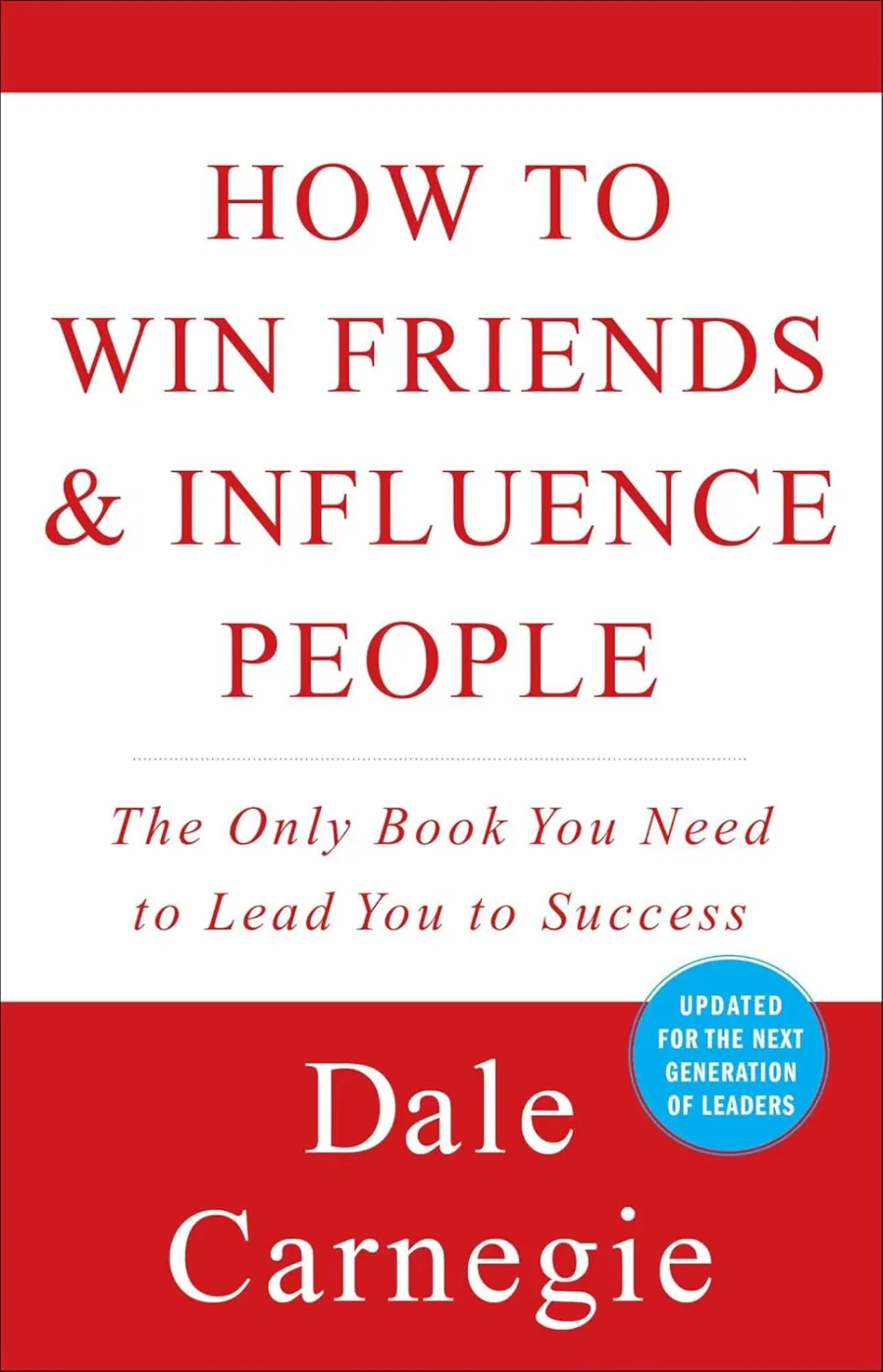
Download Cover Image
Do you want to download the full cover image for How to Win Friends and Influence People?