
The Disappearers: A Novel
Hardcover
• 640 Pages
• USD 30.59
• English
• 9780593717202
No ratings yet
| Publisher | Riverhead Books |
|---|---|
| ISBN13 | 9780593717202 |
| ASIN/SKU | 0593717201 |
| Book Format | Hardcover |
| Language | English |
| Pages | 640 |
| List Price | USD 30.59 |
| Publishing Date | 01/09/2026 |
| Dimensions | 6.37 x 1.67 x 9.53 inches |
| Weight | 1.85 pounds |
| Book Code | BD00070303 |
Buy this Book
Amazon Stores
Ebook Stores
Other Stores
Discover The Disappearers: A Novel by Marlon James. This book is published by Riverhead Books in Hardcover format, ISBN 9780593717202, ASIN 0593717201, under Literature and Fiction, LGBTQ+ Literary Fiction, Literary Fiction.
Book Description
LONGLISTED FOR THE 2026 BOOKER PRIZE
“This masterpiece is the novel of the decade, if not the century... The Disappearers places [James] near the front of the line, a decade or two from now, for the Nobel Prize.” –The New York Times
“Harrowing, hilarious, magnificent …this novel will be read decades from now, pored over in seminars and bookmarked on subway commutes … [James’] defiant queer epic belongs to us all.” –The Boston Globe
“Among Marlon James’s most ambitious and history-making works… James is a singular literary talent.” –Booker Prize judge's citation
From Marlon James, author of the Booker Prize–winning A Brief History of Seven Killings: the electrifying story of the murder of a gay man in 1980s Jamaica and its far-reaching consequences
In 1988, eight men in Kingston, Jamaica, begin rehearsals for a play. Though strangers to one another, they share an inescapable truth: All of them are gay. And they live in a world that refuses to accept them.
One night the men are savagely beaten and one of them is killed. As their bodies heal, the survivors begin to face the hatred and contempt that the violence laid bare. Some try to ignore what happened. Others double down on retribution. Some disappear completely.
In this spellbinding novel, Marlon James has written a propulsive crime story that is also a deeply human account of connection and acceptance. Full of fascinating characters, biting humor, and unapologetic sex, The Disappearers is both a thrilling page-turner and a finely etched portrait of queer life.
“This masterpiece is the novel of the decade, if not the century... The Disappearers places [James] near the front of the line, a decade or two from now, for the Nobel Prize.” –The New York Times
“Harrowing, hilarious, magnificent …this novel will be read decades from now, pored over in seminars and bookmarked on subway commutes … [James’] defiant queer epic belongs to us all.” –The Boston Globe
“Among Marlon James’s most ambitious and history-making works… James is a singular literary talent.” –Booker Prize judge's citation
From Marlon James, author of the Booker Prize–winning A Brief History of Seven Killings: the electrifying story of the murder of a gay man in 1980s Jamaica and its far-reaching consequences
In 1988, eight men in Kingston, Jamaica, begin rehearsals for a play. Though strangers to one another, they share an inescapable truth: All of them are gay. And they live in a world that refuses to accept them.
One night the men are savagely beaten and one of them is killed. As their bodies heal, the survivors begin to face the hatred and contempt that the violence laid bare. Some try to ignore what happened. Others double down on retribution. Some disappear completely.
In this spellbinding novel, Marlon James has written a propulsive crime story that is also a deeply human account of connection and acceptance. Full of fascinating characters, biting humor, and unapologetic sex, The Disappearers is both a thrilling page-turner and a finely etched portrait of queer life.
Author Biography
Marlon James was born in Kingston, Jamaica, in 1970. He is the author of The Book of Night Women, which won the 2010 Dayton Literary Peace Prize, The Minnesota Book Award and was a finalist for the 2010 National Book Critics Circle Award in fiction as well as an NAACP Image Award. His first novel John Crow’s Devil was a finalist for the Los Angeles Times Book Prize and the Commonwealth Writers Prize, and was a New York Times Editor’s Choice. In his third novel, A Brief History Of Seven Killings, James is exploring multiple genres: the political thriller, the oral biography, and the classic whodunit to confront the untold history of Jamaica in the late 1970’s; of the assassination attempt on Bob Marley, and the country’s own clandestine battles of the cold war.
James graduated from the University of the West Indies in 1991 with a degree in Language And Literature, and from Wilkes University in 2006 with a Masters in creative writing. His short fiction and nonfiction have appeared widely including in Esquire, Granta, and The Caribbean Review of Books.
James graduated from the University of the West Indies in 1991 with a degree in Language And Literature, and from Wilkes University in 2006 with a Masters in creative writing. His short fiction and nonfiction have appeared widely including in Esquire, Granta, and The Caribbean Review of Books.
Editorial Reviews
“Marlon James’s story of gay experience and murderous homophobia in Jamaica is a maximalist’s banquet — and the Booker Prize winner’s finest book yet… The Disappearers places him near the front of the line, a decade or two from now, for the Nobel Prize.” —The New York Times
“The Disappearers uses the tricks of fiction to pull off something extremely difficult: giving full weight to tragedy and injustice without implying that some lives are over before they’ve begun.” —The New Yorker
“A harrowing, hilarious, magnificent novel that will stand the test of time… Like Whitman, James is a lover of detail and a poet of the body: he dwells on lips, shoulders, chests, and all points south. He ranks among our greatest vernacular authors, rendering most of The Disappearers in an English creole thick with lewd jokes and profanity… This novel will be read decades from now, pored over in seminars and bookmarked on subway commutes… As the disappearers emerge in human form, James mourns those lost to plague and violence while offering sprigs of hope. His defiant queer epic belongs to us all.”—The Boston Globe
"The unrelentingly raw and profane vision is enlivened by the energy of the writing, and in particular its infusions of Jamaican slang. Mr. James does not simply reproduce the island’s singular patois; he uses it to create abrasive auditory rhythms.”–The Wall Street Journal
“Few books have mapped the beleaguered realities of queer existence with such psychological depth, harrowing realism and searing condemnation … James makes room for the contradictions of queer life, its intimacies, estrangements and hungers, in utterly indelible ways. His prose is a consistent triumph: bitter and hilarious, lyrical, bawdy, pugnacious and scorchingly, ravishingly queer.” —The Guardian
“The Disappearers is a harrowing book, to be sure, but never nihilist, or defeatist, or cynical. Its joy in ultimate survival comes through.” —The Atlantic
“James is also determined to unwind the cliches of gay fiction… he in part evokes Alan Hollinghurst… The strength of the novel — and the source of its melancholy tone — is in its scope.”—Los Angeles Times
“Wickedly funny, at times sexy, and full of longing.”—Harper's Bazaar
“Hard to put down… A good book can lift your spirits, brighten your day or add some spice to a dull life, but the truly great books change how you think, what you see and, hopefully, how you live. The Disappearers is one of those.” —Book Page (starred review)
“Breathtaking … an ambitious and astonishing portrait of queer life.” —Publishers Weekly (starred review)
“This language-rich novel is filled with vivid slang … As always, James writes exceptionally well….This book may remind readers of works by John Rechy, Jean Genet, William Burroughs, and Hubert Selby, but James is his own man.” —Library Journal (starred review)
“Galvanizing … Equal parts detective story and sociocultural history, James’ new novel takes a deep, harrowing dive into the tragic consequences of violent homophobia … with random, frantic voices that leave unsettling echoes.” —Kirkus (starred review)
“Captivating and epic… James renders his characters’ tumultuous inner lives with striking imagery and energy; their dialogue is rapid, keen, and hard-hitting. In all, a gritty, powerful, and gripping read.” —Booklist
“The Disappearers uses the tricks of fiction to pull off something extremely difficult: giving full weight to tragedy and injustice without implying that some lives are over before they’ve begun.” —The New Yorker
“A harrowing, hilarious, magnificent novel that will stand the test of time… Like Whitman, James is a lover of detail and a poet of the body: he dwells on lips, shoulders, chests, and all points south. He ranks among our greatest vernacular authors, rendering most of The Disappearers in an English creole thick with lewd jokes and profanity… This novel will be read decades from now, pored over in seminars and bookmarked on subway commutes… As the disappearers emerge in human form, James mourns those lost to plague and violence while offering sprigs of hope. His defiant queer epic belongs to us all.”—The Boston Globe
"The unrelentingly raw and profane vision is enlivened by the energy of the writing, and in particular its infusions of Jamaican slang. Mr. James does not simply reproduce the island’s singular patois; he uses it to create abrasive auditory rhythms.”–The Wall Street Journal
“Few books have mapped the beleaguered realities of queer existence with such psychological depth, harrowing realism and searing condemnation … James makes room for the contradictions of queer life, its intimacies, estrangements and hungers, in utterly indelible ways. His prose is a consistent triumph: bitter and hilarious, lyrical, bawdy, pugnacious and scorchingly, ravishingly queer.” —The Guardian
“The Disappearers is a harrowing book, to be sure, but never nihilist, or defeatist, or cynical. Its joy in ultimate survival comes through.” —The Atlantic
“James is also determined to unwind the cliches of gay fiction… he in part evokes Alan Hollinghurst… The strength of the novel — and the source of its melancholy tone — is in its scope.”—Los Angeles Times
“Wickedly funny, at times sexy, and full of longing.”—Harper's Bazaar
“Hard to put down… A good book can lift your spirits, brighten your day or add some spice to a dull life, but the truly great books change how you think, what you see and, hopefully, how you live. The Disappearers is one of those.” —Book Page (starred review)
“Breathtaking … an ambitious and astonishing portrait of queer life.” —Publishers Weekly (starred review)
“This language-rich novel is filled with vivid slang … As always, James writes exceptionally well….This book may remind readers of works by John Rechy, Jean Genet, William Burroughs, and Hubert Selby, but James is his own man.” —Library Journal (starred review)
“Galvanizing … Equal parts detective story and sociocultural history, James’ new novel takes a deep, harrowing dive into the tragic consequences of violent homophobia … with random, frantic voices that leave unsettling echoes.” —Kirkus (starred review)
“Captivating and epic… James renders his characters’ tumultuous inner lives with striking imagery and energy; their dialogue is rapid, keen, and hard-hitting. In all, a gritty, powerful, and gripping read.” —Booklist
Book Summary
Marlon James’s The Disappearers is a sprawling, intimate, and deeply unsettling novel about queer life, violence, friendship, memory, and survival in Jamaica. Published by Riverhead Books in September 2026, the 640-page novel is set primarily in Jamaica during the late 1980s and 1990s, at a time when homosexuality was heavily stigmatized, violence against gay men was a terrifying reality, and the emerging AIDS crisis intensified public fear. James, the Booker Prize–winning author of A Brief History of Seven Killings, returns to Jamaica in this novel, but instead of focusing on political violence or gang warfare, he turns his attention toward a group of gay men whose lives are transformed by one horrific act of homophobic violence.
At the center of The Disappearers is a simple but powerful premise. In 1988, eight men in Kingston come together to rehearse a production of John Herbert’s Fortune and Men’s Eyes, a play about imprisonment, sexuality, and power among men. They are strangers with very different personalities, backgrounds, social positions, and reasons for participating, but they share one dangerous fact: they are gay men living in a society that does not accept them. Their rehearsal space becomes a temporary refuge, somewhere they can speak more freely, joke, flirt, argue, perform, and imagine a different kind of life. The play is therefore much more than entertainment. For these men, acting becomes a way of making themselves visible in a world that expects them to remain hidden.
One of the most important characters is Edmond “Eddy” Porteous, a young, intelligent, somewhat privileged teenager whose journal provides the opening section of the novel. Eddy is biracial and light-skinned, comes from an affluent family, and is able to move through Jamaican society with privileges that many of the other men do not possess. Yet his relative privilege does not protect him from the fear and confusion surrounding his sexuality. He is still learning how to understand himself, his desires, his friendships, and the complicated social rules that determine what he can safely reveal. Through Eddy’s eyes, James creates an intimate portrait of a young man discovering that there is an entire hidden world of queer Jamaican life beneath the respectable surface of society.
Eddy’s journal is particularly effective because it allows the reader to experience the world before the central tragedy occurs. The rehearsals are filled with teasing, intellectual arguments, sexual tension, gossip, insecurity, and moments of genuine affection. The men are not presented simply as victims waiting for violence to happen. They are funny, vain, ambitious, horny, jealous, frightened, argumentative, generous, and sometimes cruel. They have different ideas about what it means to be gay and how openly they should live. James deliberately refuses to turn queer community into a sentimental picture of perfect solidarity. Instead, he shows a group of complicated human beings who sometimes love one another, sometimes dislike one another, and often do both simultaneously.
Jordan Brown becomes particularly important to Eddy. Jordan is younger, poorer, sharper-tongued, and considerably more cynical. He has been rejected by his affluent family and lives a precarious life, including survival through sex work. He is deeply intelligent and fiercely protective of his independence, but beneath his sarcasm is enormous vulnerability. Eddy and Jordan recognize something of themselves in each other, although they also compete. Their relationship becomes one of the novel’s most important emotional threads because they represent two different ways of responding to a hostile society. Eddy searches for understanding and acceptance, while Jordan is more inclined toward defiance and confrontation.
Other members of the group broaden this portrait of queer Jamaican life. Matt Chin is a handsome, reserved businessman who becomes an object of Eddy’s fascination. Orrin Turner is more flamboyant and openly expressive, while Rainford Ellis is an office worker whose vulnerability becomes central to the tragedy. Omar Joseph, a wealthy man involved in the production, occupies another social position entirely. Havelock Titus, the educated and sophisticated director, has a larger intellectual vision for the production. He understands that staging a gay play in Jamaica is politically provocative, but he also wants to create something artistically serious. The cast therefore represents different classes, personalities, shades of skin, and approaches to queer identity.
The play they are rehearsing is significant because its subject—men trapped within a prison environment—mirrors the circumstances of their own lives. Havelock understands that Jamaican society itself can feel like a prison for gay men. The irony is painful: the characters are performing a story about confinement while experiencing confinement outside the theater. Their rehearsal room becomes one of the few places where they can temporarily escape the rules imposed upon them. James uses this theatrical structure to ask an important question: what happens when people who have been forced to hide finally attempt to become visible?
The answer arrives with devastating violence. During a rehearsal, a homophobic mob attacks the group. The assault is brutal, chaotic, and terrifying. One of the men is killed, another is blinded, and the survivors are left physically and psychologically damaged. Eddy happens to arrive too late for the attack, which saves him from the immediate violence but creates another kind of suffering: survivor’s guilt. He cannot escape the knowledge that the people he was supposed to be with were attacked while he was absent. The violence therefore becomes the dividing line of the novel. Everything before it represents the possibility of community; everything afterward concerns trauma, disappearance, memory, and revenge.
James makes the attack especially disturbing by refusing to show violence only from the victims’ perspective. The novel also enters the minds of the attackers, including people whose public identities appear respectable. A policeman, a religious figure, and other men connected to the culture of homophobia reveal how violence can be supported by institutions and social attitudes rather than existing merely as the work of isolated criminals. A reggae artist named Streggeh Don becomes associated with anti-gay rhetoric that helps create an atmosphere in which attacks can seem socially permissible. The result is a broader examination of how hatred is produced, normalized, and eventually acted upon.
The novel then moves beyond the immediate aftermath of the attack. Several years later, the surviving characters are still living with what happened. Jordan and Eddy become particularly important as they attempt to understand the fate of people who vanished after the assault. Their search gradually becomes a detective story, but it is a very unusual detective story because the mystery is inseparable from trauma. They are not simply looking for missing people. They are looking for explanations, accountability, and some way of making sense of a past that refuses to stay buried.
This is where the title The Disappearers takes on its deepest meaning. Disappearance in the novel is not simply physical. Queer people can disappear because they are killed, because they flee, because they hide their sexuality, because their families reject them, because society refuses to acknowledge their relationships, or because shame teaches them to erase parts of themselves. Some disappear from public life; others disappear emotionally. James consequently expands the idea of disappearance from a mystery into a metaphor for the experience of marginalized people whose lives are treated as though they should never have been visible in the first place.
The novel also examines the AIDS crisis, which adds another layer of fear to the characters’ lives. The period in which the story unfolds was marked by misinformation, panic, shame, and the association of AIDS with already stigmatized communities. For gay Jamaican men, the health crisis existed alongside the threat of physical violence and social rejection. James does not reduce his characters to victims of either homophobia or AIDS, however. Their lives contain desire, humor, friendship, sex, ambition, jealousy, art, and ordinary pleasures. This insistence on depicting queer life in its fullness is one of the book’s most important achievements.
The structure of The Disappearers reflects the instability of memory itself. Rather than relying on one conventional narrator, James uses journal entries, interviews, letters, multiple points of view, and shifting narrative forms. Eddy’s early journal creates an intimate record of the young men before the attack, while later sections bring in interview transcripts and other voices. The attack itself becomes fragmented through different perspectives, emphasizing that traumatic events are rarely remembered in a single, clean version. Everyone remembers something different. Everyone carries a different wound.
This unconventional structure also allows James to explore the difference between personal memory and public history. A newspaper report might record that gay men were attacked in Kingston, but such a report cannot capture what the victims feared, desired, joked about, or dreamed of before the violence. By giving these men voices, James transforms people who might otherwise be reduced to statistics into fully developed human beings. Their private lives matter as much as the public event that destroyed them.
Race, class, and colorism are equally important. Eddy’s light skin gives him forms of social privilege that Jordan and some of the other men do not possess. Yet his privilege creates its own complications because he can move closer to conventional respectability while still feeling alienated from it. Jordan’s darker skin and economic vulnerability make his experience markedly different. James shows that there is no single “gay experience.” Sexuality intersects with skin color, money, family background, education, masculinity, and social status.
Perhaps the most powerful theme in The Disappearers is the tension between survival and revenge. After experiencing violence, some characters want to move on. Others want justice. Jordan, in particular, becomes associated with a desire to strike back against the people and culture responsible for the suffering. The novel does not treat revenge as an easy moral solution. Revenge can provide a sense of power to someone who has been made powerless, but it can also trap a person permanently inside the event that wounded them. The search for justice therefore becomes inseparable from the question of whether healing is possible.
At the same time, James refuses to make the novel completely bleak. Beneath the anger and grief is an insistence on queer joy. The men laugh. They desire one another. They argue about books and music. They perform. They develop friendships. They create spaces in which they can be themselves. James has described the book in terms of both pain and pleasure, and critics have emphasized that its vision of queer community is deliberately complicated rather than sentimental.
The writing style is another major part of the novel’s identity. James uses Jamaican speech, slang, profanity, humor, literary references, popular culture, and rapidly shifting voices to create an energetic linguistic world. The language can be abrasive, funny, erotic, lyrical, and heartbreaking within the same passage. Rather than translating Jamaica into a version of English designed entirely for outsiders, James allows Jamaican voices to retain their own rhythms. This makes the novel demanding at times, but it also gives it unusual vitality.
Ultimately, The Disappearers is not simply a novel about a homophobic attack. It is a novel about what happens to people after the headlines disappear. The assault is the central wound, but James is interested in everything that follows: guilt, rage, friendship, memory, desire, silence, disappearance, and the difficult process of rebuilding a life. Eddy’s youthful uncertainty grows into a deeper understanding of the world around him, while Jordan’s anger becomes part of a broader search for truth and accountability.
The deepest message of The Disappearers is that survival itself can be an act of resistance. A society that wants marginalized people to disappear can be challenged simply by remembering them, telling their stories, loving openly, creating art, and refusing to accept shame as the natural condition of existence. James does not romanticize this struggle. His Jamaica is dangerous, contradictory, and painfully real. But it is also alive with humor, sexuality, intelligence, creativity, and human connection.
For readers searching for a summary of The Disappearers by Marlon James, the novel can therefore be understood as a combination of literary fiction, crime story, historical portrait, queer coming-of-age narrative, and meditation on trauma. It begins with eight men rehearsing a play in 1988 Kingston and expands into a decades-long exploration of what happens when violence attempts to erase them. The result is a demanding but profoundly humane novel about people who are repeatedly told that they should hide, only to discover that their stories become more powerful when they are finally brought into the open. The book was longlisted for the 2026 Booker Prize, and its reception has particularly emphasized its ambition, linguistic energy, psychological depth, and portrayal of queer Jamaican life.
In the end, The Disappearers asks readers to look beyond the violence itself. The real question is not simply who disappeared, who survived, or who was responsible. It is what it means to remain visible after a world has given you every reason to hide. Marlon James answers that question through a chorus of imperfect voices. His characters do not survive by becoming symbols. They survive by remaining human—messy, sexual, funny, frightened, angry, loving, ambitious, contradictory, and alive. That is what gives The Disappearers its lasting emotional force: it is ultimately a story about the right to exist fully, and about the extraordinary power of remembering people whom history, prejudice, and fear have tried to make disappear.
At the center of The Disappearers is a simple but powerful premise. In 1988, eight men in Kingston come together to rehearse a production of John Herbert’s Fortune and Men’s Eyes, a play about imprisonment, sexuality, and power among men. They are strangers with very different personalities, backgrounds, social positions, and reasons for participating, but they share one dangerous fact: they are gay men living in a society that does not accept them. Their rehearsal space becomes a temporary refuge, somewhere they can speak more freely, joke, flirt, argue, perform, and imagine a different kind of life. The play is therefore much more than entertainment. For these men, acting becomes a way of making themselves visible in a world that expects them to remain hidden.
One of the most important characters is Edmond “Eddy” Porteous, a young, intelligent, somewhat privileged teenager whose journal provides the opening section of the novel. Eddy is biracial and light-skinned, comes from an affluent family, and is able to move through Jamaican society with privileges that many of the other men do not possess. Yet his relative privilege does not protect him from the fear and confusion surrounding his sexuality. He is still learning how to understand himself, his desires, his friendships, and the complicated social rules that determine what he can safely reveal. Through Eddy’s eyes, James creates an intimate portrait of a young man discovering that there is an entire hidden world of queer Jamaican life beneath the respectable surface of society.
Eddy’s journal is particularly effective because it allows the reader to experience the world before the central tragedy occurs. The rehearsals are filled with teasing, intellectual arguments, sexual tension, gossip, insecurity, and moments of genuine affection. The men are not presented simply as victims waiting for violence to happen. They are funny, vain, ambitious, horny, jealous, frightened, argumentative, generous, and sometimes cruel. They have different ideas about what it means to be gay and how openly they should live. James deliberately refuses to turn queer community into a sentimental picture of perfect solidarity. Instead, he shows a group of complicated human beings who sometimes love one another, sometimes dislike one another, and often do both simultaneously.
Jordan Brown becomes particularly important to Eddy. Jordan is younger, poorer, sharper-tongued, and considerably more cynical. He has been rejected by his affluent family and lives a precarious life, including survival through sex work. He is deeply intelligent and fiercely protective of his independence, but beneath his sarcasm is enormous vulnerability. Eddy and Jordan recognize something of themselves in each other, although they also compete. Their relationship becomes one of the novel’s most important emotional threads because they represent two different ways of responding to a hostile society. Eddy searches for understanding and acceptance, while Jordan is more inclined toward defiance and confrontation.
Other members of the group broaden this portrait of queer Jamaican life. Matt Chin is a handsome, reserved businessman who becomes an object of Eddy’s fascination. Orrin Turner is more flamboyant and openly expressive, while Rainford Ellis is an office worker whose vulnerability becomes central to the tragedy. Omar Joseph, a wealthy man involved in the production, occupies another social position entirely. Havelock Titus, the educated and sophisticated director, has a larger intellectual vision for the production. He understands that staging a gay play in Jamaica is politically provocative, but he also wants to create something artistically serious. The cast therefore represents different classes, personalities, shades of skin, and approaches to queer identity.
The play they are rehearsing is significant because its subject—men trapped within a prison environment—mirrors the circumstances of their own lives. Havelock understands that Jamaican society itself can feel like a prison for gay men. The irony is painful: the characters are performing a story about confinement while experiencing confinement outside the theater. Their rehearsal room becomes one of the few places where they can temporarily escape the rules imposed upon them. James uses this theatrical structure to ask an important question: what happens when people who have been forced to hide finally attempt to become visible?
The answer arrives with devastating violence. During a rehearsal, a homophobic mob attacks the group. The assault is brutal, chaotic, and terrifying. One of the men is killed, another is blinded, and the survivors are left physically and psychologically damaged. Eddy happens to arrive too late for the attack, which saves him from the immediate violence but creates another kind of suffering: survivor’s guilt. He cannot escape the knowledge that the people he was supposed to be with were attacked while he was absent. The violence therefore becomes the dividing line of the novel. Everything before it represents the possibility of community; everything afterward concerns trauma, disappearance, memory, and revenge.
James makes the attack especially disturbing by refusing to show violence only from the victims’ perspective. The novel also enters the minds of the attackers, including people whose public identities appear respectable. A policeman, a religious figure, and other men connected to the culture of homophobia reveal how violence can be supported by institutions and social attitudes rather than existing merely as the work of isolated criminals. A reggae artist named Streggeh Don becomes associated with anti-gay rhetoric that helps create an atmosphere in which attacks can seem socially permissible. The result is a broader examination of how hatred is produced, normalized, and eventually acted upon.
The novel then moves beyond the immediate aftermath of the attack. Several years later, the surviving characters are still living with what happened. Jordan and Eddy become particularly important as they attempt to understand the fate of people who vanished after the assault. Their search gradually becomes a detective story, but it is a very unusual detective story because the mystery is inseparable from trauma. They are not simply looking for missing people. They are looking for explanations, accountability, and some way of making sense of a past that refuses to stay buried.
This is where the title The Disappearers takes on its deepest meaning. Disappearance in the novel is not simply physical. Queer people can disappear because they are killed, because they flee, because they hide their sexuality, because their families reject them, because society refuses to acknowledge their relationships, or because shame teaches them to erase parts of themselves. Some disappear from public life; others disappear emotionally. James consequently expands the idea of disappearance from a mystery into a metaphor for the experience of marginalized people whose lives are treated as though they should never have been visible in the first place.
The novel also examines the AIDS crisis, which adds another layer of fear to the characters’ lives. The period in which the story unfolds was marked by misinformation, panic, shame, and the association of AIDS with already stigmatized communities. For gay Jamaican men, the health crisis existed alongside the threat of physical violence and social rejection. James does not reduce his characters to victims of either homophobia or AIDS, however. Their lives contain desire, humor, friendship, sex, ambition, jealousy, art, and ordinary pleasures. This insistence on depicting queer life in its fullness is one of the book’s most important achievements.
The structure of The Disappearers reflects the instability of memory itself. Rather than relying on one conventional narrator, James uses journal entries, interviews, letters, multiple points of view, and shifting narrative forms. Eddy’s early journal creates an intimate record of the young men before the attack, while later sections bring in interview transcripts and other voices. The attack itself becomes fragmented through different perspectives, emphasizing that traumatic events are rarely remembered in a single, clean version. Everyone remembers something different. Everyone carries a different wound.
This unconventional structure also allows James to explore the difference between personal memory and public history. A newspaper report might record that gay men were attacked in Kingston, but such a report cannot capture what the victims feared, desired, joked about, or dreamed of before the violence. By giving these men voices, James transforms people who might otherwise be reduced to statistics into fully developed human beings. Their private lives matter as much as the public event that destroyed them.
Race, class, and colorism are equally important. Eddy’s light skin gives him forms of social privilege that Jordan and some of the other men do not possess. Yet his privilege creates its own complications because he can move closer to conventional respectability while still feeling alienated from it. Jordan’s darker skin and economic vulnerability make his experience markedly different. James shows that there is no single “gay experience.” Sexuality intersects with skin color, money, family background, education, masculinity, and social status.
Perhaps the most powerful theme in The Disappearers is the tension between survival and revenge. After experiencing violence, some characters want to move on. Others want justice. Jordan, in particular, becomes associated with a desire to strike back against the people and culture responsible for the suffering. The novel does not treat revenge as an easy moral solution. Revenge can provide a sense of power to someone who has been made powerless, but it can also trap a person permanently inside the event that wounded them. The search for justice therefore becomes inseparable from the question of whether healing is possible.
At the same time, James refuses to make the novel completely bleak. Beneath the anger and grief is an insistence on queer joy. The men laugh. They desire one another. They argue about books and music. They perform. They develop friendships. They create spaces in which they can be themselves. James has described the book in terms of both pain and pleasure, and critics have emphasized that its vision of queer community is deliberately complicated rather than sentimental.
The writing style is another major part of the novel’s identity. James uses Jamaican speech, slang, profanity, humor, literary references, popular culture, and rapidly shifting voices to create an energetic linguistic world. The language can be abrasive, funny, erotic, lyrical, and heartbreaking within the same passage. Rather than translating Jamaica into a version of English designed entirely for outsiders, James allows Jamaican voices to retain their own rhythms. This makes the novel demanding at times, but it also gives it unusual vitality.
Ultimately, The Disappearers is not simply a novel about a homophobic attack. It is a novel about what happens to people after the headlines disappear. The assault is the central wound, but James is interested in everything that follows: guilt, rage, friendship, memory, desire, silence, disappearance, and the difficult process of rebuilding a life. Eddy’s youthful uncertainty grows into a deeper understanding of the world around him, while Jordan’s anger becomes part of a broader search for truth and accountability.
The deepest message of The Disappearers is that survival itself can be an act of resistance. A society that wants marginalized people to disappear can be challenged simply by remembering them, telling their stories, loving openly, creating art, and refusing to accept shame as the natural condition of existence. James does not romanticize this struggle. His Jamaica is dangerous, contradictory, and painfully real. But it is also alive with humor, sexuality, intelligence, creativity, and human connection.
For readers searching for a summary of The Disappearers by Marlon James, the novel can therefore be understood as a combination of literary fiction, crime story, historical portrait, queer coming-of-age narrative, and meditation on trauma. It begins with eight men rehearsing a play in 1988 Kingston and expands into a decades-long exploration of what happens when violence attempts to erase them. The result is a demanding but profoundly humane novel about people who are repeatedly told that they should hide, only to discover that their stories become more powerful when they are finally brought into the open. The book was longlisted for the 2026 Booker Prize, and its reception has particularly emphasized its ambition, linguistic energy, psychological depth, and portrayal of queer Jamaican life.
In the end, The Disappearers asks readers to look beyond the violence itself. The real question is not simply who disappeared, who survived, or who was responsible. It is what it means to remain visible after a world has given you every reason to hide. Marlon James answers that question through a chorus of imperfect voices. His characters do not survive by becoming symbols. They survive by remaining human—messy, sexual, funny, frightened, angry, loving, ambitious, contradictory, and alive. That is what gives The Disappearers its lasting emotional force: it is ultimately a story about the right to exist fully, and about the extraordinary power of remembering people whom history, prejudice, and fear have tried to make disappear.
Sample Chapters
Sample Chapters will be added soon…
Reader Reviews
No reviews yet.
The Disappearers: A Novel
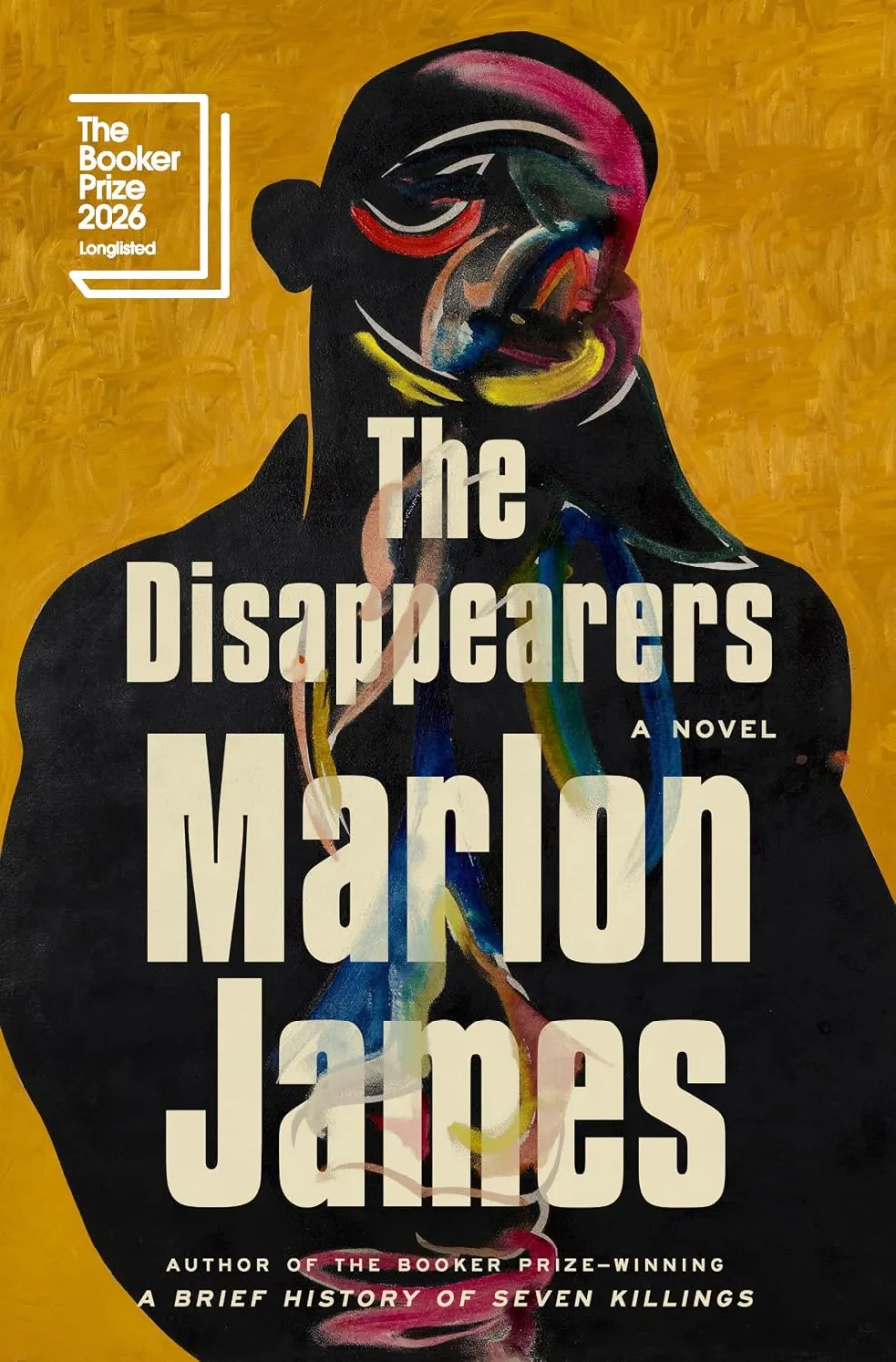
Download Cover Image
Do you want to download the full cover image for The Disappearers: A Novel?