
Situated: Find the People and Places That Bring Out Your Best
Hardcover
• 352 Pages
• USD 30.00
• English
• 9781668005941
No ratings yet
| Publisher | Scribner |
|---|---|
| ISBN13 | 9781668005941 |
| ASIN/SKU | 1668005948 |
| Book Format | Hardcover |
| Language | English |
| Pages | 352 |
| List Price | USD 30.00 |
| Publishing Date | 01/09/2026 |
| Dimensions | 6 x 1.2 x 9 inches |
| Weight | 1.14 pounds |
| Book Code | BD00070307 |
Buy this Book
Amazon Stores
Ebook Stores
Other Stores
Discover Situated: Find the People and Places That Bring Out Your Best by Angela Duckworth. This book is published by Scribner in Hardcover format, ISBN 9781668005941, ASIN 1668005948, under Self-Help, Personal Transformation Self-Help, Motivational Self-Help.
Book Description
From the #1 bestselling author of Grit, a new book that reveals the hidden power of situations and how you can shape them to bring out your best.
In Angela Duckworth’s first book, she showed that a common denominator of successful strivers is a blend of passion and perseverance she dubbed “grit.” This second book springs from her deepening realization that grit, while necessary, is sometimes not sufficient. How you situate yourself to meet a challenge can be crucial.
Duckworth’s in-depth research reveals the enormous influence wielded by the objects within arm’s reach, your peers and mentors, and even your zip code. Though you’re often told to make the best of your situation, it is far, far better to make your situation better first.
In Situated, you’ll discover:
-Why your personality changes, sometimes dramatically, from one situation to another—and how you can harness that shift
-The secret to conquering temptation without willpower
-Why taking the less effortful path can feel like cheating but often solves a stubborn problem
-How the company you keep shapes the person you become
-The most effective ways to help others succeed
Highlighting four essential elements of successful situations, Duckworth shows how high performers like Taylor Swift, Michael Phelps, and Jerry Seinfeld create situations that make it easier to excel. And, with disarming honesty, she shares her own struggles with burnout and marriage—and how learning to change her situation, not herself, made all the difference. Whatever it is you want to achieve, there’s a situation that can make your journey easier.
It takes effort to make your situation your ally—but a little effort goes a long way...when you get situated.
In Angela Duckworth’s first book, she showed that a common denominator of successful strivers is a blend of passion and perseverance she dubbed “grit.” This second book springs from her deepening realization that grit, while necessary, is sometimes not sufficient. How you situate yourself to meet a challenge can be crucial.
Duckworth’s in-depth research reveals the enormous influence wielded by the objects within arm’s reach, your peers and mentors, and even your zip code. Though you’re often told to make the best of your situation, it is far, far better to make your situation better first.
In Situated, you’ll discover:
-Why your personality changes, sometimes dramatically, from one situation to another—and how you can harness that shift
-The secret to conquering temptation without willpower
-Why taking the less effortful path can feel like cheating but often solves a stubborn problem
-How the company you keep shapes the person you become
-The most effective ways to help others succeed
Highlighting four essential elements of successful situations, Duckworth shows how high performers like Taylor Swift, Michael Phelps, and Jerry Seinfeld create situations that make it easier to excel. And, with disarming honesty, she shares her own struggles with burnout and marriage—and how learning to change her situation, not herself, made all the difference. Whatever it is you want to achieve, there’s a situation that can make your journey easier.
It takes effort to make your situation your ally—but a little effort goes a long way...when you get situated.
Author Biography
Angela Duckworth, PhD, is a psychologist, a MacArthur Fellow, and the Rosa Lee and Egbert Chang Professor at the University of Pennsylvania. Duckworth’s TED talk is among the most viewed of all time. Her first book Grit: The Power of Passion and Perseverance was a #1 New York Times bestseller and has sold more than 5 million copies worldwide. Her second book is called: Situated: Find the People and Places That Bring Out Your Best.
Editorial Reviews
“PERSUASIVE… Duckworth argues that efforts to change oneself are most effective when they begin “upstream,” because situations stimulate thoughts…She illustrates with a trove of memorable examples…Readers of Grit will find this a useful and humane follow-up.”
—Publishers Weekly
“A CAPTIVATING LOOK AT WHAT IT TAKES TO GAIN MORE CONTROL OVER YOUR DESTINY. Angela Duckworth has delivered a book that’s bursting with surprising science, alluring anecdotes, and actionable advice about human agency. It’s the ultimate guide to changing your circumstances.”
—Adam Grant, #1 New York Times bestselling author of Think Again and Hidden Potential, and host of the podcast Re:Thinking
“IT MIGHT NOT HAVE SEEMED POSSIBLE, BUT THE AUTHOR OF GRIT HAS OUTDONE HERSELF. The scholar who taught us about sticking with hard things now persuasively argues that in addition to passion and perseverance, you need a situation that supports you. This is an intensely personal book that shows how to make doing hard things easier.”
—David Brooks, former columnist for the New York Times, current staff writer for The Atlantic, regular contributor to PBS Newshour, and bestselling author of How to Know a Person and The Road to Character
“SITUATED HIT ME AS HARD AS DUCKWORTH’S FIRST BOOK GRIT. In this follow-up, she drives home a key point: we are not the same person in every situation. Being human means bringing different versions of ourselves to the arena, and the best may depend on circumstances. Brilliantly insightful, Situated made me think about the seemingly random nature of success. Maybe being gritty isn’t enough? Maybe being in the right situation is just as important, or more? Whatever you conclude, you’ll agree after reading this book that it’s a slam dunk. I loved it.”
—Steve Kerr, four-time NBA Champion as Coach of the Golden State Warriors
“ANGELA DUCKWORTH HAS DONE IT AGAIN. Situated is the book you read when you’re tired of being told to ‘just try harder.’ Duckworth proves that the fastest way to change your results is to change your situation—your environment, your people, your defaults—so success gets easier, not harder. If you read one book this year to level up your life, make it this one.”
—Mel Robbins, #1 New York Times bestselling author of The Let Them Theory and host of The Mel Robbins Podcast
“ILLUMINATING AND INSPIRING…Duckworth’s special skill is helping people find out what they’re truly capable of. Here she reveals the levers that can convert an impossible situation into one ripe with possibility. For anyone who feels stuck, this book offers a path to something new.”
—Carol Dweck, bestselling author of Mindset: The New Psychology of Success
“THIS IS HOW YOU DO IT. This is how you fuse the instructive insights of solid behavioral science with the flair of a superb communicator. Situated is brilliant and makes me envious.”
—Robert Cialdini, New York Times bestselling author of Influence and Pre-Suasion
“EXPLORES AN ADDITIONAL TRUTH THAT I WHOLEHEARTEDLY AGREE WITH, which is that much depends on the environment you create. Angela continues to motivate and inspire me to do my best work, for my family, my readers, and myself.”
—Marie Kondo, #1 New York Times bestselling author of The Life-Changing Magic of Tidying Up and Letter from Japan
“SITUATED BROADENED MY PERSPECTIVE. This book offers a fresh, practical take on what drives real success.”
—Jamie Dimon, chairman and CEO of JPMorganChase
“AN INCREDIBLY FUN READ, WITH CHARACTER-DRIVEN STORIES AND GOBS OF EYE-OPENING DATA. The soul of the book, however, is the liberating notion that our best selves can be achieved through tiny, manageable tweaks to our environment; freeing us from the shame-inducing cycle of failed willpower. I admire Angela deeply for her openness and vulnerability in pursuit of this highly impactful book.”
—Dax Shepard, actor, comedian, and host of the Armchair Expert podcast
“YET ANOTHER COMPELLING BOOK FROM DUCKWORTH THAT CHALLENGES HOW WE THINK ABOUT ACHIEVEMENT. Situated argues persuasively that we too often ask ‘What's wrong with me?’ when instead we should be asking, ‘Where, and with whom, can I be better?’ Reading these pages will dramatically boost the level of achievement you can imagine for yourself and those you’re trying to help.”
—Salman Khan, founder and CEO of Khan Academy and author of Brave New Words
—Publishers Weekly
“A CAPTIVATING LOOK AT WHAT IT TAKES TO GAIN MORE CONTROL OVER YOUR DESTINY. Angela Duckworth has delivered a book that’s bursting with surprising science, alluring anecdotes, and actionable advice about human agency. It’s the ultimate guide to changing your circumstances.”
—Adam Grant, #1 New York Times bestselling author of Think Again and Hidden Potential, and host of the podcast Re:Thinking
“IT MIGHT NOT HAVE SEEMED POSSIBLE, BUT THE AUTHOR OF GRIT HAS OUTDONE HERSELF. The scholar who taught us about sticking with hard things now persuasively argues that in addition to passion and perseverance, you need a situation that supports you. This is an intensely personal book that shows how to make doing hard things easier.”
—David Brooks, former columnist for the New York Times, current staff writer for The Atlantic, regular contributor to PBS Newshour, and bestselling author of How to Know a Person and The Road to Character
“SITUATED HIT ME AS HARD AS DUCKWORTH’S FIRST BOOK GRIT. In this follow-up, she drives home a key point: we are not the same person in every situation. Being human means bringing different versions of ourselves to the arena, and the best may depend on circumstances. Brilliantly insightful, Situated made me think about the seemingly random nature of success. Maybe being gritty isn’t enough? Maybe being in the right situation is just as important, or more? Whatever you conclude, you’ll agree after reading this book that it’s a slam dunk. I loved it.”
—Steve Kerr, four-time NBA Champion as Coach of the Golden State Warriors
“ANGELA DUCKWORTH HAS DONE IT AGAIN. Situated is the book you read when you’re tired of being told to ‘just try harder.’ Duckworth proves that the fastest way to change your results is to change your situation—your environment, your people, your defaults—so success gets easier, not harder. If you read one book this year to level up your life, make it this one.”
—Mel Robbins, #1 New York Times bestselling author of The Let Them Theory and host of The Mel Robbins Podcast
“ILLUMINATING AND INSPIRING…Duckworth’s special skill is helping people find out what they’re truly capable of. Here she reveals the levers that can convert an impossible situation into one ripe with possibility. For anyone who feels stuck, this book offers a path to something new.”
—Carol Dweck, bestselling author of Mindset: The New Psychology of Success
“THIS IS HOW YOU DO IT. This is how you fuse the instructive insights of solid behavioral science with the flair of a superb communicator. Situated is brilliant and makes me envious.”
—Robert Cialdini, New York Times bestselling author of Influence and Pre-Suasion
“EXPLORES AN ADDITIONAL TRUTH THAT I WHOLEHEARTEDLY AGREE WITH, which is that much depends on the environment you create. Angela continues to motivate and inspire me to do my best work, for my family, my readers, and myself.”
—Marie Kondo, #1 New York Times bestselling author of The Life-Changing Magic of Tidying Up and Letter from Japan
“SITUATED BROADENED MY PERSPECTIVE. This book offers a fresh, practical take on what drives real success.”
—Jamie Dimon, chairman and CEO of JPMorganChase
“AN INCREDIBLY FUN READ, WITH CHARACTER-DRIVEN STORIES AND GOBS OF EYE-OPENING DATA. The soul of the book, however, is the liberating notion that our best selves can be achieved through tiny, manageable tweaks to our environment; freeing us from the shame-inducing cycle of failed willpower. I admire Angela deeply for her openness and vulnerability in pursuit of this highly impactful book.”
—Dax Shepard, actor, comedian, and host of the Armchair Expert podcast
“YET ANOTHER COMPELLING BOOK FROM DUCKWORTH THAT CHALLENGES HOW WE THINK ABOUT ACHIEVEMENT. Situated argues persuasively that we too often ask ‘What's wrong with me?’ when instead we should be asking, ‘Where, and with whom, can I be better?’ Reading these pages will dramatically boost the level of achievement you can imagine for yourself and those you’re trying to help.”
—Salman Khan, founder and CEO of Khan Academy and author of Brave New Words
Book Summary
Angela Duckworth’s Situated: Find the People and Places That Bring Out Your Best is a practical psychology and personal-development book about a deceptively simple idea: your behavior is shaped not only by who you are, but by where you are, what surrounds you, and who surrounds you. Duckworth, the psychologist and bestselling author of Grit, builds on her earlier argument that passion and perseverance are powerful ingredients of achievement. In Situated, however, she adds an important qualification: grit is necessary, but it is not always sufficient. Sometimes the problem is not that you lack discipline, motivation, or character. Sometimes your situation is working against you.
The book, published by Scribner on September 1, 2026, runs 352 pages and extends Duckworth’s research into behavior, motivation, self-control, achievement, relationships, parenting, leadership, and personal growth. Its central argument is that people are often too quick to ask, “What is wrong with me?” when a more productive question may be, “What situation would make it easier for me to become the person I want to be?” Duckworth’s answer is not to abandon personal responsibility. Rather, she argues that responsible self-improvement includes changing the conditions in which our behavior takes place.
The concept of a “situation” is deliberately broader than simply a physical location. Duckworth defines it as the objective physical and social circumstances a person inhabits: the room, the objects within reach, the people nearby, the culture of a workplace or school, social expectations, and even the broader community in which someone lives. Your situation can therefore include something as small as where you put your phone at night and something as large as the city or neighborhood in which you raise a family. The book’s title captures the idea that we are constantly “situated” somewhere, and those surroundings quietly influence what we think, feel, and do.
This argument begins with a challenge to one of the most common assumptions in self-help: if you want to change, you need to change yourself. Duckworth believes this is incomplete. Human beings naturally respond to cues in their environments. A person may sincerely intend to exercise every morning, eat healthier food, study consistently, or spend less time on social media, yet the environment can make those intentions either much easier or much harder to follow. The difference may have little to do with moral strength. It can have much more to do with what the person encounters before a decision is even consciously made.
This is why Duckworth describes changing the situation as an “upstream” intervention. Instead of waiting until temptation appears and then demanding heroic willpower, change the circumstances that generate the temptation in the first place. Publishers Weekly summarizes this argument by explaining that situations stimulate thoughts, which then provoke responses; consequently, modifying the environment can be more effective than attacking a motivation problem at the last possible moment.
One of the book’s strongest ideas is therefore that willpower is often the wrong tool. People tend to admire self-control because it looks like evidence of character. Someone who can resist dessert, ignore their phone, wake up early, or work through distractions seems disciplined. But Duckworth argues that repeatedly placing yourself in situations where temptation is intense and then trying to overpower it is an inefficient way to live. A better strategy is often to make the desired behavior easier and the undesired behavior harder.
Imagine someone who wants to stop checking their phone while working. They can keep the phone on the desk and repeatedly tell themselves not to touch it. Or they can put it in another room. The second choice may feel almost embarrassingly simple, but that is precisely the point. Good situational design can eliminate the need for repeated acts of self-control. Duckworth sees this not as cheating but as intelligent behavioral engineering.
The same principle applies to healthy eating, studying, exercising, sleeping, and managing digital distractions. If you want to read more, keep a book within reach. If you want to exercise, reduce the friction involved in starting. If you want to sleep better, create distance between yourself and stimulating devices. If you want to concentrate, make distraction inconvenient. These are small changes, but Duckworth argues that small environmental changes can have surprisingly large effects because they operate repeatedly.
The book also explores why our personality can appear to change from one situation to another. A person may be confident in one environment and hesitant in another. Someone who is naturally sociable may become withdrawn around a particular group. A person who considers themselves highly disciplined may discover that discipline disappears in a distracting environment. Duckworth's point is not that personality is meaningless. Instead, personality interacts continuously with circumstances. Who you are matters, but the situation determines which aspects of you are most likely to emerge.
This insight has important implications for self-understanding. People often create rigid identities around their behavior: “I'm lazy,” “I'm bad at math,” “I'm not a morning person,” “I'm terrible with money,” or “I have no self-control.” Situated encourages readers to question such conclusions. Perhaps the behavior is partly a response to the environment. Perhaps the person performs differently when surrounded by different cues, expectations, people, or opportunities. Instead of treating an unwanted behavior as proof of a permanent personal defect, Duckworth encourages readers to investigate the conditions under which that behavior appears.
One of the most important parts of the book concerns the people we spend time with. Human beings are social learners. We absorb habits, expectations, language, attitudes, ambitions, and standards from the people around us. The people in your life can therefore influence who you become without ever explicitly instructing you to change.
This makes friendships and professional relationships more consequential than they may initially seem. If you regularly spend time with people who value learning, discipline, generosity, creativity, or physical health, those behaviors can become more normal for you. Conversely, if the people around you constantly normalize cynicism, distraction, unhealthy habits, or low expectations, maintaining a different standard becomes more difficult.
Duckworth therefore encourages readers to think deliberately about who brings out their best selves. This does not mean abandoning everyone who behaves differently from you. Instead, it means recognizing that relationships have behavioral consequences. Choosing friends, colleagues, mentors, teammates, and communities is partly choosing an environment in which your own personality will develop.
Mentors receive particular attention because they can expand what people imagine to be possible. A mentor does not simply provide advice. The mentor can become evidence that a particular path exists. Seeing someone who has achieved something you aspire to can change your perception of what is realistic. Duckworth therefore encourages readers to put themselves in situations where they are likely to encounter people who can teach, challenge, and encourage them.
The book applies this principle to high performers, including Taylor Swift, Michael Phelps, and Jerry Seinfeld. Duckworth uses these figures not simply to celebrate exceptional talent but to demonstrate that extraordinary achievement is rarely produced by individual effort alone. Behind highly successful people are often coaches, collaborators, teachers, family members, institutions, facilities, routines, audiences, and cultural environments that amplify their abilities.
Michael Phelps provides an especially useful example because swimming appears, from the outside, to be an intensely individual sport. Yet elite performance depends on an entire ecosystem: coaches, training partners, facilities, schedules, expertise, competition, and support. Talent matters, effort matters, and perseverance matters—but the surrounding system can determine whether those qualities are developed to their fullest potential. The lesson is broader than athletics: great performance is often a property of a person-in-a-system rather than a person acting alone.
Duckworth extends the same reasoning to workplaces. A company culture can encourage initiative, learning, collaboration, and excellence—or it can punish risk-taking, create fear, encourage political behavior, and exhaust its employees. Someone may appear highly motivated in one organization and chronically disengaged in another. Rather than immediately concluding that the employee has changed, Situated asks us to consider whether the culture is bringing out different qualities.
This has an important implication for career decisions. Finding the right job is not simply about salary, title, prestige, or job description. It is also about fit between the individual and the environment. A workplace can make your strengths visible or bury them. It can make good habits easy or make them nearly impossible. It can challenge you without breaking you, or it can gradually produce burnout.
Duckworth is especially candid about burnout, using her own experience to illustrate the book’s message. Her personal struggles, including difficulties related to burnout and marriage, become evidence for the idea that changing one's situation can sometimes be more effective than demanding more effort from oneself.
Burnout is therefore treated not merely as a failure of resilience but potentially as information. Duckworth’s website explains that when someone feels burned out, ordinary tasks can become exhausting and progress can feel impossible despite sustained effort. A healthy challenging situation, by contrast, can encourage positive thoughts and make productive effort feel more natural.
This distinction is important because modern achievement culture can glorify endurance. People are often told to work harder, push through, be tougher, or develop more grit. Duckworth does not reject perseverance, but she argues that persistence in a bad situation can become counterproductive. If the environment continually drains you, increasing your effort may simply accelerate exhaustion.
The book's discussion of temptation follows the same logic. Instead of asking, “How can I become strong enough to resist this?” Duckworth suggests asking, “How can I arrange things so that resisting is easier?” This shift is psychologically liberating because it removes some of the shame surrounding failed willpower. When people repeatedly fail at a behavior, they often blame themselves. But if the environment is badly designed, self-blame may obscure the real problem.
Duckworth also examines the importance of effortless or less effortful choices. People sometimes believe that the harder path is morally superior. If one person exercises using enormous discipline while another simply lives in a neighborhood where walking is convenient, the first person may appear more virtuous. But Duckworth challenges the assumption that struggle itself is evidence of character. If you can design a situation in which the desired behavior becomes easier, why would you deliberately make it harder?
This is one of the book's most humane messages: there is no prize for making self-improvement unnecessarily painful.
The situational approach also has consequences for parenting. Parents often focus on teaching children discipline, motivation, and responsibility, but Duckworth suggests that adults should also think about the environments they create. Children learn not only from instructions but from routines, expectations, peers, schools, neighborhoods, and the behaviors they observe every day. The question becomes not merely “How do I motivate my child?” but “What kind of environment makes the behavior I want more natural?”
This extends to education. A student's performance is influenced by teachers, classmates, school culture, physical surroundings, expectations, and opportunities. A child who struggles in one classroom may flourish in another. That does not necessarily mean the child suddenly became more intelligent. The situation may have changed what was possible to express.
Duckworth also moves into leadership, where the responsibility becomes even greater. Leaders do not merely tell people what to do; they create the conditions in which people work. A manager can make excellence easier by clarifying expectations, removing unnecessary obstacles, providing useful feedback, and surrounding employees with capable colleagues. Conversely, a poorly designed organization can make even talented people ineffective.
The same principle applies to helping others. If you want someone to succeed, Duckworth argues, don't focus exclusively on changing their motivation. Change the situation around them. Provide better cues, supportive relationships, useful defaults, appropriate challenges, and environments that reinforce the behavior you want to encourage.
One particularly useful idea associated with the book is Duckworth's Three Boxes Blueprint, a tool for tracing behavior backward to its situational triggers. Rather than beginning with the behavior itself, the framework encourages people to examine what happened before it: the surrounding circumstances, cues, thoughts, and responses that led to the outcome. This provides a practical method for diagnosing patterns rather than simply labeling them.
The book does not claim that people have unlimited control over their circumstances. Duckworth explicitly recognizes that not everyone has equal freedom to change their situation. Wealth, geography, family responsibilities, social conditions, and structural inequalities can severely limit people's choices. This is an important qualification because situational advice can otherwise become another form of individualistic self-help: simply move, change jobs, choose better friends, or relocate to a better neighborhood.
Duckworth's argument is more modest. We cannot control everything about our circumstances, but we often have some degree of agency. Even when major life conditions cannot be changed, smaller aspects of the environment may be adjustable. The location of your phone, the people with whom you spend discretionary time, the routines in your home, or the physical arrangement of your workspace may be within your control.
The idea of geography is particularly interesting. Duckworth argues that where we live can influence opportunities, expectations, networks, education, and cultural norms. The people and institutions surrounding us can affect what careers seem possible, what behaviors are normal, and what ambitions feel realistic. This makes the “zip code” more than an address; it becomes part of the psychological environment.
At the same time, this is one area where the book raises an uncomfortable socioeconomic issue. Critics have noted that advice involving moving to particular cities or choosing communities with excellent schools may be more accessible to affluent readers than to people without the financial ability to relocate. The larger principle remains useful, but its application must be understood within the realities of unequal resources.
Ultimately, Situated reframes the relationship between character and circumstance. It does not say that personality does not matter, that effort is irrelevant, or that people are helpless products of their environments. Instead, Duckworth argues for a more complete model: people and situations interact. Grit allows us to persevere, but the right situation can amplify that perseverance while the wrong situation can drain it. As Duckworth puts it in her own explanation of the book, grit remains necessary—but not sufficient.
The deepest lesson is therefore a change in the question we ask ourselves. Instead of constantly saying, “How can I become more disciplined?”, we can sometimes ask, “How can I build a life in which discipline is less necessary?” Instead of asking, “Why can't I motivate myself?” we can ask, “What is happening upstream of my motivation?” Instead of asking, “What's wrong with me?” we can ask, “Where and with whom do I become my best self?”
For readers searching for a Situated book summary, Angela Duckworth Situated summary, Situated by Angela Duckworth key ideas, how environment affects behavior, how to design your environment for success, books like Grit, Angela Duckworth self-improvement advice, how to stop relying on willpower, habit formation and environment design, or how your surroundings influence success, the book offers a powerful and practical framework. Its message is especially relevant to people who feel stuck despite trying hard.
In the end, Situated: Find the People and Places That Bring Out Your Best is a compassionate correction to the idea that every failure is a personal failure. Duckworth does not remove responsibility; she redefines responsibility. If your environment consistently makes your goals harder, part of becoming more effective may be to redesign that environment. Put distance between yourself and distractions. Spend more time with people who raise your standards. Seek mentors who expand your possibilities. Choose cultures that support the person you want to become. Create physical spaces that make good choices easier. And when possible, choose places that give your strengths room to grow.
The book's ultimate promise is both practical and hopeful: you may not need to become a completely different person to achieve more. You may need to become better situated. Your best self may already exist within you, but certain people, places, routines, and cultures make that version of you easier to access. And when you learn to recognize and deliberately create those situations, personal growth becomes less about fighting yourself every day and more about building a life that works with you rather than against you.
The book, published by Scribner on September 1, 2026, runs 352 pages and extends Duckworth’s research into behavior, motivation, self-control, achievement, relationships, parenting, leadership, and personal growth. Its central argument is that people are often too quick to ask, “What is wrong with me?” when a more productive question may be, “What situation would make it easier for me to become the person I want to be?” Duckworth’s answer is not to abandon personal responsibility. Rather, she argues that responsible self-improvement includes changing the conditions in which our behavior takes place.
The concept of a “situation” is deliberately broader than simply a physical location. Duckworth defines it as the objective physical and social circumstances a person inhabits: the room, the objects within reach, the people nearby, the culture of a workplace or school, social expectations, and even the broader community in which someone lives. Your situation can therefore include something as small as where you put your phone at night and something as large as the city or neighborhood in which you raise a family. The book’s title captures the idea that we are constantly “situated” somewhere, and those surroundings quietly influence what we think, feel, and do.
This argument begins with a challenge to one of the most common assumptions in self-help: if you want to change, you need to change yourself. Duckworth believes this is incomplete. Human beings naturally respond to cues in their environments. A person may sincerely intend to exercise every morning, eat healthier food, study consistently, or spend less time on social media, yet the environment can make those intentions either much easier or much harder to follow. The difference may have little to do with moral strength. It can have much more to do with what the person encounters before a decision is even consciously made.
This is why Duckworth describes changing the situation as an “upstream” intervention. Instead of waiting until temptation appears and then demanding heroic willpower, change the circumstances that generate the temptation in the first place. Publishers Weekly summarizes this argument by explaining that situations stimulate thoughts, which then provoke responses; consequently, modifying the environment can be more effective than attacking a motivation problem at the last possible moment.
One of the book’s strongest ideas is therefore that willpower is often the wrong tool. People tend to admire self-control because it looks like evidence of character. Someone who can resist dessert, ignore their phone, wake up early, or work through distractions seems disciplined. But Duckworth argues that repeatedly placing yourself in situations where temptation is intense and then trying to overpower it is an inefficient way to live. A better strategy is often to make the desired behavior easier and the undesired behavior harder.
Imagine someone who wants to stop checking their phone while working. They can keep the phone on the desk and repeatedly tell themselves not to touch it. Or they can put it in another room. The second choice may feel almost embarrassingly simple, but that is precisely the point. Good situational design can eliminate the need for repeated acts of self-control. Duckworth sees this not as cheating but as intelligent behavioral engineering.
The same principle applies to healthy eating, studying, exercising, sleeping, and managing digital distractions. If you want to read more, keep a book within reach. If you want to exercise, reduce the friction involved in starting. If you want to sleep better, create distance between yourself and stimulating devices. If you want to concentrate, make distraction inconvenient. These are small changes, but Duckworth argues that small environmental changes can have surprisingly large effects because they operate repeatedly.
The book also explores why our personality can appear to change from one situation to another. A person may be confident in one environment and hesitant in another. Someone who is naturally sociable may become withdrawn around a particular group. A person who considers themselves highly disciplined may discover that discipline disappears in a distracting environment. Duckworth's point is not that personality is meaningless. Instead, personality interacts continuously with circumstances. Who you are matters, but the situation determines which aspects of you are most likely to emerge.
This insight has important implications for self-understanding. People often create rigid identities around their behavior: “I'm lazy,” “I'm bad at math,” “I'm not a morning person,” “I'm terrible with money,” or “I have no self-control.” Situated encourages readers to question such conclusions. Perhaps the behavior is partly a response to the environment. Perhaps the person performs differently when surrounded by different cues, expectations, people, or opportunities. Instead of treating an unwanted behavior as proof of a permanent personal defect, Duckworth encourages readers to investigate the conditions under which that behavior appears.
One of the most important parts of the book concerns the people we spend time with. Human beings are social learners. We absorb habits, expectations, language, attitudes, ambitions, and standards from the people around us. The people in your life can therefore influence who you become without ever explicitly instructing you to change.
This makes friendships and professional relationships more consequential than they may initially seem. If you regularly spend time with people who value learning, discipline, generosity, creativity, or physical health, those behaviors can become more normal for you. Conversely, if the people around you constantly normalize cynicism, distraction, unhealthy habits, or low expectations, maintaining a different standard becomes more difficult.
Duckworth therefore encourages readers to think deliberately about who brings out their best selves. This does not mean abandoning everyone who behaves differently from you. Instead, it means recognizing that relationships have behavioral consequences. Choosing friends, colleagues, mentors, teammates, and communities is partly choosing an environment in which your own personality will develop.
Mentors receive particular attention because they can expand what people imagine to be possible. A mentor does not simply provide advice. The mentor can become evidence that a particular path exists. Seeing someone who has achieved something you aspire to can change your perception of what is realistic. Duckworth therefore encourages readers to put themselves in situations where they are likely to encounter people who can teach, challenge, and encourage them.
The book applies this principle to high performers, including Taylor Swift, Michael Phelps, and Jerry Seinfeld. Duckworth uses these figures not simply to celebrate exceptional talent but to demonstrate that extraordinary achievement is rarely produced by individual effort alone. Behind highly successful people are often coaches, collaborators, teachers, family members, institutions, facilities, routines, audiences, and cultural environments that amplify their abilities.
Michael Phelps provides an especially useful example because swimming appears, from the outside, to be an intensely individual sport. Yet elite performance depends on an entire ecosystem: coaches, training partners, facilities, schedules, expertise, competition, and support. Talent matters, effort matters, and perseverance matters—but the surrounding system can determine whether those qualities are developed to their fullest potential. The lesson is broader than athletics: great performance is often a property of a person-in-a-system rather than a person acting alone.
Duckworth extends the same reasoning to workplaces. A company culture can encourage initiative, learning, collaboration, and excellence—or it can punish risk-taking, create fear, encourage political behavior, and exhaust its employees. Someone may appear highly motivated in one organization and chronically disengaged in another. Rather than immediately concluding that the employee has changed, Situated asks us to consider whether the culture is bringing out different qualities.
This has an important implication for career decisions. Finding the right job is not simply about salary, title, prestige, or job description. It is also about fit between the individual and the environment. A workplace can make your strengths visible or bury them. It can make good habits easy or make them nearly impossible. It can challenge you without breaking you, or it can gradually produce burnout.
Duckworth is especially candid about burnout, using her own experience to illustrate the book’s message. Her personal struggles, including difficulties related to burnout and marriage, become evidence for the idea that changing one's situation can sometimes be more effective than demanding more effort from oneself.
Burnout is therefore treated not merely as a failure of resilience but potentially as information. Duckworth’s website explains that when someone feels burned out, ordinary tasks can become exhausting and progress can feel impossible despite sustained effort. A healthy challenging situation, by contrast, can encourage positive thoughts and make productive effort feel more natural.
This distinction is important because modern achievement culture can glorify endurance. People are often told to work harder, push through, be tougher, or develop more grit. Duckworth does not reject perseverance, but she argues that persistence in a bad situation can become counterproductive. If the environment continually drains you, increasing your effort may simply accelerate exhaustion.
The book's discussion of temptation follows the same logic. Instead of asking, “How can I become strong enough to resist this?” Duckworth suggests asking, “How can I arrange things so that resisting is easier?” This shift is psychologically liberating because it removes some of the shame surrounding failed willpower. When people repeatedly fail at a behavior, they often blame themselves. But if the environment is badly designed, self-blame may obscure the real problem.
Duckworth also examines the importance of effortless or less effortful choices. People sometimes believe that the harder path is morally superior. If one person exercises using enormous discipline while another simply lives in a neighborhood where walking is convenient, the first person may appear more virtuous. But Duckworth challenges the assumption that struggle itself is evidence of character. If you can design a situation in which the desired behavior becomes easier, why would you deliberately make it harder?
This is one of the book's most humane messages: there is no prize for making self-improvement unnecessarily painful.
The situational approach also has consequences for parenting. Parents often focus on teaching children discipline, motivation, and responsibility, but Duckworth suggests that adults should also think about the environments they create. Children learn not only from instructions but from routines, expectations, peers, schools, neighborhoods, and the behaviors they observe every day. The question becomes not merely “How do I motivate my child?” but “What kind of environment makes the behavior I want more natural?”
This extends to education. A student's performance is influenced by teachers, classmates, school culture, physical surroundings, expectations, and opportunities. A child who struggles in one classroom may flourish in another. That does not necessarily mean the child suddenly became more intelligent. The situation may have changed what was possible to express.
Duckworth also moves into leadership, where the responsibility becomes even greater. Leaders do not merely tell people what to do; they create the conditions in which people work. A manager can make excellence easier by clarifying expectations, removing unnecessary obstacles, providing useful feedback, and surrounding employees with capable colleagues. Conversely, a poorly designed organization can make even talented people ineffective.
The same principle applies to helping others. If you want someone to succeed, Duckworth argues, don't focus exclusively on changing their motivation. Change the situation around them. Provide better cues, supportive relationships, useful defaults, appropriate challenges, and environments that reinforce the behavior you want to encourage.
One particularly useful idea associated with the book is Duckworth's Three Boxes Blueprint, a tool for tracing behavior backward to its situational triggers. Rather than beginning with the behavior itself, the framework encourages people to examine what happened before it: the surrounding circumstances, cues, thoughts, and responses that led to the outcome. This provides a practical method for diagnosing patterns rather than simply labeling them.
The book does not claim that people have unlimited control over their circumstances. Duckworth explicitly recognizes that not everyone has equal freedom to change their situation. Wealth, geography, family responsibilities, social conditions, and structural inequalities can severely limit people's choices. This is an important qualification because situational advice can otherwise become another form of individualistic self-help: simply move, change jobs, choose better friends, or relocate to a better neighborhood.
Duckworth's argument is more modest. We cannot control everything about our circumstances, but we often have some degree of agency. Even when major life conditions cannot be changed, smaller aspects of the environment may be adjustable. The location of your phone, the people with whom you spend discretionary time, the routines in your home, or the physical arrangement of your workspace may be within your control.
The idea of geography is particularly interesting. Duckworth argues that where we live can influence opportunities, expectations, networks, education, and cultural norms. The people and institutions surrounding us can affect what careers seem possible, what behaviors are normal, and what ambitions feel realistic. This makes the “zip code” more than an address; it becomes part of the psychological environment.
At the same time, this is one area where the book raises an uncomfortable socioeconomic issue. Critics have noted that advice involving moving to particular cities or choosing communities with excellent schools may be more accessible to affluent readers than to people without the financial ability to relocate. The larger principle remains useful, but its application must be understood within the realities of unequal resources.
Ultimately, Situated reframes the relationship between character and circumstance. It does not say that personality does not matter, that effort is irrelevant, or that people are helpless products of their environments. Instead, Duckworth argues for a more complete model: people and situations interact. Grit allows us to persevere, but the right situation can amplify that perseverance while the wrong situation can drain it. As Duckworth puts it in her own explanation of the book, grit remains necessary—but not sufficient.
The deepest lesson is therefore a change in the question we ask ourselves. Instead of constantly saying, “How can I become more disciplined?”, we can sometimes ask, “How can I build a life in which discipline is less necessary?” Instead of asking, “Why can't I motivate myself?” we can ask, “What is happening upstream of my motivation?” Instead of asking, “What's wrong with me?” we can ask, “Where and with whom do I become my best self?”
For readers searching for a Situated book summary, Angela Duckworth Situated summary, Situated by Angela Duckworth key ideas, how environment affects behavior, how to design your environment for success, books like Grit, Angela Duckworth self-improvement advice, how to stop relying on willpower, habit formation and environment design, or how your surroundings influence success, the book offers a powerful and practical framework. Its message is especially relevant to people who feel stuck despite trying hard.
In the end, Situated: Find the People and Places That Bring Out Your Best is a compassionate correction to the idea that every failure is a personal failure. Duckworth does not remove responsibility; she redefines responsibility. If your environment consistently makes your goals harder, part of becoming more effective may be to redesign that environment. Put distance between yourself and distractions. Spend more time with people who raise your standards. Seek mentors who expand your possibilities. Choose cultures that support the person you want to become. Create physical spaces that make good choices easier. And when possible, choose places that give your strengths room to grow.
The book's ultimate promise is both practical and hopeful: you may not need to become a completely different person to achieve more. You may need to become better situated. Your best self may already exist within you, but certain people, places, routines, and cultures make that version of you easier to access. And when you learn to recognize and deliberately create those situations, personal growth becomes less about fighting yourself every day and more about building a life that works with you rather than against you.
Sample Chapters
Sample Chapters will be added soon…
Reader Reviews
No reviews yet.
Situated: Find the People and Places That Bring Out Your Best
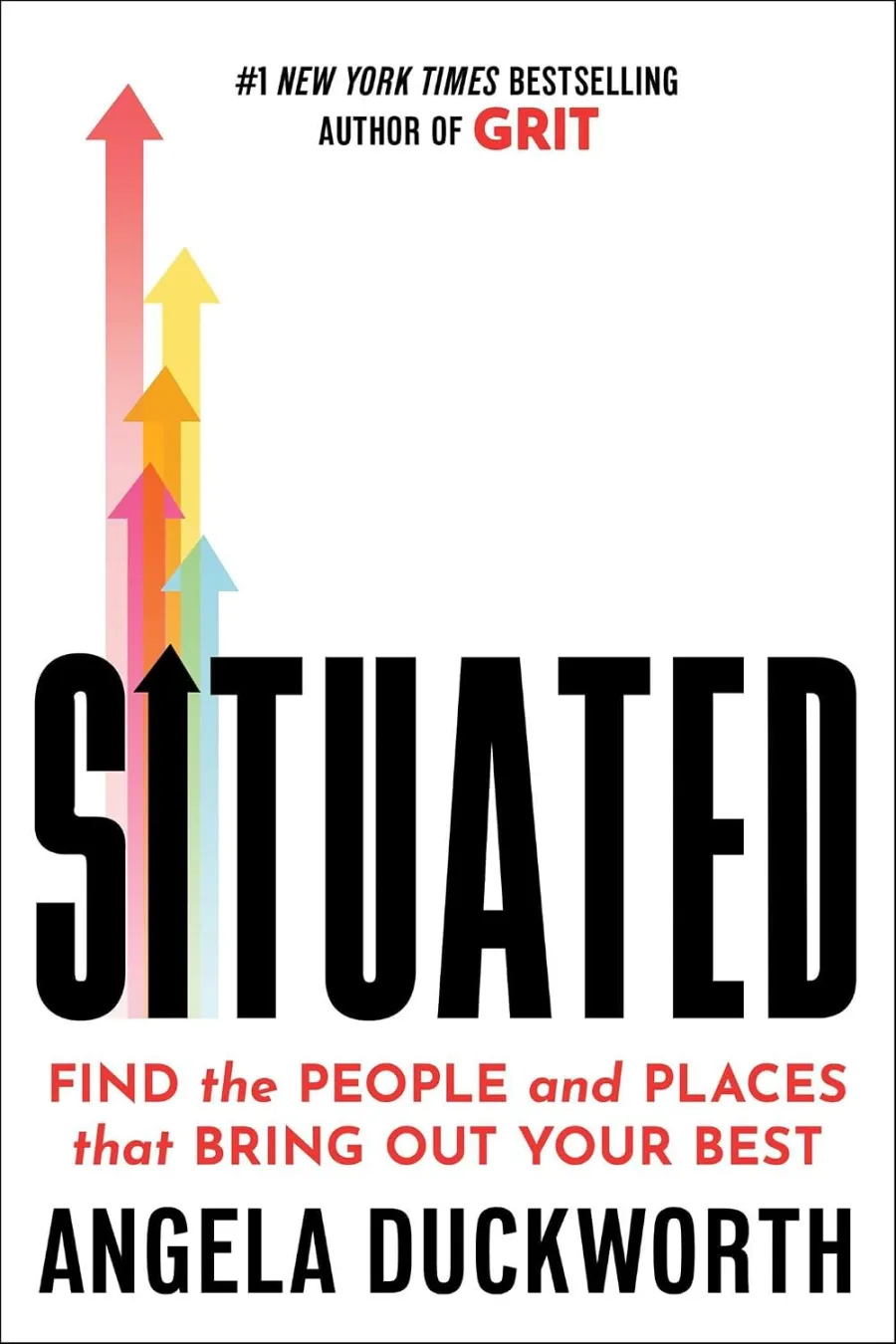
Download Cover Image
Do you want to download the full cover image for Situated: Find the People and Places That Bring Out Your Best?