
The Witches of Cambridge : A Novel
Hardcover
• 416 Pages
• USD 29.00
• English
• 9781668074640
No ratings yet
| Publisher | Scribner |
|---|---|
| ISBN13 | 9781668074640 |
| ASIN/SKU | 1668074648 |
| Book Format | Hardcover |
| Language | English |
| Pages | 416 |
| List Price | USD 29.00 |
| Publishing Date | 08/09/2026 |
| Dimensions | 6 x 1.6 x 9 inches |
| Weight | 1.25 pounds |
| Book Code | BD00070449 |
Buy this Book
Amazon Stores
Ebook Stores
Other Stores
Discover The Witches of Cambridge : A Novel by Alice Hoffman. This book is published by Scribner in Hardcover format, ISBN 9781668074640, ASIN 1668074648, under Literature and Fiction, Horror Occult and Supernatural, Historical Fiction.
Book Description
A READ WITH JENNA BOOK CLUB PICK
The brand-new series from the bestselling author of Practical Magic, following two brilliant young women in 1950s Cambridge, Massachusetts, as they become immersed in a mysterious secret group of witches at Radcliffe known as the Lilith Society.
Once upon a time, women were drowned in the river and the only witnesses were the crows in the trees. The Puritans blamed Eve for the sins of the world. That was when we began to meet in the name of Lilith, Adam’s first wife—banished for refusing to do as she was told.
We Fly Together…
By the 1950s, Cambridge, Massachusetts feels far removed from the legendary witch trials that marked its early days as a colony. Ava, a bright young woman from a small town in Maine, arrives for her first year at Radcliffe College. There, she meets Lauren, her opposite in every way—the wild and brazen daughter of a wealthy and well-established Cambridge family. But the two have more in common than they think. Both are recruited by the Lilith Society, a secret organization of witches at Radcliffe dating back to colonial times. As they learn more about their legacy, Ava and Lauren form a close bond that is put to the test as they learn to navigate their new power, friendship, and love.
While Radcliffe seems like a safe haven, the shadow of McCarthyism looms large, an ever-present threat to the flourishing creative and intellectual life in Cambridge. And as girls from the Lilith Society begin to go missing, Ava and Lauren realize the witch trials of the past may not be as deeply buried as they once believed.
The brand-new series from the bestselling author of Practical Magic, following two brilliant young women in 1950s Cambridge, Massachusetts, as they become immersed in a mysterious secret group of witches at Radcliffe known as the Lilith Society.
Once upon a time, women were drowned in the river and the only witnesses were the crows in the trees. The Puritans blamed Eve for the sins of the world. That was when we began to meet in the name of Lilith, Adam’s first wife—banished for refusing to do as she was told.
We Fly Together…
By the 1950s, Cambridge, Massachusetts feels far removed from the legendary witch trials that marked its early days as a colony. Ava, a bright young woman from a small town in Maine, arrives for her first year at Radcliffe College. There, she meets Lauren, her opposite in every way—the wild and brazen daughter of a wealthy and well-established Cambridge family. But the two have more in common than they think. Both are recruited by the Lilith Society, a secret organization of witches at Radcliffe dating back to colonial times. As they learn more about their legacy, Ava and Lauren form a close bond that is put to the test as they learn to navigate their new power, friendship, and love.
While Radcliffe seems like a safe haven, the shadow of McCarthyism looms large, an ever-present threat to the flourishing creative and intellectual life in Cambridge. And as girls from the Lilith Society begin to go missing, Ava and Lauren realize the witch trials of the past may not be as deeply buried as they once believed.
Author Biography
Alice Hoffman is the author of thirty works of fiction, including Practical Magic, The Dovekeepers, Magic Lessons, and, most recently, The Book of Magic. She lives in Boston. Her new novel, The Invisible Hour, is forthcoming in August 2023. Visit her website: www.alicehoffman.com
Editorial Reviews
"The great Alice Hoffman kicks off a brand-new witchy series: this time, taking us to Radcliffe and a secret society of witches in the 1950s. This is so deeply my kind of comfort reading and I cannot wait.” —Literary Hub, Most Anticipated Books of 2026 (Part 2)
“[A] sagely bewitching immersion in New England history, magic, misogyny, and resistance... Spiked with fascinating facts, incandescent with lush evocations of nature and the supernatural, and propelled by ravishing and suspenseful struggles for love against all odds, this is an enrapturing, illuminating, and slyly relevant saga.” —Booklist, Starred Review
“Hoffman again draws on lore and a strong sense of place to root her tale of magic, feminism, and sisterly love. Her characters shine… This is a book that knows what it wants to say and says it. A welcome novel for Hoffman fans and readers of fantastical fiction.” —Kirkus
“Enticing… Hoffman proves she’s still capable of magic.” —Publishers Weekly
"Rich with history, heartbreak, and magic, Hoffman's tale of privilege and persecution expertly navigates past and present, reality and fantasy, all of it rendered in brilliant detail. Each twist of fate feels crueler than the last, and I loved watching these characters fight for every hard-won moment of love and redemption. Utterly spellbinding." —Leigh Bardugo, #1 New York Times bestselling author of Ninth House and The Familiar
“Alice Hoffman introduces us to a whole new world of witches and wonders in The Witches of Cambridge. Richly atmospheric and brimming over with Hoffman’s love of family, history, and books, the reader is ushered into the dark halls of academia where secret societies and New England’s magical legacy are set against the dangers of the McCarthy era. Hoffman twists together secrets and silences, past and present, into a timely and compelling tale that asks, “who can you trust?" —Deborah Harkness, #1 New York Times bestselling author of A Discovery of Witches and the All Souls Trilogy
“[A] sagely bewitching immersion in New England history, magic, misogyny, and resistance... Spiked with fascinating facts, incandescent with lush evocations of nature and the supernatural, and propelled by ravishing and suspenseful struggles for love against all odds, this is an enrapturing, illuminating, and slyly relevant saga.” —Booklist, Starred Review
“Hoffman again draws on lore and a strong sense of place to root her tale of magic, feminism, and sisterly love. Her characters shine… This is a book that knows what it wants to say and says it. A welcome novel for Hoffman fans and readers of fantastical fiction.” —Kirkus
“Enticing… Hoffman proves she’s still capable of magic.” —Publishers Weekly
"Rich with history, heartbreak, and magic, Hoffman's tale of privilege and persecution expertly navigates past and present, reality and fantasy, all of it rendered in brilliant detail. Each twist of fate feels crueler than the last, and I loved watching these characters fight for every hard-won moment of love and redemption. Utterly spellbinding." —Leigh Bardugo, #1 New York Times bestselling author of Ninth House and The Familiar
“Alice Hoffman introduces us to a whole new world of witches and wonders in The Witches of Cambridge. Richly atmospheric and brimming over with Hoffman’s love of family, history, and books, the reader is ushered into the dark halls of academia where secret societies and New England’s magical legacy are set against the dangers of the McCarthy era. Hoffman twists together secrets and silences, past and present, into a timely and compelling tale that asks, “who can you trust?" —Deborah Harkness, #1 New York Times bestselling author of A Discovery of Witches and the All Souls Trilogy
Book Summary
The Witches of Cambridge by Alice Hoffman is a richly atmospheric historical fantasy that blends witchcraft, friendship, romance, women’s history, academic life, and political fear into a story about two young women discovering that the past is never as safely buried as people imagine. Set primarily in 1950s Cambridge, Massachusetts, the novel follows Ava Abbot, a bright young woman from Maine, and Lauren Bell, the rebellious daughter of a wealthy Cambridge family. Their lives seem completely different, yet both women are drawn into the same secret world when they are recruited into the Lilith Society, a centuries-old organization of witches connected to Radcliffe College. As Ava and Lauren discover their powers and become close friends, they also encounter a darker reality: McCarthyism is spreading fear through American intellectual life, women connected to the Lilith Society are disappearing, and the persecution that once produced the Salem witch trials may have taken a new form. Published in 2026 as the beginning of a new series, the novel is a particularly natural fit for readers searching for an Alice Hoffman witch novel, The Witches of Cambridge summary, historical fantasy about witches, books like Practical Magic, or stories about female friendship and secret societies.
At the heart of the novel is Ava, whose arrival at Radcliffe represents the beginning of an entirely new life. She comes from a small town in Maine and has always felt that something larger was waiting for her somewhere beyond the limits of her familiar surroundings. Winning a scholarship to Radcliffe gives her an opportunity to escape the expectations of home and enter a world of books, ideas, independence, and possibility. Yet Ava's excitement is mixed with uncertainty. She is young, inexperienced, and trying to understand who she might become when she is no longer defined by the people and circumstances that shaped her childhood. Her longing for freedom becomes one of the emotional foundations of the story. The official discussion guide describes her as someone who wants to be surprised by life, and her journey gradually becomes one of learning how to claim that freedom rather than simply dreaming about it.
Lauren Bell provides a striking contrast to Ava. She is wealthy, confident, unconventional, and already familiar with the social world of Cambridge. Where Ava initially appears cautious and uncertain, Lauren is bold and rebellious. Yet Lauren's apparent confidence hides her own vulnerabilities. She understands how to move through privileged society, but she also knows that social expectations can become another kind of prison. Her family background gives her advantages, but those advantages do not necessarily make her emotionally free. Her relationship with Ava becomes important precisely because the two women recognize something in each other that their outward differences conceal. Their friendship is not simply a convenient partnership for solving supernatural mysteries. It becomes the emotional center of the novel. Through one another, they begin to understand courage, vulnerability, independence, and the risks involved in refusing to conform.
The two women are brought together through the Lilith Society, the secret organization at the center of The Witches of Cambridge. According to Hoffman's official description, the society dates back to the colonial era and takes its name from Lilith, Adam's first wife in Jewish folklore, who was banished because she refused to obey him. The society's mythology therefore immediately establishes one of the book's most important themes: female independence has historically been treated as dangerous. The witches do not gather merely to practice supernatural abilities. Their organization preserves a history of women who refused to accept the roles imposed upon them.
This history gives the novel its distinctive connection between witchcraft and feminism. In Hoffman's world, the accusation of witchcraft is not simply about whether supernatural powers exist. It is also a way society labels women who are difficult to control. The novel looks backward to the Puritan era, when women could be accused, persecuted, and killed for supposedly practicing witchcraft, and then places that history beside 1950s America. The comparison is deliberate. Hoffman asks what happens when a society becomes frightened of people who think differently, live differently, or refuse to conform. The supernatural story consequently becomes a metaphor for real historical persecution.
Ava and Lauren initially see the Lilith Society as a place of discovery and belonging. They meet women who understand their unusual abilities and who have preserved traditions hidden from the outside world. Living at Lilith House gives the young women a sense of community that neither has fully experienced before. Yet the safety of this community is fragile. Their education in magic is happening against a political background in which suspicion is becoming increasingly dangerous. The United States of the 1950s is experiencing the fear and paranoia of McCarthyism, when accusations of Communist sympathies could destroy careers, friendships, reputations, and intellectual communities. The novel uses that historical moment to show that persecution does not always look exactly like the persecution of the past. The methods can change while the underlying fear remains recognizable.
This parallel between the Salem witch trials and McCarthyism is arguably the novel's most important historical idea. The old witch trials punished people by turning suspicion into certainty. McCarthy-era investigations similarly encouraged people to see ideological difference as evidence of guilt. Hoffman connects these moments to demonstrate how easily fear can become a social weapon. When people are encouraged to believe that hidden enemies are everywhere, accusations can become more powerful than evidence. The official reading guide directly asks readers to consider where the novel's parallels between Salem and McCarthy-era America are most visible and whether similar comparisons can be drawn to the political climate of the present.
The story becomes more suspenseful when members of the Lilith Society begin to disappear. At first, the secret society seems like a refuge from the outside world. Gradually, however, Ava and Lauren realize that their magical community itself may be under threat. The disappearances force them to reconsider what they know about the society, its history, and the people surrounding them. They cannot simply assume that the past is finished. The possibility emerges that the forces responsible for persecuting witches centuries earlier have never entirely disappeared. Instead, they have adapted to a new historical moment. This mystery gives the novel its thriller-like momentum while keeping the emotional focus on Ava and Lauren.
The mystery also introduces one of Hoffman's favorite concerns: the relationship between memory and history. The past in this novel is not dead information stored in books. It actively shapes the present. The women of the Lilith Society carry memories of earlier generations, and the descendants of people connected to historical persecution continue to live with the consequences of that legacy. Characters cannot simply decide that history no longer matters. They inherit stories, fears, privileges, prejudices, and wounds whether they want them or not.
Jamie Mather represents this idea particularly well. His family history is connected to the Salem witch trials, giving him a personal relationship with a past he did not choose. The official discussion questions specifically ask readers to consider how Jamie's relationship with his family's legacy shapes his journey. His presence complicates the story because history is not divided neatly into innocent victims and distant villains. People inherit complicated legacies. They have to decide what responsibility means when they are connected to actions committed by previous generations.
Romance is another important element of the novel, but Hoffman does not treat love as an uncomplicated escape from danger. Ava becomes involved with Jamie, while Lauren has a relationship with Lionel and later becomes connected to a tattoo artist. These relationships allow Hoffman to explore vulnerability. Love requires people to reveal parts of themselves that they might otherwise keep hidden, and that can be frightening. Lauren's belief that people like her should not fall in love reflects her fear that emotional attachment will weaken her independence. Yet the story gradually suggests that genuine intimacy is not the opposite of strength. Allowing yourself to care about another person can itself be an act of courage.
The friendship between Ava and Lauren is therefore just as important as their romantic relationships. Their bond becomes a form of resistance. They come from different social worlds and have very different personalities, but they learn that friendship can cross those boundaries. Their relationship embodies the idea of a coven in its broadest sense: women supporting women, sharing knowledge, protecting one another, and refusing to face danger alone. Alice Hoffman has spoken about the importance of women having their own “coven,” and the novel transforms that idea into both a supernatural and emotional reality.
Another major theme is conformity. Lauren tells Ava that she needs to learn the “game of appearing normal,” and this becomes an important lesson. The witches possess powers that make them different, but the danger does not necessarily come from the powers themselves. It comes from being discovered. They have to decide when to hide, when to reveal themselves, and when refusing to conform is worth the risk. This mirrors the experience of many characters living under McCarthyism, where people may conceal their beliefs, associations, or relationships because exposure can have serious consequences. The supernatural and political stories therefore reinforce one another.
The novel's portrayal of magic is also distinctly Hoffman-like. Magic is not presented merely as a collection of spectacular spells. It is tied to nature, intuition, inherited knowledge, women's bodies, memory, and emotional experience. The supernatural world feels embedded within ordinary life rather than completely separate from it. This creates the magical atmosphere that readers familiar with Practical Magic may recognize. However, The Witches of Cambridge develops its own identity by placing that magic inside an academic setting and a specific historical period. The result is a combination of dark academia, historical fiction, magical realism, and feminist fantasy. Critics have specifically praised the book's atmosphere, its New England history, and its exploration of magic, feminism, sisterly love, and resistance.
The academic setting is especially significant. Radcliffe represents knowledge, ambition, and intellectual freedom, but the novel asks who gets access to those things and who is allowed to use knowledge without being punished for it. The women of the Lilith Society possess forms of knowledge that have survived outside official institutions. Their magic becomes another kind of intellectual inheritance. At the same time, McCarthyism threatens Cambridge's creative and academic culture, demonstrating how easily intellectual freedom can be damaged when fear takes control.
For readers looking for a detailed summary of The Witches of Cambridge, the novel can therefore be understood as a story about two young women discovering that power means very little without the courage to use it responsibly. Ava begins as someone searching for a larger life. Lauren begins as someone who appears to have everything but is still afraid of vulnerability. The Lilith Society gives them both a community, but the growing danger forces them to decide what that community means to them. Their education in magic becomes inseparable from their education in friendship, love, history, and resistance.
The title itself carries several meanings. The witches of Cambridge are literally women with supernatural abilities, but they are also women who refuse to accept the limitations placed upon them. The word “witch” has historically been used to frighten and control women, and Hoffman reclaims it as a symbol of knowledge, independence, sisterhood, and resilience. The novel's historical parallels make that reclamation especially powerful. The women who were once drowned or executed have become part of a continuing tradition rather than forgotten victims. Their descendants inherit not only their powers but also their determination to survive.
Ultimately, The Witches of Cambridge is a novel about women finding power through connection. Ava and Lauren do not become stronger because they stop needing other people. They become stronger because they learn whom they can trust. Their friendship gives them courage, the Lilith Society gives them history, magic gives them a new understanding of themselves, and the dangers surrounding them force them to confront what happens when fear becomes a justification for persecution. Hoffman's story suggests that oppressive systems depend partly on isolation: people are easier to control when they believe they are alone. Community breaks that isolation.
For fans of Practical Magic, historical fantasy, witch novels, secret-society stories, dark academia, feminist fiction, and Alice Hoffman books, The Witches of Cambridge offers a compelling combination of atmosphere and historical relevance. It is also a particularly strong choice for book clubs because its central questions extend beyond the fantasy plot: How much of ourselves should we hide to appear normal? Can people escape the mistakes of their ancestors? What happens when political fear becomes more powerful than evidence? Why are independent women so often treated as threatening? And how can friendship become a form of resistance? These are the questions that give the novel depth beyond its magical premise.
At its deepest level, The Witches of Cambridge argues that history repeats itself not because people are incapable of learning, but because fear can make old patterns look new. The Salem witch trials and McCarthy-era persecution are separated by centuries, yet both reveal the danger of turning difference into suspicion. Against that history, Hoffman places Ava and Lauren, two young women learning to trust themselves and each other. Their story is ultimately about refusing silence, protecting one another, and understanding that power becomes meaningful when it is used to preserve freedom rather than impose control. The novel's magic is enchanting, but its most lasting magic is human: friendship, courage, love, memory, and the decision to stand together when the world would prefer that everyone stand alone.
At the heart of the novel is Ava, whose arrival at Radcliffe represents the beginning of an entirely new life. She comes from a small town in Maine and has always felt that something larger was waiting for her somewhere beyond the limits of her familiar surroundings. Winning a scholarship to Radcliffe gives her an opportunity to escape the expectations of home and enter a world of books, ideas, independence, and possibility. Yet Ava's excitement is mixed with uncertainty. She is young, inexperienced, and trying to understand who she might become when she is no longer defined by the people and circumstances that shaped her childhood. Her longing for freedom becomes one of the emotional foundations of the story. The official discussion guide describes her as someone who wants to be surprised by life, and her journey gradually becomes one of learning how to claim that freedom rather than simply dreaming about it.
Lauren Bell provides a striking contrast to Ava. She is wealthy, confident, unconventional, and already familiar with the social world of Cambridge. Where Ava initially appears cautious and uncertain, Lauren is bold and rebellious. Yet Lauren's apparent confidence hides her own vulnerabilities. She understands how to move through privileged society, but she also knows that social expectations can become another kind of prison. Her family background gives her advantages, but those advantages do not necessarily make her emotionally free. Her relationship with Ava becomes important precisely because the two women recognize something in each other that their outward differences conceal. Their friendship is not simply a convenient partnership for solving supernatural mysteries. It becomes the emotional center of the novel. Through one another, they begin to understand courage, vulnerability, independence, and the risks involved in refusing to conform.
The two women are brought together through the Lilith Society, the secret organization at the center of The Witches of Cambridge. According to Hoffman's official description, the society dates back to the colonial era and takes its name from Lilith, Adam's first wife in Jewish folklore, who was banished because she refused to obey him. The society's mythology therefore immediately establishes one of the book's most important themes: female independence has historically been treated as dangerous. The witches do not gather merely to practice supernatural abilities. Their organization preserves a history of women who refused to accept the roles imposed upon them.
This history gives the novel its distinctive connection between witchcraft and feminism. In Hoffman's world, the accusation of witchcraft is not simply about whether supernatural powers exist. It is also a way society labels women who are difficult to control. The novel looks backward to the Puritan era, when women could be accused, persecuted, and killed for supposedly practicing witchcraft, and then places that history beside 1950s America. The comparison is deliberate. Hoffman asks what happens when a society becomes frightened of people who think differently, live differently, or refuse to conform. The supernatural story consequently becomes a metaphor for real historical persecution.
Ava and Lauren initially see the Lilith Society as a place of discovery and belonging. They meet women who understand their unusual abilities and who have preserved traditions hidden from the outside world. Living at Lilith House gives the young women a sense of community that neither has fully experienced before. Yet the safety of this community is fragile. Their education in magic is happening against a political background in which suspicion is becoming increasingly dangerous. The United States of the 1950s is experiencing the fear and paranoia of McCarthyism, when accusations of Communist sympathies could destroy careers, friendships, reputations, and intellectual communities. The novel uses that historical moment to show that persecution does not always look exactly like the persecution of the past. The methods can change while the underlying fear remains recognizable.
This parallel between the Salem witch trials and McCarthyism is arguably the novel's most important historical idea. The old witch trials punished people by turning suspicion into certainty. McCarthy-era investigations similarly encouraged people to see ideological difference as evidence of guilt. Hoffman connects these moments to demonstrate how easily fear can become a social weapon. When people are encouraged to believe that hidden enemies are everywhere, accusations can become more powerful than evidence. The official reading guide directly asks readers to consider where the novel's parallels between Salem and McCarthy-era America are most visible and whether similar comparisons can be drawn to the political climate of the present.
The story becomes more suspenseful when members of the Lilith Society begin to disappear. At first, the secret society seems like a refuge from the outside world. Gradually, however, Ava and Lauren realize that their magical community itself may be under threat. The disappearances force them to reconsider what they know about the society, its history, and the people surrounding them. They cannot simply assume that the past is finished. The possibility emerges that the forces responsible for persecuting witches centuries earlier have never entirely disappeared. Instead, they have adapted to a new historical moment. This mystery gives the novel its thriller-like momentum while keeping the emotional focus on Ava and Lauren.
The mystery also introduces one of Hoffman's favorite concerns: the relationship between memory and history. The past in this novel is not dead information stored in books. It actively shapes the present. The women of the Lilith Society carry memories of earlier generations, and the descendants of people connected to historical persecution continue to live with the consequences of that legacy. Characters cannot simply decide that history no longer matters. They inherit stories, fears, privileges, prejudices, and wounds whether they want them or not.
Jamie Mather represents this idea particularly well. His family history is connected to the Salem witch trials, giving him a personal relationship with a past he did not choose. The official discussion questions specifically ask readers to consider how Jamie's relationship with his family's legacy shapes his journey. His presence complicates the story because history is not divided neatly into innocent victims and distant villains. People inherit complicated legacies. They have to decide what responsibility means when they are connected to actions committed by previous generations.
Romance is another important element of the novel, but Hoffman does not treat love as an uncomplicated escape from danger. Ava becomes involved with Jamie, while Lauren has a relationship with Lionel and later becomes connected to a tattoo artist. These relationships allow Hoffman to explore vulnerability. Love requires people to reveal parts of themselves that they might otherwise keep hidden, and that can be frightening. Lauren's belief that people like her should not fall in love reflects her fear that emotional attachment will weaken her independence. Yet the story gradually suggests that genuine intimacy is not the opposite of strength. Allowing yourself to care about another person can itself be an act of courage.
The friendship between Ava and Lauren is therefore just as important as their romantic relationships. Their bond becomes a form of resistance. They come from different social worlds and have very different personalities, but they learn that friendship can cross those boundaries. Their relationship embodies the idea of a coven in its broadest sense: women supporting women, sharing knowledge, protecting one another, and refusing to face danger alone. Alice Hoffman has spoken about the importance of women having their own “coven,” and the novel transforms that idea into both a supernatural and emotional reality.
Another major theme is conformity. Lauren tells Ava that she needs to learn the “game of appearing normal,” and this becomes an important lesson. The witches possess powers that make them different, but the danger does not necessarily come from the powers themselves. It comes from being discovered. They have to decide when to hide, when to reveal themselves, and when refusing to conform is worth the risk. This mirrors the experience of many characters living under McCarthyism, where people may conceal their beliefs, associations, or relationships because exposure can have serious consequences. The supernatural and political stories therefore reinforce one another.
The novel's portrayal of magic is also distinctly Hoffman-like. Magic is not presented merely as a collection of spectacular spells. It is tied to nature, intuition, inherited knowledge, women's bodies, memory, and emotional experience. The supernatural world feels embedded within ordinary life rather than completely separate from it. This creates the magical atmosphere that readers familiar with Practical Magic may recognize. However, The Witches of Cambridge develops its own identity by placing that magic inside an academic setting and a specific historical period. The result is a combination of dark academia, historical fiction, magical realism, and feminist fantasy. Critics have specifically praised the book's atmosphere, its New England history, and its exploration of magic, feminism, sisterly love, and resistance.
The academic setting is especially significant. Radcliffe represents knowledge, ambition, and intellectual freedom, but the novel asks who gets access to those things and who is allowed to use knowledge without being punished for it. The women of the Lilith Society possess forms of knowledge that have survived outside official institutions. Their magic becomes another kind of intellectual inheritance. At the same time, McCarthyism threatens Cambridge's creative and academic culture, demonstrating how easily intellectual freedom can be damaged when fear takes control.
For readers looking for a detailed summary of The Witches of Cambridge, the novel can therefore be understood as a story about two young women discovering that power means very little without the courage to use it responsibly. Ava begins as someone searching for a larger life. Lauren begins as someone who appears to have everything but is still afraid of vulnerability. The Lilith Society gives them both a community, but the growing danger forces them to decide what that community means to them. Their education in magic becomes inseparable from their education in friendship, love, history, and resistance.
The title itself carries several meanings. The witches of Cambridge are literally women with supernatural abilities, but they are also women who refuse to accept the limitations placed upon them. The word “witch” has historically been used to frighten and control women, and Hoffman reclaims it as a symbol of knowledge, independence, sisterhood, and resilience. The novel's historical parallels make that reclamation especially powerful. The women who were once drowned or executed have become part of a continuing tradition rather than forgotten victims. Their descendants inherit not only their powers but also their determination to survive.
Ultimately, The Witches of Cambridge is a novel about women finding power through connection. Ava and Lauren do not become stronger because they stop needing other people. They become stronger because they learn whom they can trust. Their friendship gives them courage, the Lilith Society gives them history, magic gives them a new understanding of themselves, and the dangers surrounding them force them to confront what happens when fear becomes a justification for persecution. Hoffman's story suggests that oppressive systems depend partly on isolation: people are easier to control when they believe they are alone. Community breaks that isolation.
For fans of Practical Magic, historical fantasy, witch novels, secret-society stories, dark academia, feminist fiction, and Alice Hoffman books, The Witches of Cambridge offers a compelling combination of atmosphere and historical relevance. It is also a particularly strong choice for book clubs because its central questions extend beyond the fantasy plot: How much of ourselves should we hide to appear normal? Can people escape the mistakes of their ancestors? What happens when political fear becomes more powerful than evidence? Why are independent women so often treated as threatening? And how can friendship become a form of resistance? These are the questions that give the novel depth beyond its magical premise.
At its deepest level, The Witches of Cambridge argues that history repeats itself not because people are incapable of learning, but because fear can make old patterns look new. The Salem witch trials and McCarthy-era persecution are separated by centuries, yet both reveal the danger of turning difference into suspicion. Against that history, Hoffman places Ava and Lauren, two young women learning to trust themselves and each other. Their story is ultimately about refusing silence, protecting one another, and understanding that power becomes meaningful when it is used to preserve freedom rather than impose control. The novel's magic is enchanting, but its most lasting magic is human: friendship, courage, love, memory, and the decision to stand together when the world would prefer that everyone stand alone.
Sample Chapters
Sample Chapters will be added soon…
Reader Reviews
No reviews yet.
The Witches of Cambridge : A Novel
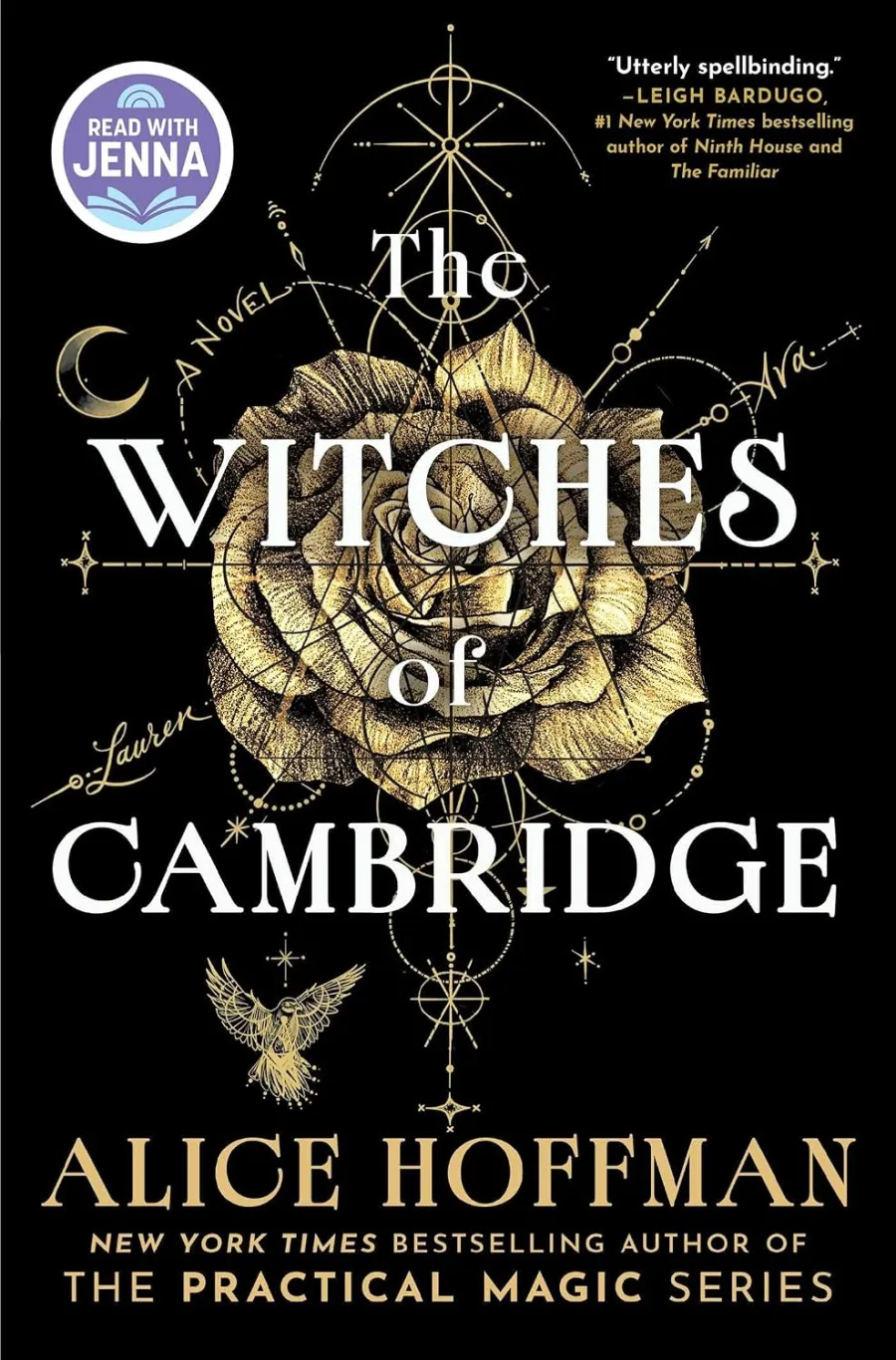
Download Cover Image
Do you want to download the full cover image for The Witches of Cambridge : A Novel?