
Training for Your Old Lady Body: A Guide to Building Muscle and Mobility at Any Age
Paperback
• 240 Pages
• USD 24.95
• English
• 9781797238845
No ratings yet
| Publisher | Chronicle Books |
|---|---|
| ISBN13 | 9781797238845 |
| ASIN/SKU | 1797238841 |
| Book Format | Paperback |
| Language | English |
| Pages | 240 |
| List Price | USD 24.95 |
| Publishing Date | 08/09/2026 |
| Dimensions | 6.1 x 0.74 x 8.05 inches |
| Weight | 1.05 pounds |
| Book Code | BD00070453 |
Buy this Book
Amazon Stores
Ebook Stores
Other Stores
Discover Training for Your Old Lady Body: A Guide to Building Muscle and Mobility at Any Age by Elizabeth Davies. This book is published by Chronicle Books in Paperback format, ISBN 9781797238845, ASIN 1797238841, under Health, Fitness and Dieting, General Women's Health, Exercise and Fitness.
Book Description
An empowering fitness guide from personal trainer Elizabeth Davies (@thiswomanlifts) designed to help you live a long, strong, healthy life with easy-to-follow strength training workout plans you can perform at home or in the gym, no matter your starting point.
Training for a bikini body? No, thank you. We’re training for dense bones, a healthy heart, good balance, and to maintain physical independence in our senior years. To carry our groceries up a flight of stairs. To play with our children and our grandchildren after them. We’re training for our old lady bodies.
Whether you are starting from scratch or a seasoned pro in the gym, these pages contain everything you need to know to strength train safely and effectively. This essential guide offers practical instruction and powerful motivation to build strength for life, including:
Sections highlighting pelvic floor health, mobility, and bone density
A training jargon dictionary
Modifications for bodyweight exercises
Tips on sleep health and protein intake
Creating a routine that fits within busy schedules
And much more.
Filled with expert guidance and 50 illustrations showcasing various exercises, this empowering companion will provide you with the tools and confidence to establish a healthy, consistent fitness practice, enabling you to feel your best and strongest at any age.
A NEW ANGLE ON FITNESS: Did you know “toning” is a marketing term to make building muscle more palatable for women? For decades, exercise has been packaged and sold as a means to an end for speedy physical transformation: 30 days to get shredded, 4 weeks to washboard abs, 8 weeks to a “bikini body.” Training for Your Old Lady Body breaks the mold, encouraging readers to train―not to become the smallest version of themselves, but to be able to carry groceries up the stairs independently at 90.
THE GIFT OF STRENGTH: The best part about building muscle? It's never too late to start. A comprehensive guide to the benefits of weightlifting, this book offers a true omnibus of how and why it can make life more seamless and enjoyable. It makes the perfect gift for women of all ages and fitness levels.
EXPERT, AUTHORITATIVE AUTHOR: Elizabeth Davies, founder of training platform This Woman Lifts, is a Certified Personal Trainer with qualifications in pre- and post-natal fitness. Her training emphasizes helping women build muscle to age strong, regardless of their stage in life―from young mothers to busy professionals to post-menopausal women.
Perfect for:
Women of all ages looking to build muscle for longevity
Beginners in the gym looking for guidance on strength training
Seasoned fitness enthusiasts
Fans of fitness and longevity bestsellers like Forever Strong and Outlive
Training for a bikini body? No, thank you. We’re training for dense bones, a healthy heart, good balance, and to maintain physical independence in our senior years. To carry our groceries up a flight of stairs. To play with our children and our grandchildren after them. We’re training for our old lady bodies.
Whether you are starting from scratch or a seasoned pro in the gym, these pages contain everything you need to know to strength train safely and effectively. This essential guide offers practical instruction and powerful motivation to build strength for life, including:
Sections highlighting pelvic floor health, mobility, and bone density
A training jargon dictionary
Modifications for bodyweight exercises
Tips on sleep health and protein intake
Creating a routine that fits within busy schedules
And much more.
Filled with expert guidance and 50 illustrations showcasing various exercises, this empowering companion will provide you with the tools and confidence to establish a healthy, consistent fitness practice, enabling you to feel your best and strongest at any age.
A NEW ANGLE ON FITNESS: Did you know “toning” is a marketing term to make building muscle more palatable for women? For decades, exercise has been packaged and sold as a means to an end for speedy physical transformation: 30 days to get shredded, 4 weeks to washboard abs, 8 weeks to a “bikini body.” Training for Your Old Lady Body breaks the mold, encouraging readers to train―not to become the smallest version of themselves, but to be able to carry groceries up the stairs independently at 90.
THE GIFT OF STRENGTH: The best part about building muscle? It's never too late to start. A comprehensive guide to the benefits of weightlifting, this book offers a true omnibus of how and why it can make life more seamless and enjoyable. It makes the perfect gift for women of all ages and fitness levels.
EXPERT, AUTHORITATIVE AUTHOR: Elizabeth Davies, founder of training platform This Woman Lifts, is a Certified Personal Trainer with qualifications in pre- and post-natal fitness. Her training emphasizes helping women build muscle to age strong, regardless of their stage in life―from young mothers to busy professionals to post-menopausal women.
Perfect for:
Women of all ages looking to build muscle for longevity
Beginners in the gym looking for guidance on strength training
Seasoned fitness enthusiasts
Fans of fitness and longevity bestsellers like Forever Strong and Outlive
Author Biography
Elizabeth Davies is an ex-lawyer-turned-personal-trainer with qualifications in pre- and post-natal fitness. Davies founded her training platform, This Woman Lifts, where her training emphasis is on helping women build muscle no matter what stage of life they’re in. She lives in Kent, England, with her three kids, one husband, French bulldog, tortoise, and two gerbils.
Editorial Reviews
“This essential debut guide from personal trainer Davies provides advice on how to stay healthy and strong into old age…Welcoming and practical, this is a much-needed reframing of the importance of physical activity.”―Publishers Weekly
Book Summary
Training for Your Old Lady Body: A Guide to Building Muscle and Mobility at Any Age by Elizabeth Davies is a refreshing challenge to the way women have traditionally been taught to think about exercise. Instead of asking women to train for a smaller waist, a flatter stomach, a lower number on the scale, or a temporary “bikini body,” Davies asks a much more meaningful question: What kind of body do you want to have when you are old? Her answer is practical and empowering. She wants women to train for strength, mobility, balance, healthy bones, cardiovascular fitness, pelvic-floor function, and physical independence. The book's central message is that exercise should not primarily be a punishment for eating or a shortcut to looking younger. It should be an investment in the ability to live a capable, active, independent life for as long as possible. The 2026 Chronicle Books edition is a 240-page guide with exercise illustrations, workout guidance, modifications, and practical advice for building a sustainable fitness routine.
Davies begins by challenging the culture surrounding women's fitness. For decades, women have been surrounded by messages promising dramatic physical transformations in a few weeks: lose weight quickly, get “toned,” flatten your stomach, or achieve a particular appearance. Davies argues that this approach creates a narrow definition of fitness and can make exercise feel like another obligation imposed on women rather than something that belongs to them. The word “toning,” in particular, is questioned because it can make strength training sound more acceptable to women without directly acknowledging that what they actually need is muscle development. The book replaces the language of appearance with the language of capability. Instead of asking whether an exercise will make someone look better in a photograph, Davies encourages readers to ask whether it will help them carry groceries, climb stairs, lift children, get up from the floor, travel, play with grandchildren, and remain physically independent later in life.
This change in perspective is the foundation of the entire book. Davies wants readers to imagine their future selves not as abstract “old ladies,” but as people who will still want to participate in life. The provocative title is therefore deliberately positive. Training for your “old lady body” means preparing your future body before you desperately need its strength. It is similar to saving money for retirement: you make small investments now because you want greater security later. The book repeatedly reframes exercise as a form of long-term preparation rather than short-term self-correction. This is why the author's approach can appeal to women in their twenties and thirties as much as to women approaching menopause or already in later adulthood. Strength is something worth developing before it becomes urgently necessary.
A major argument concerns the natural loss of muscle with age. Davies points out that muscle mass begins to decline over adulthood, with the book citing an estimated loss of roughly 3 to 8 percent per decade after age thirty. This does not mean that physical decline is inevitable or that everyone will become frail. Rather, it means that resistance training becomes increasingly valuable as a way of maintaining and building the physical capacity needed for everyday life. Davies therefore places muscle at the center of her fitness philosophy. Building muscle is not merely about looking athletic; it is about having a reserve of strength to draw upon as the body ages.
The book consequently explains the fundamentals of strength training for women in accessible language. Davies discusses resistance training, progressive overload, muscle growth, exercise intensity, and the practical differences between bodyweight exercises, resistance bands, and weights. Importantly, she does not present weightlifting as something reserved for experienced gym-goers. Beginners can start with simple movements and gradually increase the challenge. The goal is not to copy the strongest person in the gym but to give the muscles an appropriate stimulus and allow the body to adapt. The book includes exercise demonstrations such as split squats and glute bridges, while also offering modifications that make movements more accessible.
Davies also tackles one of the most common barriers to exercise: the belief that people need enormous amounts of free time to make meaningful progress. Her approach to building an exercise habit is intentionally realistic. Women may have jobs, children, partners, caring responsibilities, household work, and countless other demands competing for their attention. Waiting for a perfect schedule can therefore mean waiting forever. Instead, Davies encourages readers to create a routine that can survive ordinary life. Consistency matters more than an idealized program that looks impressive on paper but becomes impossible to maintain. This is particularly important because her philosophy is about decades of movement rather than a six-week transformation.
Another significant theme is the importance of self-worth and permission to prioritize movement. Davies recognizes that many women feel guilty when they take time for themselves. Exercise can become one more item on a long list of responsibilities, and mothers in particular may struggle to view personal fitness as legitimate. The book challenges that mindset. Looking after your body is not selfish simply because other people depend on you. In fact, remaining physically capable can make it easier to participate in family life and maintain independence. Davies therefore treats exercise as a form of self-care that deserves space rather than something that must always be squeezed into whatever time remains.
Bone health receives substantial attention because muscle is only one part of healthy aging. Davies argues that women should think beyond visible muscles and consider the strength of the skeleton supporting the entire body. Bone density becomes particularly important as people age, because weaker bones increase the consequences of falls and fractures. The book's provocative chapter title, “Bone Density > Six Packs,” summarizes the argument perfectly. A visible abdominal muscle may have aesthetic value, but strong bones can have enormous practical value decades later. Resistance and impact-based activities can play important roles in maintaining skeletal health, making exercise a long-term investment in physical resilience.
Davies also emphasizes cardiovascular health, reminding readers that strength training should not replace all other forms of movement. The heart, lungs, and blood vessels need regular activity too. Walking, running, cycling, swimming, and other forms of aerobic exercise can contribute to cardiovascular fitness. Her larger message is one of balance: a healthy aging strategy should develop strength and muscle while also supporting the cardiovascular system. Fitness is not one quality. It is a collection of capacities that allow a person to keep doing the things she values.
The discussion of the pelvic floor is another feature that makes the book particularly relevant to women. Davies brings attention to a part of the body that is often ignored until problems arise. Her own experience helped motivate her interest in women's physical health, and the book addresses pelvic-floor function as something worth understanding rather than something women should simply endure. Pelvic-floor concerns can affect women at different stages of life, including pregnancy, postpartum recovery, menopause, and later adulthood. By including pelvic health alongside strength, bone density, and cardiovascular fitness, Davies presents a much more complete picture of women's physical well-being.
Mobility is equally important. Davies distinguishes between simply being able to perform an exercise and having the ability to move joints through useful ranges of motion. Maintaining mobility can make everyday tasks easier and can help people continue activities they enjoy. The book therefore does not portray strength and flexibility as opposing goals. Instead, strength should support useful movement. A strong body that cannot move comfortably is not the complete picture of physical independence, just as flexibility without sufficient strength may not provide the resilience needed for everyday life. The combination of strength and mobility is what makes the book's approach particularly focused on longevity.
Davies also recognizes that training cannot be separated completely from lifestyle. Sleep, protein intake, recovery, stress, and daily habits all influence the ability to train consistently and adapt to exercise. The book provides practical guidance rather than demanding perfection. Readers are encouraged to make sensible choices that support their training while accepting that real life is messy. This is part of the book's humane quality: Davies does not imagine a reader with unlimited time, perfect motivation, or an uninterrupted routine. She writes for ordinary women whose lives sometimes make exercise difficult.
The book's “pension” metaphor brings these ideas together. Every strength-training session can be viewed as a small payment toward future physical freedom. That future might be decades away, but the principle is simple: the capacity to move independently later in life is easier to preserve when it has been supported throughout adulthood. This reframing also removes some of the emotional pressure surrounding fitness. You do not have to love every workout or constantly chase personal records. You simply need to recognize that movement has long-term value. Even a modest, sustainable practice can be meaningful when repeated for years.
Davies's own professional journey strengthens this message. She moved from a career in law into personal training and founded the training platform This Woman Lifts. Her qualifications include pre- and post-natal fitness, pelvic-floor dysfunction, and habit coaching, and she has worked with women ranging from their twenties to their seventies. Her experience gives the book a practical perspective: the advice is designed not for an imaginary perfect athlete but for women living through different stages of life and facing different physical and logistical challenges.
For readers searching for a summary of Training for Your Old Lady Body, Elizabeth Davies's strength-training advice, the best fitness approach for women as they age, how to build muscle after 30, how women can protect bone density, women's mobility exercises, pelvic-floor-friendly fitness, or exercise for healthy aging, the book's central answer is straightforward: stop treating exercise as a temporary appearance project and start treating it as lifelong infrastructure. You are not training because your current body is inadequate. You are training because your future body deserves support.
Ultimately, Training for Your Old Lady Body is a book about changing the reason we exercise. Davies does not deny that appearance can matter to people, nor does she suggest that everyone must become a dedicated weightlifter. Her deeper argument is that aesthetics should not be the only measure of success. A strong body is valuable because it allows you to participate in your own life. Muscle can help you carry things. Bone health can help protect independence. Cardiovascular fitness supports endurance. Mobility allows you to move freely. Pelvic-floor awareness can improve confidence and function. And consistent habits can make all of these benefits more sustainable.
The most memorable idea in the book is therefore also the simplest: train for the life you want to keep living. Imagine yourself decades from now and think about the ordinary things you hope will still be easy—walking upstairs, lifting a suitcase, getting up from a chair, carrying shopping bags, playing with children, traveling, gardening, dancing, or simply living without depending on someone else for basic physical tasks. Those abilities are not guaranteed, but they can be supported. Davies asks women to stop waiting for old age before taking physical independence seriously. Start building the body you will eventually rely upon. In that sense, the “old lady body” is not something to fear. It is a future version of yourself worth caring for now. The book's final message is both practical and hopeful: it is never too early, and it is never too late, to become stronger.
Davies begins by challenging the culture surrounding women's fitness. For decades, women have been surrounded by messages promising dramatic physical transformations in a few weeks: lose weight quickly, get “toned,” flatten your stomach, or achieve a particular appearance. Davies argues that this approach creates a narrow definition of fitness and can make exercise feel like another obligation imposed on women rather than something that belongs to them. The word “toning,” in particular, is questioned because it can make strength training sound more acceptable to women without directly acknowledging that what they actually need is muscle development. The book replaces the language of appearance with the language of capability. Instead of asking whether an exercise will make someone look better in a photograph, Davies encourages readers to ask whether it will help them carry groceries, climb stairs, lift children, get up from the floor, travel, play with grandchildren, and remain physically independent later in life.
This change in perspective is the foundation of the entire book. Davies wants readers to imagine their future selves not as abstract “old ladies,” but as people who will still want to participate in life. The provocative title is therefore deliberately positive. Training for your “old lady body” means preparing your future body before you desperately need its strength. It is similar to saving money for retirement: you make small investments now because you want greater security later. The book repeatedly reframes exercise as a form of long-term preparation rather than short-term self-correction. This is why the author's approach can appeal to women in their twenties and thirties as much as to women approaching menopause or already in later adulthood. Strength is something worth developing before it becomes urgently necessary.
A major argument concerns the natural loss of muscle with age. Davies points out that muscle mass begins to decline over adulthood, with the book citing an estimated loss of roughly 3 to 8 percent per decade after age thirty. This does not mean that physical decline is inevitable or that everyone will become frail. Rather, it means that resistance training becomes increasingly valuable as a way of maintaining and building the physical capacity needed for everyday life. Davies therefore places muscle at the center of her fitness philosophy. Building muscle is not merely about looking athletic; it is about having a reserve of strength to draw upon as the body ages.
The book consequently explains the fundamentals of strength training for women in accessible language. Davies discusses resistance training, progressive overload, muscle growth, exercise intensity, and the practical differences between bodyweight exercises, resistance bands, and weights. Importantly, she does not present weightlifting as something reserved for experienced gym-goers. Beginners can start with simple movements and gradually increase the challenge. The goal is not to copy the strongest person in the gym but to give the muscles an appropriate stimulus and allow the body to adapt. The book includes exercise demonstrations such as split squats and glute bridges, while also offering modifications that make movements more accessible.
Davies also tackles one of the most common barriers to exercise: the belief that people need enormous amounts of free time to make meaningful progress. Her approach to building an exercise habit is intentionally realistic. Women may have jobs, children, partners, caring responsibilities, household work, and countless other demands competing for their attention. Waiting for a perfect schedule can therefore mean waiting forever. Instead, Davies encourages readers to create a routine that can survive ordinary life. Consistency matters more than an idealized program that looks impressive on paper but becomes impossible to maintain. This is particularly important because her philosophy is about decades of movement rather than a six-week transformation.
Another significant theme is the importance of self-worth and permission to prioritize movement. Davies recognizes that many women feel guilty when they take time for themselves. Exercise can become one more item on a long list of responsibilities, and mothers in particular may struggle to view personal fitness as legitimate. The book challenges that mindset. Looking after your body is not selfish simply because other people depend on you. In fact, remaining physically capable can make it easier to participate in family life and maintain independence. Davies therefore treats exercise as a form of self-care that deserves space rather than something that must always be squeezed into whatever time remains.
Bone health receives substantial attention because muscle is only one part of healthy aging. Davies argues that women should think beyond visible muscles and consider the strength of the skeleton supporting the entire body. Bone density becomes particularly important as people age, because weaker bones increase the consequences of falls and fractures. The book's provocative chapter title, “Bone Density > Six Packs,” summarizes the argument perfectly. A visible abdominal muscle may have aesthetic value, but strong bones can have enormous practical value decades later. Resistance and impact-based activities can play important roles in maintaining skeletal health, making exercise a long-term investment in physical resilience.
Davies also emphasizes cardiovascular health, reminding readers that strength training should not replace all other forms of movement. The heart, lungs, and blood vessels need regular activity too. Walking, running, cycling, swimming, and other forms of aerobic exercise can contribute to cardiovascular fitness. Her larger message is one of balance: a healthy aging strategy should develop strength and muscle while also supporting the cardiovascular system. Fitness is not one quality. It is a collection of capacities that allow a person to keep doing the things she values.
The discussion of the pelvic floor is another feature that makes the book particularly relevant to women. Davies brings attention to a part of the body that is often ignored until problems arise. Her own experience helped motivate her interest in women's physical health, and the book addresses pelvic-floor function as something worth understanding rather than something women should simply endure. Pelvic-floor concerns can affect women at different stages of life, including pregnancy, postpartum recovery, menopause, and later adulthood. By including pelvic health alongside strength, bone density, and cardiovascular fitness, Davies presents a much more complete picture of women's physical well-being.
Mobility is equally important. Davies distinguishes between simply being able to perform an exercise and having the ability to move joints through useful ranges of motion. Maintaining mobility can make everyday tasks easier and can help people continue activities they enjoy. The book therefore does not portray strength and flexibility as opposing goals. Instead, strength should support useful movement. A strong body that cannot move comfortably is not the complete picture of physical independence, just as flexibility without sufficient strength may not provide the resilience needed for everyday life. The combination of strength and mobility is what makes the book's approach particularly focused on longevity.
Davies also recognizes that training cannot be separated completely from lifestyle. Sleep, protein intake, recovery, stress, and daily habits all influence the ability to train consistently and adapt to exercise. The book provides practical guidance rather than demanding perfection. Readers are encouraged to make sensible choices that support their training while accepting that real life is messy. This is part of the book's humane quality: Davies does not imagine a reader with unlimited time, perfect motivation, or an uninterrupted routine. She writes for ordinary women whose lives sometimes make exercise difficult.
The book's “pension” metaphor brings these ideas together. Every strength-training session can be viewed as a small payment toward future physical freedom. That future might be decades away, but the principle is simple: the capacity to move independently later in life is easier to preserve when it has been supported throughout adulthood. This reframing also removes some of the emotional pressure surrounding fitness. You do not have to love every workout or constantly chase personal records. You simply need to recognize that movement has long-term value. Even a modest, sustainable practice can be meaningful when repeated for years.
Davies's own professional journey strengthens this message. She moved from a career in law into personal training and founded the training platform This Woman Lifts. Her qualifications include pre- and post-natal fitness, pelvic-floor dysfunction, and habit coaching, and she has worked with women ranging from their twenties to their seventies. Her experience gives the book a practical perspective: the advice is designed not for an imaginary perfect athlete but for women living through different stages of life and facing different physical and logistical challenges.
For readers searching for a summary of Training for Your Old Lady Body, Elizabeth Davies's strength-training advice, the best fitness approach for women as they age, how to build muscle after 30, how women can protect bone density, women's mobility exercises, pelvic-floor-friendly fitness, or exercise for healthy aging, the book's central answer is straightforward: stop treating exercise as a temporary appearance project and start treating it as lifelong infrastructure. You are not training because your current body is inadequate. You are training because your future body deserves support.
Ultimately, Training for Your Old Lady Body is a book about changing the reason we exercise. Davies does not deny that appearance can matter to people, nor does she suggest that everyone must become a dedicated weightlifter. Her deeper argument is that aesthetics should not be the only measure of success. A strong body is valuable because it allows you to participate in your own life. Muscle can help you carry things. Bone health can help protect independence. Cardiovascular fitness supports endurance. Mobility allows you to move freely. Pelvic-floor awareness can improve confidence and function. And consistent habits can make all of these benefits more sustainable.
The most memorable idea in the book is therefore also the simplest: train for the life you want to keep living. Imagine yourself decades from now and think about the ordinary things you hope will still be easy—walking upstairs, lifting a suitcase, getting up from a chair, carrying shopping bags, playing with children, traveling, gardening, dancing, or simply living without depending on someone else for basic physical tasks. Those abilities are not guaranteed, but they can be supported. Davies asks women to stop waiting for old age before taking physical independence seriously. Start building the body you will eventually rely upon. In that sense, the “old lady body” is not something to fear. It is a future version of yourself worth caring for now. The book's final message is both practical and hopeful: it is never too early, and it is never too late, to become stronger.
Sample Chapters
Sample Chapters will be added soon…
Reader Reviews
No reviews yet.
Training for Your Old Lady Body: A Guide to Building Muscle and Mobility at Any Age
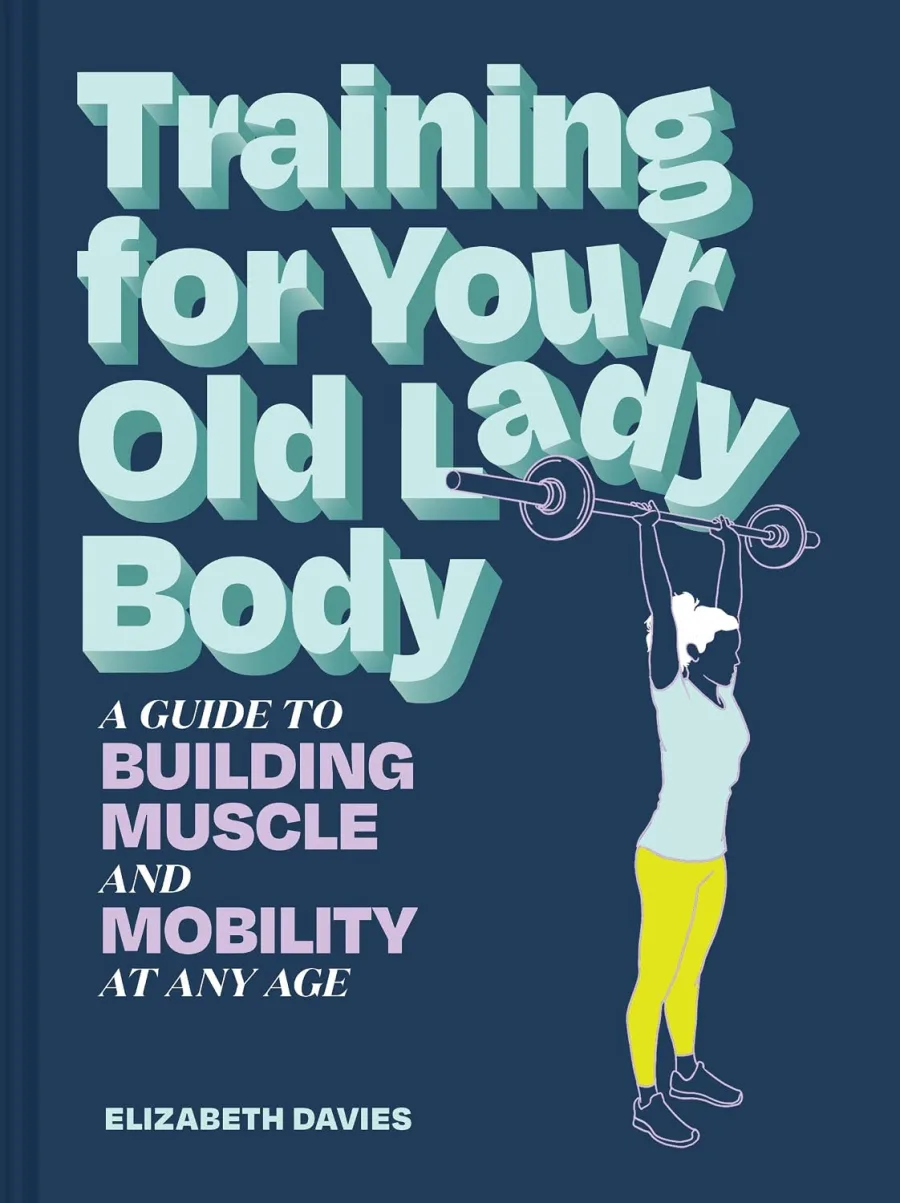
Download Cover Image
Do you want to download the full cover image for Training for Your Old Lady Body: A Guide to Building Muscle and Mobility at Any Age?