
The Breakup: A Novel
Hardcover
• 576 Pages
• USD 30.00
• English
• 9781984801371
No ratings yet
| Publisher | Random House |
|---|---|
| ISBN13 | 9781984801371 |
| ASIN/SKU | 1984801376 |
| Book Format | Hardcover |
| Language | English |
| Pages | 576 |
| List Price | USD 30.00 |
| Publishing Date | 18/08/2026 |
| Dimensions | 6.47 x 1.72 x 9.55 inches |
| Weight | 1.75 pounds |
| Book Code | BD00070456 |
Buy this Book
Amazon Stores
Ebook Stores
Other Stores
Discover The Breakup: A Novel by Kurt Andersen. This book is published by Random House in Hardcover format, ISBN 9781984801371, ASIN 1984801376, under Literature and Fiction, Dystopian Fiction, Family Life Fiction.
Book Description
NATIONAL BESTSELLER • A marriage cracks apart as a near-future United States redraws its borders in this penetrating and moving novel from the author of Fantasyland.
“This remarkable book contains multitudes. With wide-ranging intelligence and his trademark wit, Kurt Andersen has written an epic elegy for a country strained past its breaking point.”—Tom Perrotta, author of Ghost Town
Natalie and Asher’s marriage has long been marked by fault lines, quiet rifts in how they view their fellow Americans and navigate AI-suffused life in 2045. After twenty-three years together, and after surviving the two years of civil war in the 2030s, Natalie in rural Tennessee (part of the new Free American Republic) and Asher in San Francisco (in the now smaller United States). Natalie and Asher’s relationship mirrors America’s own unraveling—confused, messy, painful, ambivalent, and impossibly intimate.
When Natalie and Asher are brought back into proximity while touring far-flung colleges with their seventeen-year-old, they find themselves on a road trip through a strange, uncertain new American landscape, transformed by both the terrorist uprising and technology, all while dealing with the flux—and resilience—within their own family. They face the questions the nation has reckoned with for a generation: what differences are irreconcilable, and when is something broken worth saving?
Razor-sharp, ambitious, ranging from tragic to comic and brimming with imagination, The Breakup is a sweeping story where the personal and sociopolitical intersect in ways bracingly plausible, keenly insightful, and surprisingly hopeful.
“This remarkable book contains multitudes. With wide-ranging intelligence and his trademark wit, Kurt Andersen has written an epic elegy for a country strained past its breaking point.”—Tom Perrotta, author of Ghost Town
Natalie and Asher’s marriage has long been marked by fault lines, quiet rifts in how they view their fellow Americans and navigate AI-suffused life in 2045. After twenty-three years together, and after surviving the two years of civil war in the 2030s, Natalie in rural Tennessee (part of the new Free American Republic) and Asher in San Francisco (in the now smaller United States). Natalie and Asher’s relationship mirrors America’s own unraveling—confused, messy, painful, ambivalent, and impossibly intimate.
When Natalie and Asher are brought back into proximity while touring far-flung colleges with their seventeen-year-old, they find themselves on a road trip through a strange, uncertain new American landscape, transformed by both the terrorist uprising and technology, all while dealing with the flux—and resilience—within their own family. They face the questions the nation has reckoned with for a generation: what differences are irreconcilable, and when is something broken worth saving?
Razor-sharp, ambitious, ranging from tragic to comic and brimming with imagination, The Breakup is a sweeping story where the personal and sociopolitical intersect in ways bracingly plausible, keenly insightful, and surprisingly hopeful.
Author Biography
Kurt Andersen is the New York Times bestselling author of 9 books. He also o-founded Spy magazine and hosted the Peabody-winning public radio show Studio 360. Coming off of Evil Geniuses and Fantasyland, his latest book is The Breakup, a novel set in 2045:
Gary Shteyngart: “Great book! Pairing two divorces—one personal, one national—within a novel that’s funny and beautiful is something few writers could do. Thank you, universe, for this page-turner.”
Walter Isaacson: “Kurt Andersen is the most brilliant social novelist of our time, in the tradition of Tom Wolfe and Don DeLillo, but even funnier and deeper.”
Tom Perotta: “This remarkable book is a provocative political thought experiment, a sneakily profound meditation on AI and marriage, and a charming family road trip novel all rolled into one. With wide-ranging intelligence and his trademark wit, Kurt Andersen has written an epic elegy for a country strained past its breaking point."
Anne Lamott: “A harrowing and profound social satire set in the near future, rich in characters and insight, sometimes painful, often funny, beautifully written.”
Gary Shteyngart: “Great book! Pairing two divorces—one personal, one national—within a novel that’s funny and beautiful is something few writers could do. Thank you, universe, for this page-turner.”
Walter Isaacson: “Kurt Andersen is the most brilliant social novelist of our time, in the tradition of Tom Wolfe and Don DeLillo, but even funnier and deeper.”
Tom Perotta: “This remarkable book is a provocative political thought experiment, a sneakily profound meditation on AI and marriage, and a charming family road trip novel all rolled into one. With wide-ranging intelligence and his trademark wit, Kurt Andersen has written an epic elegy for a country strained past its breaking point."
Anne Lamott: “A harrowing and profound social satire set in the near future, rich in characters and insight, sometimes painful, often funny, beautifully written.”
Editorial Reviews
“Great book! Pairing two divorces—one personal, one national—within a novel that’s funny and beautiful is something few writers could do. Thank you, universe, for Kurt Andersen and this page-turner.”—Gary Shteyngart, New York Times bestselling author of Vera, or Faith
“A full, inventive, elaborately detailed portrait of . . . the next 19 years of American history. It’s fun to read.”—The New York Times Book Review
“Kurt Andersen plumbs the depths of our national struggle as a metaphor for a personal one . . . and vice versa. Simultaneously amusing and distressing, Clever, nuanced, and a joy.”—Jake Tapper, CNN Anchor and New York Times bestselling author
“Kurt Andersen is the most brilliant social novelist of our time, in the tradition of Tom Wolfe and Don DeLillo, but even funnier and deeper. With a light touch and instinct for telling details, he mixes pitch-perfect satire with profound insights.”—Walter Isaacson, New York Times bestselling author of The Greatest Sentence Ever Written
“One of our most brilliantly observant and thoughtful writers is compelling us to contemplate an American future of disunion and AI domination in a novel that is all the more powerful for its sobriety, its realism, and, yes, its humanity.”—Jon Meacham, #1 New York Times bestselling author of American Struggle
“With wit, fizz, and that rare ability to articulate big ideas that haven’t yet been articulated, Andersen perceives the world on a different frequency from the rest of us.”—Jennifer Senior, Pulitzer Prize–winning Atlantic writer and New York Times bestselling author
“Intoxicating . . . [Kurt Andersen] does things with words no one else can.”—Stephen Dubner, New York Times bestselling author of Freakonomics
“Explores the implications of economics, AI, media, politics, science, and other elements as they shape both the country and the individuals who live within it.”—Chicago Tribune
“A speculative state-of-the-nation novel . . . refreshingly full of absorbing characters. . . . In Fantasyland and Evil Geniuses, Andersen traced the fault lines that have threatened the American experiment ever since its foundation . . . The Breakup is in many ways an imaginative sequel to his recent nonfiction, except that his polemical gifts are coupled here with a Dickensian flair for comedy.”—Air Mail
“Andersen’s love and grief over what’s happened and is happening to this country spill onto every page.”—Newcity Lit
“With wide-ranging intelligence and his trademark wit, Kurt Andersen has written an epic elegy for a country strained past its breaking point, and imagined an eerily plausible version of our dark national future.”—Tom Perrotta, author of Ghost Town
“It is Kurt Andersen’s oracular perversity that one of the few institutions that survive the country’s demise is the college tour. So here is one last American road trip . . . confronting the great question Robert Frost posed: What to make of a diminished thing? And as Garry Shandling would say, No flipping—the ending is pure Hitchcock.”—Caitlin Flanagan, author of Girl Land
“A harrowing and profound social satire set in the near future, rich in characters and insight, sometimes painful, often funny, beautifully written.”—Anne Lamott
“A rich, incisive study of manners and morals in the American twenty-first century . . . Pointed, funny and unnerving, The Breakup conveys a sense of inevitability.”—Susanna Moore
“Road trip meets corporate intrigue meets political violence in an ultra-polarized near-future America.”—Kirkus Reviews
“A full, inventive, elaborately detailed portrait of . . . the next 19 years of American history. It’s fun to read.”—The New York Times Book Review
“Kurt Andersen plumbs the depths of our national struggle as a metaphor for a personal one . . . and vice versa. Simultaneously amusing and distressing, Clever, nuanced, and a joy.”—Jake Tapper, CNN Anchor and New York Times bestselling author
“Kurt Andersen is the most brilliant social novelist of our time, in the tradition of Tom Wolfe and Don DeLillo, but even funnier and deeper. With a light touch and instinct for telling details, he mixes pitch-perfect satire with profound insights.”—Walter Isaacson, New York Times bestselling author of The Greatest Sentence Ever Written
“One of our most brilliantly observant and thoughtful writers is compelling us to contemplate an American future of disunion and AI domination in a novel that is all the more powerful for its sobriety, its realism, and, yes, its humanity.”—Jon Meacham, #1 New York Times bestselling author of American Struggle
“With wit, fizz, and that rare ability to articulate big ideas that haven’t yet been articulated, Andersen perceives the world on a different frequency from the rest of us.”—Jennifer Senior, Pulitzer Prize–winning Atlantic writer and New York Times bestselling author
“Intoxicating . . . [Kurt Andersen] does things with words no one else can.”—Stephen Dubner, New York Times bestselling author of Freakonomics
“Explores the implications of economics, AI, media, politics, science, and other elements as they shape both the country and the individuals who live within it.”—Chicago Tribune
“A speculative state-of-the-nation novel . . . refreshingly full of absorbing characters. . . . In Fantasyland and Evil Geniuses, Andersen traced the fault lines that have threatened the American experiment ever since its foundation . . . The Breakup is in many ways an imaginative sequel to his recent nonfiction, except that his polemical gifts are coupled here with a Dickensian flair for comedy.”—Air Mail
“Andersen’s love and grief over what’s happened and is happening to this country spill onto every page.”—Newcity Lit
“With wide-ranging intelligence and his trademark wit, Kurt Andersen has written an epic elegy for a country strained past its breaking point, and imagined an eerily plausible version of our dark national future.”—Tom Perrotta, author of Ghost Town
“It is Kurt Andersen’s oracular perversity that one of the few institutions that survive the country’s demise is the college tour. So here is one last American road trip . . . confronting the great question Robert Frost posed: What to make of a diminished thing? And as Garry Shandling would say, No flipping—the ending is pure Hitchcock.”—Caitlin Flanagan, author of Girl Land
“A harrowing and profound social satire set in the near future, rich in characters and insight, sometimes painful, often funny, beautifully written.”—Anne Lamott
“A rich, incisive study of manners and morals in the American twenty-first century . . . Pointed, funny and unnerving, The Breakup conveys a sense of inevitability.”—Susanna Moore
“Road trip meets corporate intrigue meets political violence in an ultra-polarized near-future America.”—Kirkus Reviews
Book Summary
The Breakup: A Novel by Kurt Andersen is a sharp, imaginative, and surprisingly tender work of near-future fiction about a marriage coming apart at almost exactly the same time that the United States itself breaks into pieces. Published by Random House on August 18, 2026, the novel is set in 2045, after a devastating period of political violence and civil war has transformed the country. At its center are Natalie and Asher, a couple whose twenty-three-year marriage has developed deep ideological and emotional fault lines. Their personal separation mirrors the national “Disunion” that has divided America into the smaller United States and the newly formed Free American Republic. When they reunite to take their seventeen-year-old child, Logan, on a sprawling college tour, their family road trip becomes a journey through a radically changed America—and an examination of whether things that have been badly damaged can still be repaired.
The novel's most interesting idea is contained in its title. “The breakup” refers simultaneously to a marriage and a country. Andersen takes the familiar language of divorce—estrangement, irreconcilable differences, separation, shared history, custody, resentment, and the possibility of reconciliation—and applies it to American political life. This creates the novel's central metaphor: perhaps a nation can suffer the same emotional breakdown as a long marriage. People who once shared a home can discover that they no longer agree about what kind of life they want. They may still love one another while becoming convinced that living together is impossible. Similarly, Americans who share generations of history, institutions, culture, and family connections may become so politically divided that separation begins to look easier than continued conflict. Andersen uses this parallel not as a simple political argument but as a way of exploring what happens when disagreement becomes so deep that people stop believing coexistence is possible.
Natalie and Asher are therefore much more than a fictional married couple. They embody different ways of experiencing contemporary America. Their marriage has survived twenty-three years, but its underlying disagreements have accumulated gradually. They do not suddenly fall apart because of one dramatic betrayal. Instead, the relationship has been weakened by long-standing differences in how they understand other Americans, politics, technology, and the rapidly changing world around them. That slow deterioration makes their situation more believable. Real relationships often break through accumulation rather than a single event, and Andersen applies the same logic to national politics. America does not simply explode overnight; it reaches a point at which old compromises no longer seem sufficient.
The novel's future America has already experienced a terrifying political crisis. Beginning in 2036, a series of domestic terrorist attacks and political violence develops into what is commonly called a second American civil war. The conflict lasts roughly two years and leaves tens of thousands dead. Eventually, Americans move toward a negotiated separation rather than an endless attempt to reunify the country. The resulting arrangement, called “Disunion,” creates two sovereign nations: the United States of America and the Free American Republic. The distinction matters because Andersen does not present the breakup as a clean ideological victory for either side. Instead, the new borders remain complicated and unstable, with individual states and even counties debating which country they should belong to.
Natalie lives in rural Tennessee, which has become part of the Free American Republic, while Asher remains in San Francisco, which is still within the smaller United States. Their geographic separation therefore reflects their emotional separation. Natalie retreats toward the world she understands, while Asher remains connected to a technologically advanced and culturally liberal environment. Their daughter Logan connects the two worlds. The family cannot completely separate because their child belongs to both of them. That simple fact becomes one of the novel's most important reminders that political borders can never perfectly divide human relationships. Families, friendships, memories, businesses, and identities often cross borders even when governments try to create clean lines.
Logan is especially important because the novel uses the younger generation to question the assumptions of both parents. At seventeen, Logan is old enough to understand the political divisions surrounding the family but young enough to approach them differently. The college search gives Logan a practical problem that is simultaneously personal and political: where should the next stage of life happen? In a divided country, choosing a college is no longer simply about academic quality or personal preference. Geography, citizenship, political culture, security, and the future of the two new nations all become part of the decision. Logan's search therefore becomes a smaller version of America's own search for a viable future.
The college road trip is the narrative device that brings Natalie and Asher back together. Their tour takes them across the newly divided American landscape, allowing Andersen to explore how ordinary life has changed after political catastrophe. The family travels through a country that is technically at peace but still carries the scars of violence. Terrorist attacks continue occasionally, borders and political loyalties remain unsettled, and people are learning how to live with institutions that have been fundamentally altered. Yet the novel is not simply a bleak dystopia. Andersen is interested in the strange normality that develops after catastrophe. People still work, raise children, attend universities, travel, fall in love, argue, joke, and worry about ordinary things. Life continues even after the world has changed.
This mixture of ordinary life and extraordinary political circumstances gives The Breakup much of its distinctive tone. The novel can be tragic one moment and comic the next. Andersen's background as a journalist, cultural critic, and satirist is visible in his willingness to examine political absurdities through humor. The future he creates is frightening precisely because it is not completely alien. It contains recognizable political personalities, media habits, technological trends, ideological arguments, and cultural obsessions exaggerated into a plausible future. The humor makes the dystopian material easier to absorb while also making it more unsettling. Readers laugh because the situations are ridiculous, and then realize that many of the underlying tendencies are already familiar.
Technology forms another major part of the novel's future landscape. By 2045, artificial intelligence is deeply integrated into everyday life. Asher is particularly connected to this world through his work with a controversial billionaire and the National Institute of the Mind. The novel imagines a society in which AI has become so pervasive that the boundary between human intelligence and artificial intelligence is increasingly difficult to define. Andersen is interested less in presenting technology as simply good or bad than in asking what happens when technological power develops faster than society's ability to decide how it should be used. The AI elements add a speculative dimension to the story, while the marriage plot keeps those questions grounded in ordinary human experience.
Asher's professional world also brings the novel into the realm of corporate intrigue and scientific ambition. The billionaire environment surrounding him represents a future in which enormous private fortunes can shape research, technology, politics, and even the boundaries of scientific possibility. Andersen imagines wealthy entrepreneurs treating the future itself as something they can engineer. This becomes especially striking when contrasted with Natalie, who has moved back toward a much more ordinary life in Tennessee. Their separation is therefore not only geographical but philosophical: they inhabit different ideas about progress, freedom, technology, and what constitutes a good life.
One of the novel's more unusual speculative elements involves animal intelligence. The futuristic scientific world includes research into nonhuman consciousness, and the novel features a giant tortoise named Chukwa who has become an intelligent participant in the story. Kirkus notes the book's strange combination of political dystopia, AI, wealthy scientific experimentation, and unusual animal characters. This material may initially seem disconnected from the marriage and political breakup, but it reinforces Andersen's broader interest in changing definitions of intelligence and identity. If technology can alter human capabilities and animals can become participants in sophisticated intellectual life, then society must reconsider assumptions that once seemed permanent.
The novel's treatment of politics is deliberately expansive. Andersen imagines the long-term consequences of extreme polarization rather than merely depicting another election campaign. The United States has already experienced the thing that many political commentators fear: political disagreement becoming physical conflict. Yet after the violence ends, the question is not simply which side won. The harder question is how people rebuild ordinary life after discovering that neighbors, relatives, and fellow citizens were willing to kill one another over political beliefs. This is where the metaphor of divorce becomes especially powerful. A divorce may end direct conflict, but it does not erase shared history. The same is true of national separation. The two countries remain connected by culture, families, geography, economics, and memory.
Natalie's perspective is particularly valuable because she reflects on the absurdity of the political obsession that preceded the breakup. In the aftermath, she begins to notice a kind of exhaustion with ideological hatred. The novel suggests that people eventually become tired of living in a permanent state of political emergency. Even after a catastrophic division, there can be a desire simply to live. This does not mean the underlying disagreements disappear. Instead, people may gradually discover that constant political intensity is emotionally unsustainable. The possibility of a calmer future therefore becomes one of the novel's surprisingly hopeful elements.
The family road trip also allows Andersen to examine parenthood and generational change. Natalie and Asher may disagree about politics, but both remain parents to Logan. Their responsibilities do not disappear simply because their marriage has deteriorated. They must cooperate during the college search, listen to their child, negotiate practical decisions, and spend time together despite their history. In this sense, Logan becomes the human equivalent of the country's shared past. Natalie and Asher can disagree about almost everything, but they cannot simply erase the fact that they built something together. Their child is a living reminder that separation does not make history disappear.
The question of whether Logan's generation can escape the political obsessions of the previous generation becomes increasingly important. The older characters lived through the buildup to civil war; Logan must decide what kind of society should follow it. The younger generation therefore has an opportunity to define itself without completely inheriting the anger of its parents. Yet it also inherits the consequences of their decisions. This tension gives the novel a broader generational theme: adults may create political disasters, but children have to grow up inside the world those disasters leave behind.
For readers searching for a summary of The Breakup by Kurt Andersen, what happens in The Breakup, Kurt Andersen's dystopian novel explained, a novel about America's future civil war, books about political polarization, near-future American dystopian fiction, or the meaning of the ending of The Breakup, the book is best understood as both political satire and family drama. It imagines a divided America not simply to predict the future but to explore familiar questions from an exaggerated distance. How much disagreement can a relationship survive? Can political differences coexist with love? Can people separate peacefully after years of hostility? And once something has broken, is restoration always preferable to creating something new?
Ultimately, The Breakup is not a novel arguing that America must inevitably divide, nor is it simply a warning about technology or political extremism. Its deeper subject is the human difficulty of living with profound differences. Natalie and Asher's marriage is strained because they no longer understand the world in the same way. America is divided for essentially the same reason. Yet the novel refuses to make separation the final answer. Its most hopeful idea is that broken things can sometimes acquire new forms without becoming completely meaningless. A marriage may change; a country may change; technology may transform society; political identities may evolve. What matters is whether people can recognize what remains valuable after the old structure has failed. Andersen's story therefore moves beyond dystopian prediction toward a more intimate question: when something is damaged beyond recognition, what parts of it are still worth protecting?
In the end, The Breakup works because its enormous political premise remains anchored in ordinary human emotions. The United States may be divided into rival nations, AI may reshape civilization, terrorism may have transformed the political landscape, and borders may continue shifting, but Natalie still has memories of her husband, Asher still cares about his family, and Logan still needs both parents as the future approaches. The novel's final emotional force comes from this contrast between historical catastrophe and private affection. Andersen imagines a country that has broken apart while asking whether people who have been divided can still care for one another. The answer is complicated rather than sentimental, but it is ultimately hopeful. The Breakup suggests that reconciliation does not necessarily mean returning to the way things were. Sometimes it means accepting what has changed, understanding what cannot be restored, and finding a new way to live with what remains.
The novel's most interesting idea is contained in its title. “The breakup” refers simultaneously to a marriage and a country. Andersen takes the familiar language of divorce—estrangement, irreconcilable differences, separation, shared history, custody, resentment, and the possibility of reconciliation—and applies it to American political life. This creates the novel's central metaphor: perhaps a nation can suffer the same emotional breakdown as a long marriage. People who once shared a home can discover that they no longer agree about what kind of life they want. They may still love one another while becoming convinced that living together is impossible. Similarly, Americans who share generations of history, institutions, culture, and family connections may become so politically divided that separation begins to look easier than continued conflict. Andersen uses this parallel not as a simple political argument but as a way of exploring what happens when disagreement becomes so deep that people stop believing coexistence is possible.
Natalie and Asher are therefore much more than a fictional married couple. They embody different ways of experiencing contemporary America. Their marriage has survived twenty-three years, but its underlying disagreements have accumulated gradually. They do not suddenly fall apart because of one dramatic betrayal. Instead, the relationship has been weakened by long-standing differences in how they understand other Americans, politics, technology, and the rapidly changing world around them. That slow deterioration makes their situation more believable. Real relationships often break through accumulation rather than a single event, and Andersen applies the same logic to national politics. America does not simply explode overnight; it reaches a point at which old compromises no longer seem sufficient.
The novel's future America has already experienced a terrifying political crisis. Beginning in 2036, a series of domestic terrorist attacks and political violence develops into what is commonly called a second American civil war. The conflict lasts roughly two years and leaves tens of thousands dead. Eventually, Americans move toward a negotiated separation rather than an endless attempt to reunify the country. The resulting arrangement, called “Disunion,” creates two sovereign nations: the United States of America and the Free American Republic. The distinction matters because Andersen does not present the breakup as a clean ideological victory for either side. Instead, the new borders remain complicated and unstable, with individual states and even counties debating which country they should belong to.
Natalie lives in rural Tennessee, which has become part of the Free American Republic, while Asher remains in San Francisco, which is still within the smaller United States. Their geographic separation therefore reflects their emotional separation. Natalie retreats toward the world she understands, while Asher remains connected to a technologically advanced and culturally liberal environment. Their daughter Logan connects the two worlds. The family cannot completely separate because their child belongs to both of them. That simple fact becomes one of the novel's most important reminders that political borders can never perfectly divide human relationships. Families, friendships, memories, businesses, and identities often cross borders even when governments try to create clean lines.
Logan is especially important because the novel uses the younger generation to question the assumptions of both parents. At seventeen, Logan is old enough to understand the political divisions surrounding the family but young enough to approach them differently. The college search gives Logan a practical problem that is simultaneously personal and political: where should the next stage of life happen? In a divided country, choosing a college is no longer simply about academic quality or personal preference. Geography, citizenship, political culture, security, and the future of the two new nations all become part of the decision. Logan's search therefore becomes a smaller version of America's own search for a viable future.
The college road trip is the narrative device that brings Natalie and Asher back together. Their tour takes them across the newly divided American landscape, allowing Andersen to explore how ordinary life has changed after political catastrophe. The family travels through a country that is technically at peace but still carries the scars of violence. Terrorist attacks continue occasionally, borders and political loyalties remain unsettled, and people are learning how to live with institutions that have been fundamentally altered. Yet the novel is not simply a bleak dystopia. Andersen is interested in the strange normality that develops after catastrophe. People still work, raise children, attend universities, travel, fall in love, argue, joke, and worry about ordinary things. Life continues even after the world has changed.
This mixture of ordinary life and extraordinary political circumstances gives The Breakup much of its distinctive tone. The novel can be tragic one moment and comic the next. Andersen's background as a journalist, cultural critic, and satirist is visible in his willingness to examine political absurdities through humor. The future he creates is frightening precisely because it is not completely alien. It contains recognizable political personalities, media habits, technological trends, ideological arguments, and cultural obsessions exaggerated into a plausible future. The humor makes the dystopian material easier to absorb while also making it more unsettling. Readers laugh because the situations are ridiculous, and then realize that many of the underlying tendencies are already familiar.
Technology forms another major part of the novel's future landscape. By 2045, artificial intelligence is deeply integrated into everyday life. Asher is particularly connected to this world through his work with a controversial billionaire and the National Institute of the Mind. The novel imagines a society in which AI has become so pervasive that the boundary between human intelligence and artificial intelligence is increasingly difficult to define. Andersen is interested less in presenting technology as simply good or bad than in asking what happens when technological power develops faster than society's ability to decide how it should be used. The AI elements add a speculative dimension to the story, while the marriage plot keeps those questions grounded in ordinary human experience.
Asher's professional world also brings the novel into the realm of corporate intrigue and scientific ambition. The billionaire environment surrounding him represents a future in which enormous private fortunes can shape research, technology, politics, and even the boundaries of scientific possibility. Andersen imagines wealthy entrepreneurs treating the future itself as something they can engineer. This becomes especially striking when contrasted with Natalie, who has moved back toward a much more ordinary life in Tennessee. Their separation is therefore not only geographical but philosophical: they inhabit different ideas about progress, freedom, technology, and what constitutes a good life.
One of the novel's more unusual speculative elements involves animal intelligence. The futuristic scientific world includes research into nonhuman consciousness, and the novel features a giant tortoise named Chukwa who has become an intelligent participant in the story. Kirkus notes the book's strange combination of political dystopia, AI, wealthy scientific experimentation, and unusual animal characters. This material may initially seem disconnected from the marriage and political breakup, but it reinforces Andersen's broader interest in changing definitions of intelligence and identity. If technology can alter human capabilities and animals can become participants in sophisticated intellectual life, then society must reconsider assumptions that once seemed permanent.
The novel's treatment of politics is deliberately expansive. Andersen imagines the long-term consequences of extreme polarization rather than merely depicting another election campaign. The United States has already experienced the thing that many political commentators fear: political disagreement becoming physical conflict. Yet after the violence ends, the question is not simply which side won. The harder question is how people rebuild ordinary life after discovering that neighbors, relatives, and fellow citizens were willing to kill one another over political beliefs. This is where the metaphor of divorce becomes especially powerful. A divorce may end direct conflict, but it does not erase shared history. The same is true of national separation. The two countries remain connected by culture, families, geography, economics, and memory.
Natalie's perspective is particularly valuable because she reflects on the absurdity of the political obsession that preceded the breakup. In the aftermath, she begins to notice a kind of exhaustion with ideological hatred. The novel suggests that people eventually become tired of living in a permanent state of political emergency. Even after a catastrophic division, there can be a desire simply to live. This does not mean the underlying disagreements disappear. Instead, people may gradually discover that constant political intensity is emotionally unsustainable. The possibility of a calmer future therefore becomes one of the novel's surprisingly hopeful elements.
The family road trip also allows Andersen to examine parenthood and generational change. Natalie and Asher may disagree about politics, but both remain parents to Logan. Their responsibilities do not disappear simply because their marriage has deteriorated. They must cooperate during the college search, listen to their child, negotiate practical decisions, and spend time together despite their history. In this sense, Logan becomes the human equivalent of the country's shared past. Natalie and Asher can disagree about almost everything, but they cannot simply erase the fact that they built something together. Their child is a living reminder that separation does not make history disappear.
The question of whether Logan's generation can escape the political obsessions of the previous generation becomes increasingly important. The older characters lived through the buildup to civil war; Logan must decide what kind of society should follow it. The younger generation therefore has an opportunity to define itself without completely inheriting the anger of its parents. Yet it also inherits the consequences of their decisions. This tension gives the novel a broader generational theme: adults may create political disasters, but children have to grow up inside the world those disasters leave behind.
For readers searching for a summary of The Breakup by Kurt Andersen, what happens in The Breakup, Kurt Andersen's dystopian novel explained, a novel about America's future civil war, books about political polarization, near-future American dystopian fiction, or the meaning of the ending of The Breakup, the book is best understood as both political satire and family drama. It imagines a divided America not simply to predict the future but to explore familiar questions from an exaggerated distance. How much disagreement can a relationship survive? Can political differences coexist with love? Can people separate peacefully after years of hostility? And once something has broken, is restoration always preferable to creating something new?
Ultimately, The Breakup is not a novel arguing that America must inevitably divide, nor is it simply a warning about technology or political extremism. Its deeper subject is the human difficulty of living with profound differences. Natalie and Asher's marriage is strained because they no longer understand the world in the same way. America is divided for essentially the same reason. Yet the novel refuses to make separation the final answer. Its most hopeful idea is that broken things can sometimes acquire new forms without becoming completely meaningless. A marriage may change; a country may change; technology may transform society; political identities may evolve. What matters is whether people can recognize what remains valuable after the old structure has failed. Andersen's story therefore moves beyond dystopian prediction toward a more intimate question: when something is damaged beyond recognition, what parts of it are still worth protecting?
In the end, The Breakup works because its enormous political premise remains anchored in ordinary human emotions. The United States may be divided into rival nations, AI may reshape civilization, terrorism may have transformed the political landscape, and borders may continue shifting, but Natalie still has memories of her husband, Asher still cares about his family, and Logan still needs both parents as the future approaches. The novel's final emotional force comes from this contrast between historical catastrophe and private affection. Andersen imagines a country that has broken apart while asking whether people who have been divided can still care for one another. The answer is complicated rather than sentimental, but it is ultimately hopeful. The Breakup suggests that reconciliation does not necessarily mean returning to the way things were. Sometimes it means accepting what has changed, understanding what cannot be restored, and finding a new way to live with what remains.
Sample Chapters
Sample Chapters will be added soon…
Reader Reviews
No reviews yet.
The Breakup: A Novel
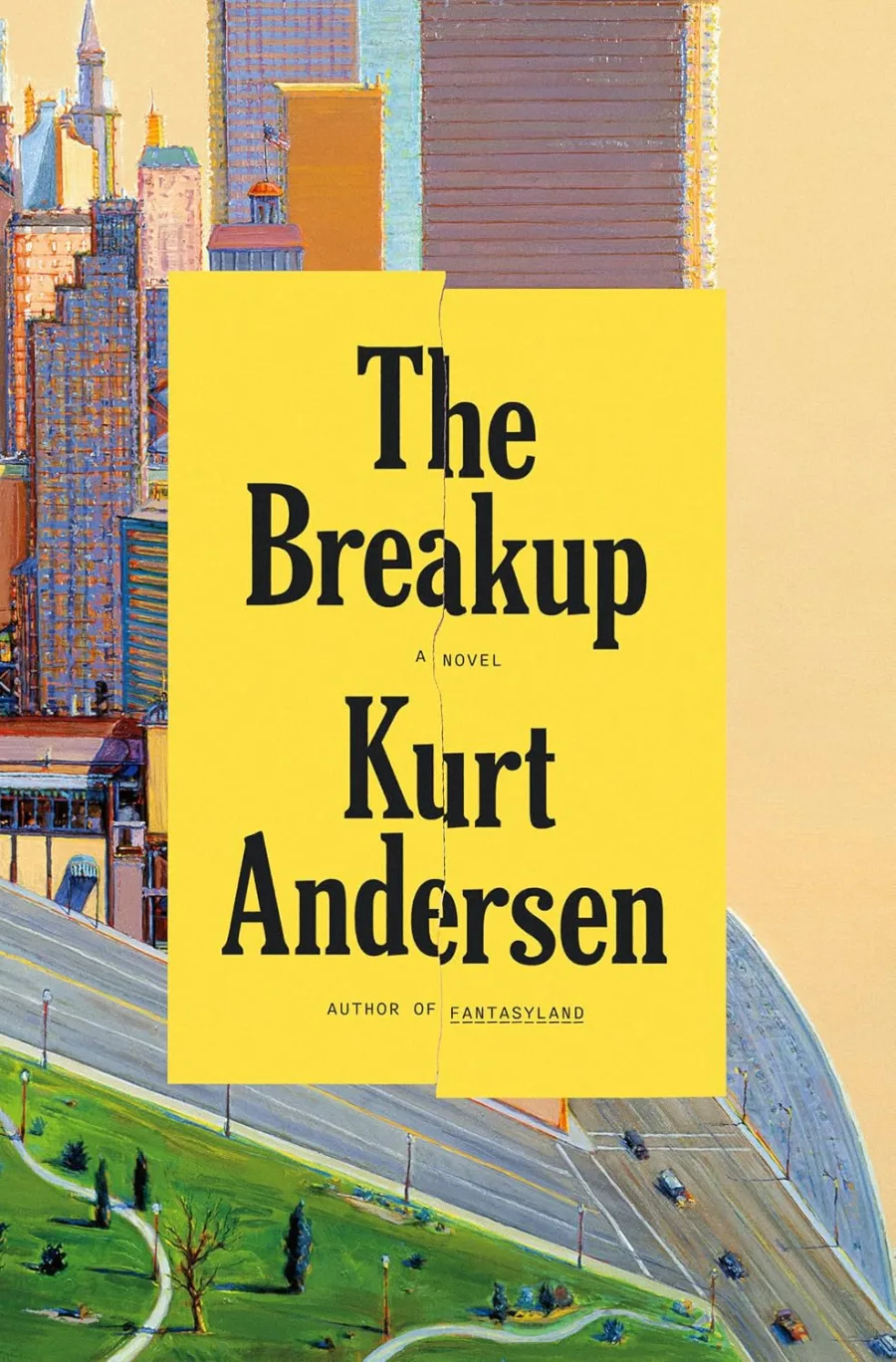
Download Cover Image
Do you want to download the full cover image for The Breakup: A Novel?