
A Life in Lyrics: The Official Creative Legacy of Freddie Mercury
Hardcover
• 320 Pages
• USD 50.00
• English
• 9780063447707
No ratings yet
| Publisher | Dey Street Books |
|---|---|
| ISBN13 | 9780063447707 |
| ASIN/SKU | 0063447703 |
| Book Format | Hardcover |
| Language | English |
| Pages | 320 |
| List Price | USD 50.00 |
| Publishing Date | 01/09/2026 |
| Dimensions | 7.44 x 0.97 x 9.69 inches |
| Weight | 2.35 pounds |
| Book Code | BD00070493 |
Buy this Book
Amazon Stores
Ebook Stores
Other Stores
Discover A Life in Lyrics: The Official Creative Legacy of Freddie Mercury by Freddie Mercury. This book is published by Dey Street Books in Hardcover format, ISBN 9780063447707, ASIN 0063447703, under Biographies and Memoirs, Rock Band Biographies, Rich and Famous Biographies.
Book Description
Freddie Mercury was one of the greatest showmen of the twentieth century. With his unparalleled voice and searing on-stage energy, he was a great pretender, a killer queen and a champion of the world.
But behind the glamour lived a musician and lyricist talented beyond measure, and the creative force behind one of the most culturally significant and musically diverse bands the world has ever seen. When Freddie passed away in 1991, he left to his former fiancé and dearest friend, Mary Austin, not only his house and possessions, but also a creative archive spanning almost two decades. From his earliest works before Queen was formed, right through to the end of his solo career, his notebooks and doodlings contain previously unpublished material including alternate lyrics and abandoned verses for “Bohemian Rhapsody” and multiple drafts of “Don’t Stop Me Now,” as well as entire songs that were never recorded.
Accompanied by stories, memories, and anecdotes from his lifelong companion, and illustrated with photographs from Freddie’s personal collection, many of which have never been published before, A Life in Lyrics is the definitive creative record of one of the greatest songwriters of all time.
But behind the glamour lived a musician and lyricist talented beyond measure, and the creative force behind one of the most culturally significant and musically diverse bands the world has ever seen. When Freddie passed away in 1991, he left to his former fiancé and dearest friend, Mary Austin, not only his house and possessions, but also a creative archive spanning almost two decades. From his earliest works before Queen was formed, right through to the end of his solo career, his notebooks and doodlings contain previously unpublished material including alternate lyrics and abandoned verses for “Bohemian Rhapsody” and multiple drafts of “Don’t Stop Me Now,” as well as entire songs that were never recorded.
Accompanied by stories, memories, and anecdotes from his lifelong companion, and illustrated with photographs from Freddie’s personal collection, many of which have never been published before, A Life in Lyrics is the definitive creative record of one of the greatest songwriters of all time.
Author Biography
When Mary Austin first met Freddie Mercury in 1970, it marked the beginning of an enduring friendship that would shape the rest of each of their lives. Mary, aged 19, worked at the Biba store in Kensington, while Freddie, aged 24, ran a stall selling his artworks in Kensington Market. They would become engaged four years later, on Christmas Day 1973, the same year that Queen released their debut album.
After Mary and Freddie’s relationship came to an end in the mid 1970s they would remain a central presence in each other’s worlds for the next two decades. When Freddie passed away in 1991, he left his home, Garden Lodge, and his possessions to Mary, who has treasured and celebrated the memory of her beloved friend ever since.
After Mary and Freddie’s relationship came to an end in the mid 1970s they would remain a central presence in each other’s worlds for the next two decades. When Freddie passed away in 1991, he left his home, Garden Lodge, and his possessions to Mary, who has treasured and celebrated the memory of her beloved friend ever since.
Editorial Reviews
Editorial Reviews will be added soon…
Book Summary
A Life in Lyrics: The Official Creative Legacy of Freddie Mercury is a remarkable archival portrait of one of rock music’s most extraordinary creative figures. Credited to Freddie Mercury with Mary Austin, the 2026 book is built not around a conventional chronological biography but around Mercury’s own creative papers: notebooks, handwritten lyrics, alternative verses, drawings, musical ideas, abandoned songs, photographs, and other material preserved from his life and career. Published by HarperCollins, the standard edition runs to 320 pages. Its purpose is to show the creative mind behind the legendary performer and to allow readers to see how songs developed before they became the recordings known around the world.
At the center of A Life in Lyrics is a simple but powerful idea: Freddie Mercury was much more than the flamboyant frontman audiences saw onstage. His public image—extravagant costumes, extraordinary vocal performances, theatrical gestures, and commanding stage presence—can sometimes overshadow the quieter process through which he actually created music. This book shifts the focus from the finished legend to the working artist. His notebooks reveal a person experimenting with words, crossing things out, trying alternatives, sketching ideas, changing directions, and searching for the right expression. In doing so, the book presents songwriting as an evolving creative process rather than something that arrived fully formed. The official description calls the collection an “extraordinary treasure trove” of lyrics, ideas, music, and drawings spanning from Mercury’s earliest work before Queen to the end of his solo career.
One of the book's greatest attractions is the access it provides to previously unpublished material. Mercury left behind a creative archive covering almost two decades, and Mary Austin inherited and preserved that material after his death in 1991. Among the most fascinating items are alternative lyrics and abandoned verses for “Bohemian Rhapsody,” multiple drafts of “Don’t Stop Me Now,” and complete songs that were never recorded. These fragments are valuable because they allow readers to see possibilities that existed before the final songs took shape. A famous recording may sound inevitable in retrospect, but the notebooks remind us that songwriting involves uncertainty and experimentation. A lyric can begin in one direction and end somewhere completely different. An idea can survive for years, disappear, return in altered form, or simply remain unfinished.
The book's treatment of “Bohemian Rhapsody” is particularly significant. Few rock songs have acquired the cultural status of Queen's six-minute masterpiece, and Mercury's surviving papers provide a rare glimpse into its development. The book contains alternative verses and abandoned material connected with the song, showing that even an apparently extraordinary finished work emerged through selection and revision. Rather than diminishing the song's magic, these discoveries make the creative achievement more impressive. They show that Mercury was not merely waiting for inspiration; he was actively shaping, testing, rejecting, and refining language. The deluxe edition reportedly goes even further, including gatefolds devoted to additional “Bohemian Rhapsody” archive material.
The contents also reveal how broadly Mercury's creative interests ranged. The listed chapters include pieces connected with “My Fairy King,” “The Fairy Feller’s Master-Stroke,” “Killer Queen,” “Sheer Heart Attack,” “Love of My Life,” “Bicycle Race,” “Don’t Stop Me,” “Crazy Little Thing Called Love,” “Life Is Real (Song for Lennon),” “The Great Pretender,” “Barcelona,” “Death on Two Legs,” “Somebody to Love,” “My Melancholy Blues,” “We Are the Champions,” and “The Miracle,” among others. The selection creates an implicit portrait of Mercury's development as a songwriter. Readers can move through different phases of Queen's career while also encountering his solo work and collaborations, observing how his interests and artistic ambitions changed over time.
The early material is especially important because it challenges the tendency to understand Freddie Mercury only through Queen. Before the band became the global institution it would eventually become, Mercury was already developing a distinctive creative identity. The book begins with material from before Queen was formed, allowing readers to see the roots of the songwriter before the public image was fully established. This makes A Life in Lyrics valuable as a study of artistic development. It suggests that the extraordinary Mercury audiences eventually encountered did not suddenly appear when Queen became famous. His imagination, theatrical instincts, visual interests, and fascination with language were already developing.
The chapter associated with “My Fairy King” is particularly revealing in this context because the song belongs to Queen's earliest period and demonstrates Mercury's willingness to build elaborate fantasy worlds through music. His writing could move far beyond ordinary conversational language. Mythology, fantasy, theatricality, symbolism, romance, drama, and surreal imagery all became part of his artistic vocabulary. The notebooks allow readers to see that these qualities were not accidental decorations added after the music was written. They were part of how Mercury thought creatively.
As Queen's career progressed, the book reveals an artist becoming increasingly confident in combining apparently unrelated influences. “Killer Queen” represents one side of that development: sophisticated, witty, glamorous, and sharply constructed. Other songs move toward vulnerability, emotional directness, theatrical drama, humor, or communal celebration. The range is one of the strongest arguments for taking Mercury seriously as a songwriter rather than viewing him simply as a spectacular singer. The archive demonstrates that his creative personality was flexible enough to accommodate many different moods and styles.
The material surrounding “Love of My Life” introduces another side of Mercury: the deeply emotional songwriter. The song's lasting popularity comes partly from its intimacy and vulnerability, qualities that can easily be overlooked when Mercury is remembered primarily for arena-sized performances. The book's archival approach encourages readers to look beyond the finished recording and consider the emotional process behind it. His songwriting could be extravagant, but it could also be personal and tender. That contrast is one of the most important aspects of his artistic identity.
The same diversity appears in the transition toward songs such as “Bicycle Race” and “Don’t Stop Me Now.” Mercury could write with humor, exuberance, sexuality, theatricality, and sheer joy. The alternative drafts of “Don’t Stop Me Now” are especially interesting because they demonstrate how a song celebrated for its feeling of spontaneous freedom was itself the product of deliberate creative work. The notebook material reminds readers that spontaneity in art is often constructed carefully. What sounds effortless may have required many attempts.
The book also explores Mercury's ability to respond to the world around him. “Life Is Real (Song for Lennon)” demonstrates a more reflective side of his songwriting, while “The Great Pretender” connects him with a tradition of theatrical performance and musical reinterpretation. His work was never confined to one emotional register. He could celebrate, mourn, seduce, provoke, entertain, and experiment. The archive therefore becomes a map of his emotional and artistic range.
Another fascinating dimension is the connection between Mercury's private and public lives. Mary Austin's contribution gives the book an intimate perspective that a purely archival publication might not have. Austin first met Mercury in 1970, when she was nineteen and he was twenty-four. They became engaged on Christmas Day 1973, but after their romantic relationship ended in the mid-1970s, they remained deeply important to one another for the rest of Mercury's life. When he died, he left Austin his home, Garden Lodge, and possessions, including the creative archive that became the foundation for this book.
Austin's role matters because A Life in Lyrics is not simply an inventory of papers. Her memories and anecdotes provide context for the person behind the documents. The notebooks can show what Mercury wrote, but memories can help explain the atmosphere surrounding the creative life. This combination of primary creative material and personal recollection gives the book a distinctive character. It is simultaneously an archive, a visual biography, a songwriting study, and an intimate remembrance.
The photographs add another layer. The book includes images from Mercury's personal collection, many of which have not previously been published. These photographs are important because they help bridge the distance between the iconic public figure and the private individual. Readers are accustomed to seeing photographs of Mercury performing for enormous audiences, but personal photographs can show another side of his world. Together with handwritten pages and drawings, they create the feeling of entering his creative environment rather than simply reading about it from a distance.
One of the most meaningful lessons in A Life in Lyrics is therefore the value of revision. Mercury's notebooks show that great songwriting is not necessarily about producing the perfect line immediately. Creative work involves hesitation, experimentation, alternatives, discarded material, and persistence. The existence of unused verses does not mean the writing failed. On the contrary, rejected ideas can be part of the process that eventually produces something extraordinary. This makes the book valuable not only to Queen fans but also to writers, musicians, artists, and anyone interested in creativity.
The archive also complicates the mythology surrounding genius. Popular culture often presents legendary artists as people who possess almost supernatural inspiration. A Life in Lyrics offers a more human picture. Mercury was enormously talented, but he also worked through ideas. He wrote things down. He reconsidered them. He changed them. He kept notebooks. He experimented with language and music. The surviving papers make creativity tangible. They turn the abstract idea of “genius” into something physical: handwriting on paper, crossed-out words, alternative possibilities, sketches, fragments, and unfinished thoughts.
Ultimately, A Life in Lyrics is best understood as a portrait of Freddie Mercury through the evidence of his own creative imagination. It does not attempt to replace the many biographies of Queen or provide a conventional cradle-to-grave account of Mercury's life. Instead, it asks a more intimate question: What did Freddie Mercury's creative mind look like when nobody was watching? The answer emerges through his notebooks, lyrics, drawings, photographs, abandoned songs, revised verses, and the memories of Mary Austin. The result is a rare opportunity to encounter Mercury not merely as the legendary frontman of Queen but as a working songwriter who constantly experimented with language, emotion, sound, theatricality, and identity.
For readers searching for a summary of A Life in Lyrics, Freddie Mercury's songwriting process, Freddie Mercury's unpublished lyrics, Queen's creative history, Bohemian Rhapsody original lyrics and drafts, or a Freddie Mercury biography based on his personal archives, this book offers something unusually valuable. Its greatest strength is its authenticity: rather than reconstructing Mercury's creative life entirely from secondhand accounts, it lets readers see the material he actually left behind. The book ultimately presents a deeply human portrait of an extraordinary artist. Behind the legendary voice was someone who wrote, revised, doubted, experimented, imagined, discarded, and tried again. That is perhaps the most moving revelation of A Life in Lyrics: the man who appeared larger than life onstage was, in the private act of creation, also a working artist searching patiently for the words that could turn an idea into a song.
At the center of A Life in Lyrics is a simple but powerful idea: Freddie Mercury was much more than the flamboyant frontman audiences saw onstage. His public image—extravagant costumes, extraordinary vocal performances, theatrical gestures, and commanding stage presence—can sometimes overshadow the quieter process through which he actually created music. This book shifts the focus from the finished legend to the working artist. His notebooks reveal a person experimenting with words, crossing things out, trying alternatives, sketching ideas, changing directions, and searching for the right expression. In doing so, the book presents songwriting as an evolving creative process rather than something that arrived fully formed. The official description calls the collection an “extraordinary treasure trove” of lyrics, ideas, music, and drawings spanning from Mercury’s earliest work before Queen to the end of his solo career.
One of the book's greatest attractions is the access it provides to previously unpublished material. Mercury left behind a creative archive covering almost two decades, and Mary Austin inherited and preserved that material after his death in 1991. Among the most fascinating items are alternative lyrics and abandoned verses for “Bohemian Rhapsody,” multiple drafts of “Don’t Stop Me Now,” and complete songs that were never recorded. These fragments are valuable because they allow readers to see possibilities that existed before the final songs took shape. A famous recording may sound inevitable in retrospect, but the notebooks remind us that songwriting involves uncertainty and experimentation. A lyric can begin in one direction and end somewhere completely different. An idea can survive for years, disappear, return in altered form, or simply remain unfinished.
The book's treatment of “Bohemian Rhapsody” is particularly significant. Few rock songs have acquired the cultural status of Queen's six-minute masterpiece, and Mercury's surviving papers provide a rare glimpse into its development. The book contains alternative verses and abandoned material connected with the song, showing that even an apparently extraordinary finished work emerged through selection and revision. Rather than diminishing the song's magic, these discoveries make the creative achievement more impressive. They show that Mercury was not merely waiting for inspiration; he was actively shaping, testing, rejecting, and refining language. The deluxe edition reportedly goes even further, including gatefolds devoted to additional “Bohemian Rhapsody” archive material.
The contents also reveal how broadly Mercury's creative interests ranged. The listed chapters include pieces connected with “My Fairy King,” “The Fairy Feller’s Master-Stroke,” “Killer Queen,” “Sheer Heart Attack,” “Love of My Life,” “Bicycle Race,” “Don’t Stop Me,” “Crazy Little Thing Called Love,” “Life Is Real (Song for Lennon),” “The Great Pretender,” “Barcelona,” “Death on Two Legs,” “Somebody to Love,” “My Melancholy Blues,” “We Are the Champions,” and “The Miracle,” among others. The selection creates an implicit portrait of Mercury's development as a songwriter. Readers can move through different phases of Queen's career while also encountering his solo work and collaborations, observing how his interests and artistic ambitions changed over time.
The early material is especially important because it challenges the tendency to understand Freddie Mercury only through Queen. Before the band became the global institution it would eventually become, Mercury was already developing a distinctive creative identity. The book begins with material from before Queen was formed, allowing readers to see the roots of the songwriter before the public image was fully established. This makes A Life in Lyrics valuable as a study of artistic development. It suggests that the extraordinary Mercury audiences eventually encountered did not suddenly appear when Queen became famous. His imagination, theatrical instincts, visual interests, and fascination with language were already developing.
The chapter associated with “My Fairy King” is particularly revealing in this context because the song belongs to Queen's earliest period and demonstrates Mercury's willingness to build elaborate fantasy worlds through music. His writing could move far beyond ordinary conversational language. Mythology, fantasy, theatricality, symbolism, romance, drama, and surreal imagery all became part of his artistic vocabulary. The notebooks allow readers to see that these qualities were not accidental decorations added after the music was written. They were part of how Mercury thought creatively.
As Queen's career progressed, the book reveals an artist becoming increasingly confident in combining apparently unrelated influences. “Killer Queen” represents one side of that development: sophisticated, witty, glamorous, and sharply constructed. Other songs move toward vulnerability, emotional directness, theatrical drama, humor, or communal celebration. The range is one of the strongest arguments for taking Mercury seriously as a songwriter rather than viewing him simply as a spectacular singer. The archive demonstrates that his creative personality was flexible enough to accommodate many different moods and styles.
The material surrounding “Love of My Life” introduces another side of Mercury: the deeply emotional songwriter. The song's lasting popularity comes partly from its intimacy and vulnerability, qualities that can easily be overlooked when Mercury is remembered primarily for arena-sized performances. The book's archival approach encourages readers to look beyond the finished recording and consider the emotional process behind it. His songwriting could be extravagant, but it could also be personal and tender. That contrast is one of the most important aspects of his artistic identity.
The same diversity appears in the transition toward songs such as “Bicycle Race” and “Don’t Stop Me Now.” Mercury could write with humor, exuberance, sexuality, theatricality, and sheer joy. The alternative drafts of “Don’t Stop Me Now” are especially interesting because they demonstrate how a song celebrated for its feeling of spontaneous freedom was itself the product of deliberate creative work. The notebook material reminds readers that spontaneity in art is often constructed carefully. What sounds effortless may have required many attempts.
The book also explores Mercury's ability to respond to the world around him. “Life Is Real (Song for Lennon)” demonstrates a more reflective side of his songwriting, while “The Great Pretender” connects him with a tradition of theatrical performance and musical reinterpretation. His work was never confined to one emotional register. He could celebrate, mourn, seduce, provoke, entertain, and experiment. The archive therefore becomes a map of his emotional and artistic range.
Another fascinating dimension is the connection between Mercury's private and public lives. Mary Austin's contribution gives the book an intimate perspective that a purely archival publication might not have. Austin first met Mercury in 1970, when she was nineteen and he was twenty-four. They became engaged on Christmas Day 1973, but after their romantic relationship ended in the mid-1970s, they remained deeply important to one another for the rest of Mercury's life. When he died, he left Austin his home, Garden Lodge, and possessions, including the creative archive that became the foundation for this book.
Austin's role matters because A Life in Lyrics is not simply an inventory of papers. Her memories and anecdotes provide context for the person behind the documents. The notebooks can show what Mercury wrote, but memories can help explain the atmosphere surrounding the creative life. This combination of primary creative material and personal recollection gives the book a distinctive character. It is simultaneously an archive, a visual biography, a songwriting study, and an intimate remembrance.
The photographs add another layer. The book includes images from Mercury's personal collection, many of which have not previously been published. These photographs are important because they help bridge the distance between the iconic public figure and the private individual. Readers are accustomed to seeing photographs of Mercury performing for enormous audiences, but personal photographs can show another side of his world. Together with handwritten pages and drawings, they create the feeling of entering his creative environment rather than simply reading about it from a distance.
One of the most meaningful lessons in A Life in Lyrics is therefore the value of revision. Mercury's notebooks show that great songwriting is not necessarily about producing the perfect line immediately. Creative work involves hesitation, experimentation, alternatives, discarded material, and persistence. The existence of unused verses does not mean the writing failed. On the contrary, rejected ideas can be part of the process that eventually produces something extraordinary. This makes the book valuable not only to Queen fans but also to writers, musicians, artists, and anyone interested in creativity.
The archive also complicates the mythology surrounding genius. Popular culture often presents legendary artists as people who possess almost supernatural inspiration. A Life in Lyrics offers a more human picture. Mercury was enormously talented, but he also worked through ideas. He wrote things down. He reconsidered them. He changed them. He kept notebooks. He experimented with language and music. The surviving papers make creativity tangible. They turn the abstract idea of “genius” into something physical: handwriting on paper, crossed-out words, alternative possibilities, sketches, fragments, and unfinished thoughts.
Ultimately, A Life in Lyrics is best understood as a portrait of Freddie Mercury through the evidence of his own creative imagination. It does not attempt to replace the many biographies of Queen or provide a conventional cradle-to-grave account of Mercury's life. Instead, it asks a more intimate question: What did Freddie Mercury's creative mind look like when nobody was watching? The answer emerges through his notebooks, lyrics, drawings, photographs, abandoned songs, revised verses, and the memories of Mary Austin. The result is a rare opportunity to encounter Mercury not merely as the legendary frontman of Queen but as a working songwriter who constantly experimented with language, emotion, sound, theatricality, and identity.
For readers searching for a summary of A Life in Lyrics, Freddie Mercury's songwriting process, Freddie Mercury's unpublished lyrics, Queen's creative history, Bohemian Rhapsody original lyrics and drafts, or a Freddie Mercury biography based on his personal archives, this book offers something unusually valuable. Its greatest strength is its authenticity: rather than reconstructing Mercury's creative life entirely from secondhand accounts, it lets readers see the material he actually left behind. The book ultimately presents a deeply human portrait of an extraordinary artist. Behind the legendary voice was someone who wrote, revised, doubted, experimented, imagined, discarded, and tried again. That is perhaps the most moving revelation of A Life in Lyrics: the man who appeared larger than life onstage was, in the private act of creation, also a working artist searching patiently for the words that could turn an idea into a song.
Sample Chapters
Sample Chapters will be added soon…
Reader Reviews
No reviews yet.
A Life in Lyrics: The Official Creative Legacy of Freddie Mercury
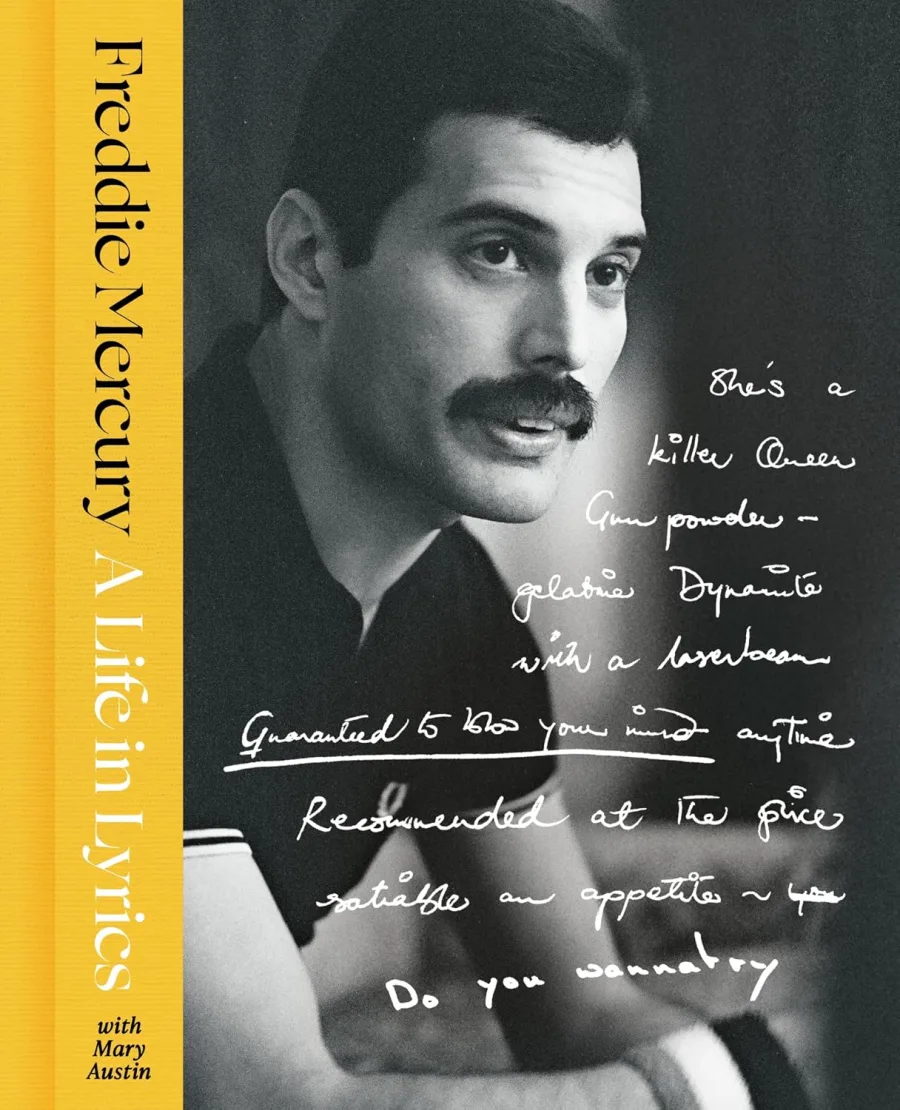
Download Cover Image
Do you want to download the full cover image for A Life in Lyrics: The Official Creative Legacy of Freddie Mercury?