
Brain Damage: A Twisted Psychological Thriller That Will Keep You Guessing
eBook
• 394 Pages
• USD 18.99
• English
No ratings yet
| Publisher | Hollywood Upstairs Publishing |
|---|---|
| ASIN/SKU | B01F1G12K4 |
| Book Format | eBook |
| Language | English |
| Pages | 394 |
| List Price | USD 18.99 |
| Publishing Date | 01/05/2016 |
| Book Code | BD00070562 |
Buy this Book
Amazon Stores
Ebook Stores
Other Stores
Discover Brain Damage: A Twisted Psychological Thriller That Will Keep You Guessing by Freida McFadden. This book is published by Hollywood Upstairs Publishing in eBook format, ASIN B01F1G12K4, under Mystery, Thriller and Suspense, Medical Thrillers, Murder Thrillers.
Book Description
After years of hard work, Dr. Charly McKenna finally has it all.
Prosperous career as a dermatologist? Check. Spacious apartment overlooking Central Park? Check. Handsome lawyer husband? Double check.
Then one night, a bullet rips through the right side of her skull and she loses everything.
As Charly struggles to recover from her brain injury, she begins to realize that the events of that fateful night are trapped in the damaged right side of her brain. Now she must put the jigsaw pieces together to discover the identity of the man who tried to kill her... before he finishes the job he started.
Prosperous career as a dermatologist? Check. Spacious apartment overlooking Central Park? Check. Handsome lawyer husband? Double check.
Then one night, a bullet rips through the right side of her skull and she loses everything.
As Charly struggles to recover from her brain injury, she begins to realize that the events of that fateful night are trapped in the damaged right side of her brain. Now she must put the jigsaw pieces together to discover the identity of the man who tried to kill her... before he finishes the job he started.
Author Biography
#1 New York Times, Amazon Charts, USA Today, Washington Post, Wall Street Journal, Sunday Times, and Publisher's Weekly bestselling author Freida McFadden is a physician who has penned multiple bestselling psychological thrillers and medical humor novels. Freida is the winner of the International Thriller Writer Award for Best Paperback Original, the Goodreads Choice Award for Best Thriller, and was honored as one of TIME 100’s most influential people in the world for 2026. Her novels have been translated into more than 45 languages.
Freida lives with her family and cat in a centuries-old three-story home overlooking the ocean, with staircases that creak and moan with each step, and nobody could hear you if you scream. Unless you scream really loudly, maybe.
To hear Freida talk about herself more in the third person, check out her website freidamcfadden dot com.
Freida lives with her family and cat in a centuries-old three-story home overlooking the ocean, with staircases that creak and moan with each step, and nobody could hear you if you scream. Unless you scream really loudly, maybe.
To hear Freida talk about herself more in the third person, check out her website freidamcfadden dot com.
Editorial Reviews
Featured in Medscape's Top Summer Reads for Physicians!
"In blending a recovery process with a story of attempted murder and intrigue, Freida McFadden has created an engrossing saga with plenty of twists and turns, highly recommended for medical thrillers readers who look for realistic, compelling writing." --D. Donovan, Senior Reviewer, Midwest Book Review
"One of the best dual point of view books to be found, Ms. McFadden has deftly crafted an almost perfect manuscript! Solid writing holds the plot together and delivers a masterful mystery. The two very different romances that ensue are delivered with ease and beauty. The essence of hope that ensues during the tale being told is enriching and gives delightful warmth to a tragic tale." --Penelope Ann Bartolo, InD'tale Magazine
"I enjoyed Brain Damage so much that I couldn't put it down. The plot is exciting and intriguing... an exciting read that will take readers on a journey that's satisfying and thrilling. I highly recommend it." --Sherri Fulmer Moorer, Readers' Favorite
"I enjoyed this book which is more than a thriller or mystery, it is about the grandeur of the human spirit, cornered and caught up in a web of inertia and stasis. The courage and strength is takes to survive such a catastrophic event is both fascinating and heart breaking." --Bette Golden Lamb, bestselling co-author of The Gina Mazzio RN medical thriller series
"An attempted murder, and the profoundly brain-injured physician-victim's stuttering recovery set the stage for a story of mystery, courage, richly evocative characters, romance, and surprising twists.... Highly recommended." --Tom Combs, author of medical thriller Nerve Damage
"The protagonist is an interesting character packed with wit, an inferiority complex, and strength and determination at the same time. Having read 'Gone Girl,' this novel has a similar thread to its storyline. However, thumbs up to Brain Damage - a much better read!" --Barbara Ebel, author of Operation Neurosurgeon
"An enjoyable, informative and quick read, I couldn't put it down once I started. Highly recommended!" --Eve Shvidler, author of Burning the Short White Coat
"I highly recommend Brain Damage!" --Lyn Horner, author of Romancing the Guardians series
"In blending a recovery process with a story of attempted murder and intrigue, Freida McFadden has created an engrossing saga with plenty of twists and turns, highly recommended for medical thrillers readers who look for realistic, compelling writing." --D. Donovan, Senior Reviewer, Midwest Book Review
"One of the best dual point of view books to be found, Ms. McFadden has deftly crafted an almost perfect manuscript! Solid writing holds the plot together and delivers a masterful mystery. The two very different romances that ensue are delivered with ease and beauty. The essence of hope that ensues during the tale being told is enriching and gives delightful warmth to a tragic tale." --Penelope Ann Bartolo, InD'tale Magazine
"I enjoyed Brain Damage so much that I couldn't put it down. The plot is exciting and intriguing... an exciting read that will take readers on a journey that's satisfying and thrilling. I highly recommend it." --Sherri Fulmer Moorer, Readers' Favorite
"I enjoyed this book which is more than a thriller or mystery, it is about the grandeur of the human spirit, cornered and caught up in a web of inertia and stasis. The courage and strength is takes to survive such a catastrophic event is both fascinating and heart breaking." --Bette Golden Lamb, bestselling co-author of The Gina Mazzio RN medical thriller series
"An attempted murder, and the profoundly brain-injured physician-victim's stuttering recovery set the stage for a story of mystery, courage, richly evocative characters, romance, and surprising twists.... Highly recommended." --Tom Combs, author of medical thriller Nerve Damage
"The protagonist is an interesting character packed with wit, an inferiority complex, and strength and determination at the same time. Having read 'Gone Girl,' this novel has a similar thread to its storyline. However, thumbs up to Brain Damage - a much better read!" --Barbara Ebel, author of Operation Neurosurgeon
"An enjoyable, informative and quick read, I couldn't put it down once I started. Highly recommended!" --Eve Shvidler, author of Burning the Short White Coat
"I highly recommend Brain Damage!" --Lyn Horner, author of Romancing the Guardians series
Book Summary
Brain Damage by Freida McFadden is a psychological and medical thriller built around a terrifying question: what happens when the person who holds the key to a murder mystery is unable to remember what happened? At the center of the novel is Dr. Charly McKenna, a successful dermatologist whose seemingly perfect life is destroyed when someone shoots her in the head. The attack leaves her with a devastating traumatic brain injury, severe physical limitations, and fragmented memories. Worse, she knows that someone tried to kill her, but she cannot remember who did it. As Charly struggles through rehabilitation, she must reconstruct her past before the person responsible has another opportunity to silence her. McFadden combines medical suspense, domestic betrayal, mystery, and psychological tension to create a story about memory, identity, trust, and survival. The novel was first published in 2016 and was later brought back in a new 2026 edition.
Before the shooting, Charly McKenna appears to have everything a person could want. She is intelligent, professionally successful, financially comfortable, and living in a beautiful apartment overlooking Central Park. Her career as a dermatologist has given her status and independence, while her marriage appears equally secure. From the outside, there is little reason to believe that Charly is in danger. That carefully constructed life changes violently when a bullet tears through the right side of her skull. She survives the attack, but survival is only the beginning of her nightmare. When she wakes in a rehabilitation hospital, she is no longer the capable woman she remembers being—or, more accurately, the woman she cannot remember being. She has difficulty walking and speaking, struggles with memory, and must depend on other people for even basic aspects of her life. The official description emphasizes the central mystery: the crucial events of the shooting are trapped somewhere inside Charly's damaged brain.
One of the most unsettling aspects of Brain Damage is that Charly's greatest weakness is also her greatest source of hope. Her damaged memory may prevent her from understanding what happened, but fragments of the past gradually begin to return. The story uses this fractured perspective to make the reader question what is real and whom Charly can trust. A person who seems helpful may have another motive, while someone who appears suspicious may actually be trying to protect her. This uncertainty gives the novel its psychological tension. Charly cannot simply investigate her own attempted murder in the traditional sense because she does not possess a reliable account of the crime. Her own mind has become the crime scene.
The novel moves between the period before the shooting and Charly's recovery afterward, allowing the mystery to develop from two directions. The "before" sections gradually reveal the relationships, conflicts, and warning signs that existed before the attack, while the "after" sections show Charly attempting to regain her independence and reconstruct her memories. This dual-timeline structure is especially effective because readers receive information that Charly herself does not fully possess. The result is a constant feeling that an important piece of the puzzle is just out of reach. Kirkus Reviews likewise notes that the novel divides its story between the events leading to the shooting and the months afterward, when Charly attempts to recover her memory and mobility.
Charly's recovery is not presented as a simple process of waking up and remembering everything. Her brain injury affects how she experiences the world, including a neurological condition called hemispatial neglect, which makes her unable to properly perceive things on one side of her visual field. Her physical rehabilitation becomes part of the suspense because every small improvement represents another opportunity to recover information about the night of the shooting. McFadden's medical background gives these portions of the story additional authenticity. She has medical experience involving brain injury, and the novel uses that knowledge to make Charly's physical and cognitive struggles an important part of the narrative rather than merely a convenient plot device.
As Charly becomes more aware of her surroundings, the mystery surrounding the shooting becomes increasingly disturbing. Several people could potentially have a reason to hurt her. Her husband becomes an obvious person to question because the closer Charly gets to the truth, the more she realizes that appearances can be deceptive. Other possible threats also emerge, including people connected to Charly's professional life and individuals whose personal circumstances may have given them a motive. McFadden deliberately creates several possibilities so that the reader cannot settle too quickly on a single suspect. The suspense therefore comes not only from asking who shot Charly, but from asking which relationships in her supposedly perfect life were built on lies.
The deeper Charly digs, the more frightening the truth becomes. Her husband, Clark, is eventually revealed to have been involved in the plot against her. The motive is not simply jealousy or anger but financial gain. Clark and another man, Kyle Barry, planned the murder in order to benefit from Charly's life insurance and gain access to money she had kept hidden. The shooting therefore destroys the comforting idea that Charly's marriage was a safe place. The person who should have been protecting her was connected to the attempt to destroy her. This betrayal is one of the novel's strongest emotional elements because Charly's physical vulnerability makes her dependent on people at precisely the moment when she has the greatest reason to distrust them.
The danger does not end when Charly begins remembering what happened. In fact, the discovery of the truth puts her in even greater danger. Clark confronts her in the rehabilitation facility and tries to force her to sign over power of attorney. When she refuses, he attempts to suffocate her with a pillow. Charly is saved when Jamie, another important figure in her recovery, enters and intervenes. The attack confirms the horrifying reality that Charly's original assailants are still determined to control the situation and that her survival is not guaranteed simply because she is now in a medical facility.
Eventually, the evidence against Clark and Kyle becomes impossible to ignore. Kyle confesses, while Jamie's testimony helps establish what happened. Clark is arrested and ultimately pleads guilty to attempted murder, receiving a prison sentence. Charly also learns that she has financial resources of her own. Her friend Bridget reveals that Charly had placed approximately two million dollars in offshore accounts as protection for herself in case she ever needed to separate her finances from Clark. That detail becomes particularly meaningful because it demonstrates that Charly was not as powerless as the people who betrayed her believed. Even before the shooting, she had taken steps to protect her independence.
The final portion of Brain Damage shifts away from the immediate murder mystery and toward recovery. Charly undergoes surgery to replace the damaged portion of her skull and eventually leaves rehabilitation. Her physical recovery remains incomplete, but she has regained enough independence to begin rebuilding her life. Jamie develops romantic feelings for her, but Charly initially rejects him because she believes that her continuing disabilities will make her a burden. This is an important emotional moment because Charly's greatest challenge is no longer simply identifying her attacker. She must learn to see herself as a whole person again rather than as someone permanently defined by the damage done to her.
One year later, Charly has made significant progress. She still walks with a cane, but she is living at home and looking toward a future in medicine. Her meeting with Jamie provides the story with its hopeful emotional conclusion. Jamie has continued to think about her, and Charly finally allows herself to acknowledge that her injury has not destroyed her ability to love or be loved. Their reunion suggests that healing does not mean returning to exactly the person she was before the shooting. Instead, it means accepting the person she has become and choosing to move forward.
At its heart, Brain Damage is about much more than an attempted murder. The thriller uses Charly's damaged memory to explore the fragile relationship between memory and identity. If a person cannot remember her past, how much of her former self remains? If the people around her tell her what happened, how can she know whether their version of events is true? And if the person she trusted most is actually responsible for her suffering, what does trust mean afterward? These questions give the novel an emotional dimension beyond its twists and suspense.
The book also explores vulnerability and power. Before the shooting, Charly is independent and professionally accomplished. Afterward, she cannot walk, speak normally, or reliably remember her own life. Suddenly, other people control information about her, her finances, and her future. Her journey therefore becomes a struggle to reclaim not only her memories but also her autonomy. This is one reason the medical setting works so well: rehabilitation becomes a physical representation of the larger process of putting a shattered life back together.
Overall, Brain Damage is a fast-moving psychological thriller that combines medical suspense with domestic betrayal and a mystery centered on memory loss. Readers looking for a Freida McFadden psychological thriller, a book about amnesia and murder, a medical thriller with a major twist, or a suspense novel about betrayal and hidden secrets will find all of those elements here. McFadden's short, accessible chapters and escalating revelations keep the story moving, while Charly's recovery gives the suspense an emotional foundation. The central hook is simple but powerful: how can you discover who wants you dead when the evidence is locked inside a damaged brain? By the end, Brain Damage becomes not only a story about discovering a killer but also a story about reclaiming identity, independence, and hope after life has been violently broken apart.
Before the shooting, Charly McKenna appears to have everything a person could want. She is intelligent, professionally successful, financially comfortable, and living in a beautiful apartment overlooking Central Park. Her career as a dermatologist has given her status and independence, while her marriage appears equally secure. From the outside, there is little reason to believe that Charly is in danger. That carefully constructed life changes violently when a bullet tears through the right side of her skull. She survives the attack, but survival is only the beginning of her nightmare. When she wakes in a rehabilitation hospital, she is no longer the capable woman she remembers being—or, more accurately, the woman she cannot remember being. She has difficulty walking and speaking, struggles with memory, and must depend on other people for even basic aspects of her life. The official description emphasizes the central mystery: the crucial events of the shooting are trapped somewhere inside Charly's damaged brain.
One of the most unsettling aspects of Brain Damage is that Charly's greatest weakness is also her greatest source of hope. Her damaged memory may prevent her from understanding what happened, but fragments of the past gradually begin to return. The story uses this fractured perspective to make the reader question what is real and whom Charly can trust. A person who seems helpful may have another motive, while someone who appears suspicious may actually be trying to protect her. This uncertainty gives the novel its psychological tension. Charly cannot simply investigate her own attempted murder in the traditional sense because she does not possess a reliable account of the crime. Her own mind has become the crime scene.
The novel moves between the period before the shooting and Charly's recovery afterward, allowing the mystery to develop from two directions. The "before" sections gradually reveal the relationships, conflicts, and warning signs that existed before the attack, while the "after" sections show Charly attempting to regain her independence and reconstruct her memories. This dual-timeline structure is especially effective because readers receive information that Charly herself does not fully possess. The result is a constant feeling that an important piece of the puzzle is just out of reach. Kirkus Reviews likewise notes that the novel divides its story between the events leading to the shooting and the months afterward, when Charly attempts to recover her memory and mobility.
Charly's recovery is not presented as a simple process of waking up and remembering everything. Her brain injury affects how she experiences the world, including a neurological condition called hemispatial neglect, which makes her unable to properly perceive things on one side of her visual field. Her physical rehabilitation becomes part of the suspense because every small improvement represents another opportunity to recover information about the night of the shooting. McFadden's medical background gives these portions of the story additional authenticity. She has medical experience involving brain injury, and the novel uses that knowledge to make Charly's physical and cognitive struggles an important part of the narrative rather than merely a convenient plot device.
As Charly becomes more aware of her surroundings, the mystery surrounding the shooting becomes increasingly disturbing. Several people could potentially have a reason to hurt her. Her husband becomes an obvious person to question because the closer Charly gets to the truth, the more she realizes that appearances can be deceptive. Other possible threats also emerge, including people connected to Charly's professional life and individuals whose personal circumstances may have given them a motive. McFadden deliberately creates several possibilities so that the reader cannot settle too quickly on a single suspect. The suspense therefore comes not only from asking who shot Charly, but from asking which relationships in her supposedly perfect life were built on lies.
The deeper Charly digs, the more frightening the truth becomes. Her husband, Clark, is eventually revealed to have been involved in the plot against her. The motive is not simply jealousy or anger but financial gain. Clark and another man, Kyle Barry, planned the murder in order to benefit from Charly's life insurance and gain access to money she had kept hidden. The shooting therefore destroys the comforting idea that Charly's marriage was a safe place. The person who should have been protecting her was connected to the attempt to destroy her. This betrayal is one of the novel's strongest emotional elements because Charly's physical vulnerability makes her dependent on people at precisely the moment when she has the greatest reason to distrust them.
The danger does not end when Charly begins remembering what happened. In fact, the discovery of the truth puts her in even greater danger. Clark confronts her in the rehabilitation facility and tries to force her to sign over power of attorney. When she refuses, he attempts to suffocate her with a pillow. Charly is saved when Jamie, another important figure in her recovery, enters and intervenes. The attack confirms the horrifying reality that Charly's original assailants are still determined to control the situation and that her survival is not guaranteed simply because she is now in a medical facility.
Eventually, the evidence against Clark and Kyle becomes impossible to ignore. Kyle confesses, while Jamie's testimony helps establish what happened. Clark is arrested and ultimately pleads guilty to attempted murder, receiving a prison sentence. Charly also learns that she has financial resources of her own. Her friend Bridget reveals that Charly had placed approximately two million dollars in offshore accounts as protection for herself in case she ever needed to separate her finances from Clark. That detail becomes particularly meaningful because it demonstrates that Charly was not as powerless as the people who betrayed her believed. Even before the shooting, she had taken steps to protect her independence.
The final portion of Brain Damage shifts away from the immediate murder mystery and toward recovery. Charly undergoes surgery to replace the damaged portion of her skull and eventually leaves rehabilitation. Her physical recovery remains incomplete, but she has regained enough independence to begin rebuilding her life. Jamie develops romantic feelings for her, but Charly initially rejects him because she believes that her continuing disabilities will make her a burden. This is an important emotional moment because Charly's greatest challenge is no longer simply identifying her attacker. She must learn to see herself as a whole person again rather than as someone permanently defined by the damage done to her.
One year later, Charly has made significant progress. She still walks with a cane, but she is living at home and looking toward a future in medicine. Her meeting with Jamie provides the story with its hopeful emotional conclusion. Jamie has continued to think about her, and Charly finally allows herself to acknowledge that her injury has not destroyed her ability to love or be loved. Their reunion suggests that healing does not mean returning to exactly the person she was before the shooting. Instead, it means accepting the person she has become and choosing to move forward.
At its heart, Brain Damage is about much more than an attempted murder. The thriller uses Charly's damaged memory to explore the fragile relationship between memory and identity. If a person cannot remember her past, how much of her former self remains? If the people around her tell her what happened, how can she know whether their version of events is true? And if the person she trusted most is actually responsible for her suffering, what does trust mean afterward? These questions give the novel an emotional dimension beyond its twists and suspense.
The book also explores vulnerability and power. Before the shooting, Charly is independent and professionally accomplished. Afterward, she cannot walk, speak normally, or reliably remember her own life. Suddenly, other people control information about her, her finances, and her future. Her journey therefore becomes a struggle to reclaim not only her memories but also her autonomy. This is one reason the medical setting works so well: rehabilitation becomes a physical representation of the larger process of putting a shattered life back together.
Overall, Brain Damage is a fast-moving psychological thriller that combines medical suspense with domestic betrayal and a mystery centered on memory loss. Readers looking for a Freida McFadden psychological thriller, a book about amnesia and murder, a medical thriller with a major twist, or a suspense novel about betrayal and hidden secrets will find all of those elements here. McFadden's short, accessible chapters and escalating revelations keep the story moving, while Charly's recovery gives the suspense an emotional foundation. The central hook is simple but powerful: how can you discover who wants you dead when the evidence is locked inside a damaged brain? By the end, Brain Damage becomes not only a story about discovering a killer but also a story about reclaiming identity, independence, and hope after life has been violently broken apart.
Sample Chapters
Sample Chapters will be added soon…
Reader Reviews
No reviews yet.
Brain Damage: A Twisted Psychological Thriller That Will Keep You Guessing
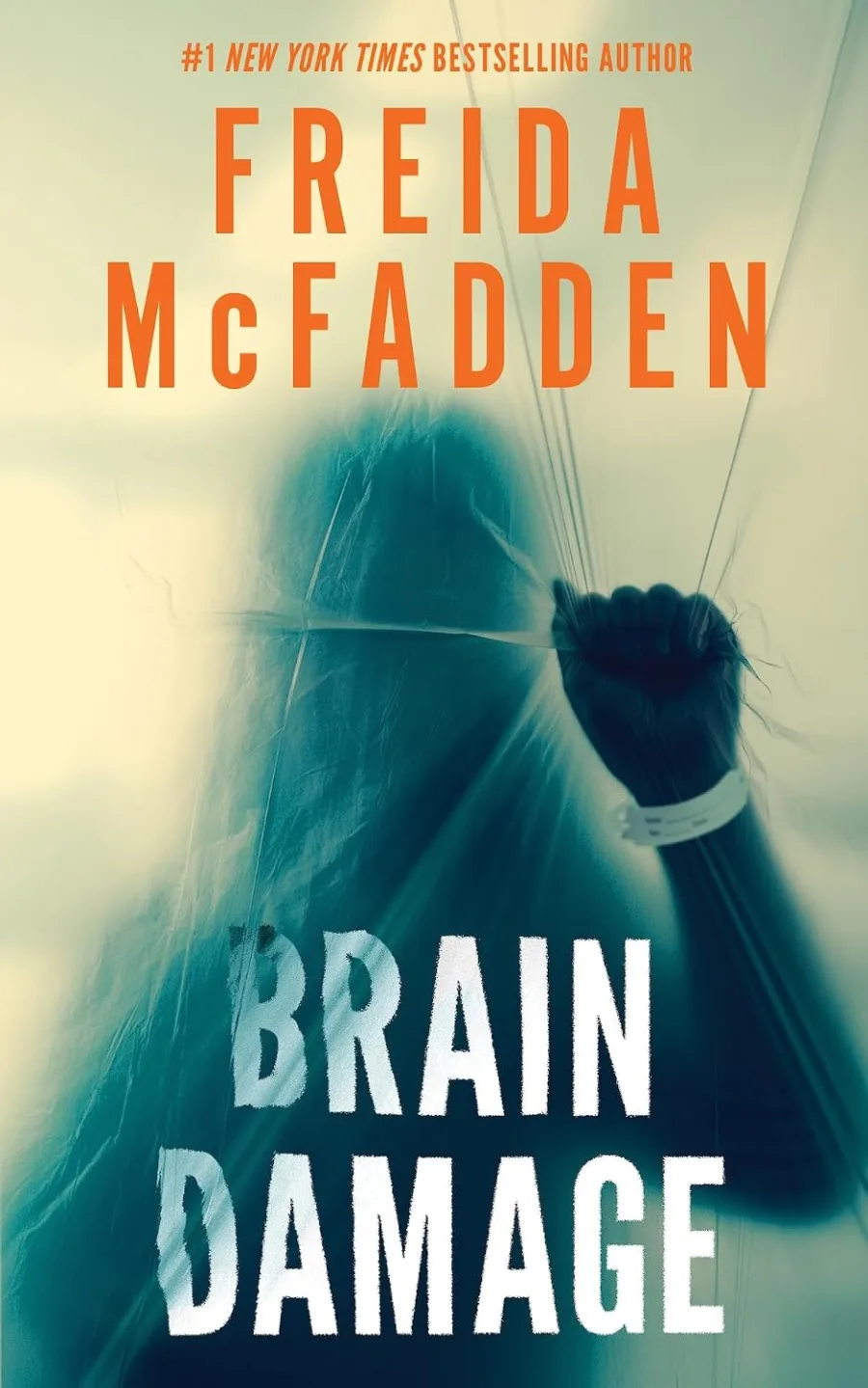
Download Cover Image
Do you want to download the full cover image for Brain Damage: A Twisted Psychological Thriller That Will Keep You Guessing?