
Angel in the Rubble: The Miraculous Rescue of 9/11's Last Survivor
Paperback
• 240 Pages
• USD 16.99
• English
• 9781451635232
No ratings yet
| Publisher | Howard Books |
|---|---|
| ISBN13 | 9781451635232 |
| ASIN/SKU | 1451635230 |
| Book Format | Paperback |
| Language | English |
| Pages | 240 |
| List Price | USD 16.99 |
| Publishing Date | 18/10/2014 |
| Dimensions | 6 x 0.62 x 9 inches |
| Weight | 9.6 ounces |
| Book Code | BD00070671 |
Buy this Book
Amazon Stores
Ebook Stores
Other Stores
Discover Angel in the Rubble: The Miraculous Rescue of 9/11's Last Survivor by Genelle Guzman-McMillan. This book is published by Howard Books in Paperback format, ISBN 9781451635232, ASIN 1451635230, under Biographies and Memoirs, Survival Biographies, Memoirs.
Book Description
The riveting story of the last survivor pulled from the 9/11 Ground Zero debris after twenty-seven hours and her journey from desperation to a miraculous salvation.
In this moving true story, Genelle Guzman-McMillan reveals her harrowing experience trapped inside the collapsed Tower One on 9/11. Buried beneath concrete and steel for over a day, Genelle couldn’t help but reflect on her life and her lost faith. Yet, something reminded her of a miracle she witnessed as a child in her native Trinidad. Maybe God had a miracle for her? She had no idea that an angel was on the way to rescue her.
“A riveting, simply-told story of strength, hope, and miracles” (Wendy Fitzwilliam, lawyer and Miss Universe winner), Angel in the Rubble will inspire you to live your life with purpose.
In this moving true story, Genelle Guzman-McMillan reveals her harrowing experience trapped inside the collapsed Tower One on 9/11. Buried beneath concrete and steel for over a day, Genelle couldn’t help but reflect on her life and her lost faith. Yet, something reminded her of a miracle she witnessed as a child in her native Trinidad. Maybe God had a miracle for her? She had no idea that an angel was on the way to rescue her.
“A riveting, simply-told story of strength, hope, and miracles” (Wendy Fitzwilliam, lawyer and Miss Universe winner), Angel in the Rubble will inspire you to live your life with purpose.
Author Biography
Author Biography will be added soon…
Editorial Reviews
Editorial Reviews will be added soon…
Book Summary
Angel in the Rubble: The Miraculous Rescue of 9/11’s Last Survivor by Genelle Guzman-McMillan is a deeply personal memoir about survival, faith, trauma, and the extraordinary chain of events that allowed one woman to live through the collapse of the World Trade Center on September 11, 2001. Rather than presenting 9/11 only as a historical tragedy, Guzman-McMillan tells the story from inside the experience of someone who was physically trapped beneath the ruins. Her memoir asks a profoundly human question: What happens when everything familiar disappears in an instant, and all you have left is the hope that someone will find you? The result is an emotional survival story that combines the terrifying reality of the attacks with a deeply spiritual account of courage and rescue.
Genelle Guzman-McMillan was working on the 64th floor of the North Tower of the World Trade Center when the attacks occurred. Like thousands of people that morning, she initially had no idea that she was witnessing an event that would change history. The ordinary rhythm of a working day was suddenly shattered by an explosion, confusion, smoke, and the realization that something catastrophic was happening. The memoir captures the frightening uncertainty of those first moments. People had to make decisions without having complete information, and the instinct to escape competed with fear, confusion, and the rapidly deteriorating conditions inside the building.
As the disaster unfolded, Guzman-McMillan tried to make her way out of the building. The World Trade Center had become a place of unimaginable danger, and the collapse transformed her situation from an evacuation into a fight for survival. When the North Tower came down, she was buried beneath an enormous mass of concrete, steel, dust, and debris. The woman who had been going about an ordinary workday suddenly found herself trapped in darkness, unable to escape and uncertain whether anyone even knew where she was.
One of the most powerful elements of Angel in the Rubble is the way the memoir communicates the psychological experience of being buried alive. Guzman-McMillan had to confront fear on a scale that is difficult to imagine. There was darkness, physical pain, limited movement, and the terrifying awareness that her surroundings could shift or collapse further. Time became difficult to measure. The normal markers of life—clocks, schedules, conversations, familiar surroundings—were gone. What remained was the immediate question of whether she would survive long enough for rescuers to reach her.
The memoir is therefore not simply a story about the September 11 attacks; it is a story about hope under impossible circumstances. Guzman-McMillan describes how her faith became increasingly important while she waited beneath the rubble. Prayer offered her a way to confront fear when there was little else she could control. Her relationship with God is central to the way she understands what happened. For her, survival was not merely a matter of physical endurance or coincidence. She interprets the events surrounding her rescue as evidence of divine intervention and the presence of an “angel” in the middle of an unimaginable catastrophe.
The title itself, Angel in the Rubble, reflects this interpretation. The “angel” is connected to the person who ultimately discovers Guzman-McMillan and helps bring her back into the world above. After hours trapped beneath the ruins, she heard signs that rescuers were nearby. Those sounds represented something enormous: proof that she had not been forgotten. The possibility of rescue changed the psychological landscape of her ordeal. Fear remained, but now it was accompanied by hope.
Her eventual discovery by rescue workers became one of the extraordinary survival stories associated with September 11. Guzman-McMillan was the last known survivor rescued from the rubble of the World Trade Center, and her rescue occurred approximately 27 hours after the collapse. Her survival was extraordinarily unlikely given the conditions surrounding her. Yet the memoir emphasizes that the rescue was not only about the moment someone found her. It was the culmination of perseverance, teamwork, faith, and an unwillingness to give up.
The rescue itself is emotionally significant because it represents the return of human connection. Beneath the rubble, Guzman-McMillan had been isolated from the outside world. The voices and hands of rescuers represented civilization reaching back toward her. Their work was dangerous and painstaking. They had to navigate unstable debris while trying to reach a person who had somehow survived underneath it. For Guzman-McMillan, being found meant more than escaping the physical ruins. It meant being restored to family, community, and life.
Another important theme in the book is the fragility of ordinary life. Before September 11, Guzman-McMillan was living a normal life filled with everyday responsibilities, relationships, hopes, and plans. The attacks demonstrated how quickly normality can disappear. The memoir encourages readers to see the value of ordinary moments because those moments can never be taken for granted. A regular morning commute, a conversation with a loved one, or a day at work can suddenly become something precious when viewed from the perspective of survival.
Family also plays an important emotional role in Guzman-McMillan's story. The possibility that her loved ones might never see her again adds another layer of emotional weight to the narrative. Being trapped beneath the rubble meant confronting not only physical danger but also the possibility of permanent separation. Her eventual rescue therefore becomes a reunion story as much as a survival story. She was not simply rescued from debris; she was given another opportunity to return to the people who loved her.
The memoir also explores trauma and the aftermath of survival. Surviving a catastrophe does not mean that the catastrophe ends when a person is physically rescued. The memories remain. The emotional consequences can continue long after the immediate danger has disappeared. Guzman-McMillan's experience illustrates how survival can create a complicated mixture of gratitude, grief, fear, responsibility, and renewed purpose. She had lived when so many others had not, and that reality inevitably affected how she understood her life afterward.
Her Christian faith gives the story its strongest interpretive framework. Guzman-McMillan looks back at the circumstances of her survival and sees God's hand in events that might otherwise appear inexplicable. Her faith does not erase the horror of September 11. Instead, it becomes the lens through which she processes that horror. Prayer, trust, and the belief that God had a purpose for her life helped her move from simply surviving the disaster toward asking what she was supposed to do with the life she had been given.
This makes Angel in the Rubble particularly relevant to readers searching for a true 9/11 survival story, a Christian memoir about September 11, or a real-life story of miraculous rescue. It is both a historical testimony and an intensely personal account. Readers interested in 9/11 memoirs will find the book valuable because it moves away from statistics and large-scale historical analysis and instead focuses on one person's direct experience. The tragedy becomes intimate: one woman, one place beneath the ruins, one desperate wait, and one extraordinary rescue.
At the same time, the book's message extends beyond September 11. Guzman-McMillan's story is ultimately about what people do when circumstances become unbearable. Her experience suggests that hope can survive even when almost everything else has been destroyed. Courage does not necessarily mean feeling fearless. In her story, courage is continuing to pray, continuing to breathe, continuing to believe, and continuing to hold on when there is no guarantee that rescue will come.
The most moving lesson of Angel in the Rubble is therefore not simply that Genelle Guzman-McMillan survived. It is that survival changed the way she understood life. The rubble became a symbol of both destruction and renewal. Beneath it, she confronted death; beyond it, she found a renewed sense of purpose. Her story reminds readers that human beings can endure extraordinary suffering and that compassion, determination, faith, and hope can appear in the darkest circumstances.
Ultimately, Angel in the Rubble: The Miraculous Rescue of 9/11's Last Survivor is a story about a woman who entered the World Trade Center expecting an ordinary day and emerged from its ruins with an extraordinary testimony. Genelle Guzman-McMillan's memoir honors those who were lost while focusing on the astonishing possibility of survival. It is a 9/11 memoir about faith, miracles, courage, rescue, and second chances, but its emotional core is universal: when life becomes frightening and uncertain, hope can become a lifeline. Guzman-McMillan's journey from the chaos of September 11 to eventual rescue and a renewed life offers a powerful reminder that even in circumstances that seem completely hopeless, the human spirit can continue to hold on.
Genelle Guzman-McMillan was working on the 64th floor of the North Tower of the World Trade Center when the attacks occurred. Like thousands of people that morning, she initially had no idea that she was witnessing an event that would change history. The ordinary rhythm of a working day was suddenly shattered by an explosion, confusion, smoke, and the realization that something catastrophic was happening. The memoir captures the frightening uncertainty of those first moments. People had to make decisions without having complete information, and the instinct to escape competed with fear, confusion, and the rapidly deteriorating conditions inside the building.
As the disaster unfolded, Guzman-McMillan tried to make her way out of the building. The World Trade Center had become a place of unimaginable danger, and the collapse transformed her situation from an evacuation into a fight for survival. When the North Tower came down, she was buried beneath an enormous mass of concrete, steel, dust, and debris. The woman who had been going about an ordinary workday suddenly found herself trapped in darkness, unable to escape and uncertain whether anyone even knew where she was.
One of the most powerful elements of Angel in the Rubble is the way the memoir communicates the psychological experience of being buried alive. Guzman-McMillan had to confront fear on a scale that is difficult to imagine. There was darkness, physical pain, limited movement, and the terrifying awareness that her surroundings could shift or collapse further. Time became difficult to measure. The normal markers of life—clocks, schedules, conversations, familiar surroundings—were gone. What remained was the immediate question of whether she would survive long enough for rescuers to reach her.
The memoir is therefore not simply a story about the September 11 attacks; it is a story about hope under impossible circumstances. Guzman-McMillan describes how her faith became increasingly important while she waited beneath the rubble. Prayer offered her a way to confront fear when there was little else she could control. Her relationship with God is central to the way she understands what happened. For her, survival was not merely a matter of physical endurance or coincidence. She interprets the events surrounding her rescue as evidence of divine intervention and the presence of an “angel” in the middle of an unimaginable catastrophe.
The title itself, Angel in the Rubble, reflects this interpretation. The “angel” is connected to the person who ultimately discovers Guzman-McMillan and helps bring her back into the world above. After hours trapped beneath the ruins, she heard signs that rescuers were nearby. Those sounds represented something enormous: proof that she had not been forgotten. The possibility of rescue changed the psychological landscape of her ordeal. Fear remained, but now it was accompanied by hope.
Her eventual discovery by rescue workers became one of the extraordinary survival stories associated with September 11. Guzman-McMillan was the last known survivor rescued from the rubble of the World Trade Center, and her rescue occurred approximately 27 hours after the collapse. Her survival was extraordinarily unlikely given the conditions surrounding her. Yet the memoir emphasizes that the rescue was not only about the moment someone found her. It was the culmination of perseverance, teamwork, faith, and an unwillingness to give up.
The rescue itself is emotionally significant because it represents the return of human connection. Beneath the rubble, Guzman-McMillan had been isolated from the outside world. The voices and hands of rescuers represented civilization reaching back toward her. Their work was dangerous and painstaking. They had to navigate unstable debris while trying to reach a person who had somehow survived underneath it. For Guzman-McMillan, being found meant more than escaping the physical ruins. It meant being restored to family, community, and life.
Another important theme in the book is the fragility of ordinary life. Before September 11, Guzman-McMillan was living a normal life filled with everyday responsibilities, relationships, hopes, and plans. The attacks demonstrated how quickly normality can disappear. The memoir encourages readers to see the value of ordinary moments because those moments can never be taken for granted. A regular morning commute, a conversation with a loved one, or a day at work can suddenly become something precious when viewed from the perspective of survival.
Family also plays an important emotional role in Guzman-McMillan's story. The possibility that her loved ones might never see her again adds another layer of emotional weight to the narrative. Being trapped beneath the rubble meant confronting not only physical danger but also the possibility of permanent separation. Her eventual rescue therefore becomes a reunion story as much as a survival story. She was not simply rescued from debris; she was given another opportunity to return to the people who loved her.
The memoir also explores trauma and the aftermath of survival. Surviving a catastrophe does not mean that the catastrophe ends when a person is physically rescued. The memories remain. The emotional consequences can continue long after the immediate danger has disappeared. Guzman-McMillan's experience illustrates how survival can create a complicated mixture of gratitude, grief, fear, responsibility, and renewed purpose. She had lived when so many others had not, and that reality inevitably affected how she understood her life afterward.
Her Christian faith gives the story its strongest interpretive framework. Guzman-McMillan looks back at the circumstances of her survival and sees God's hand in events that might otherwise appear inexplicable. Her faith does not erase the horror of September 11. Instead, it becomes the lens through which she processes that horror. Prayer, trust, and the belief that God had a purpose for her life helped her move from simply surviving the disaster toward asking what she was supposed to do with the life she had been given.
This makes Angel in the Rubble particularly relevant to readers searching for a true 9/11 survival story, a Christian memoir about September 11, or a real-life story of miraculous rescue. It is both a historical testimony and an intensely personal account. Readers interested in 9/11 memoirs will find the book valuable because it moves away from statistics and large-scale historical analysis and instead focuses on one person's direct experience. The tragedy becomes intimate: one woman, one place beneath the ruins, one desperate wait, and one extraordinary rescue.
At the same time, the book's message extends beyond September 11. Guzman-McMillan's story is ultimately about what people do when circumstances become unbearable. Her experience suggests that hope can survive even when almost everything else has been destroyed. Courage does not necessarily mean feeling fearless. In her story, courage is continuing to pray, continuing to breathe, continuing to believe, and continuing to hold on when there is no guarantee that rescue will come.
The most moving lesson of Angel in the Rubble is therefore not simply that Genelle Guzman-McMillan survived. It is that survival changed the way she understood life. The rubble became a symbol of both destruction and renewal. Beneath it, she confronted death; beyond it, she found a renewed sense of purpose. Her story reminds readers that human beings can endure extraordinary suffering and that compassion, determination, faith, and hope can appear in the darkest circumstances.
Ultimately, Angel in the Rubble: The Miraculous Rescue of 9/11's Last Survivor is a story about a woman who entered the World Trade Center expecting an ordinary day and emerged from its ruins with an extraordinary testimony. Genelle Guzman-McMillan's memoir honors those who were lost while focusing on the astonishing possibility of survival. It is a 9/11 memoir about faith, miracles, courage, rescue, and second chances, but its emotional core is universal: when life becomes frightening and uncertain, hope can become a lifeline. Guzman-McMillan's journey from the chaos of September 11 to eventual rescue and a renewed life offers a powerful reminder that even in circumstances that seem completely hopeless, the human spirit can continue to hold on.
Sample Chapters
Sample Chapters will be added soon…
Reader Reviews
No reviews yet.
Angel in the Rubble: The Miraculous Rescue of 9/11's Last Survivor
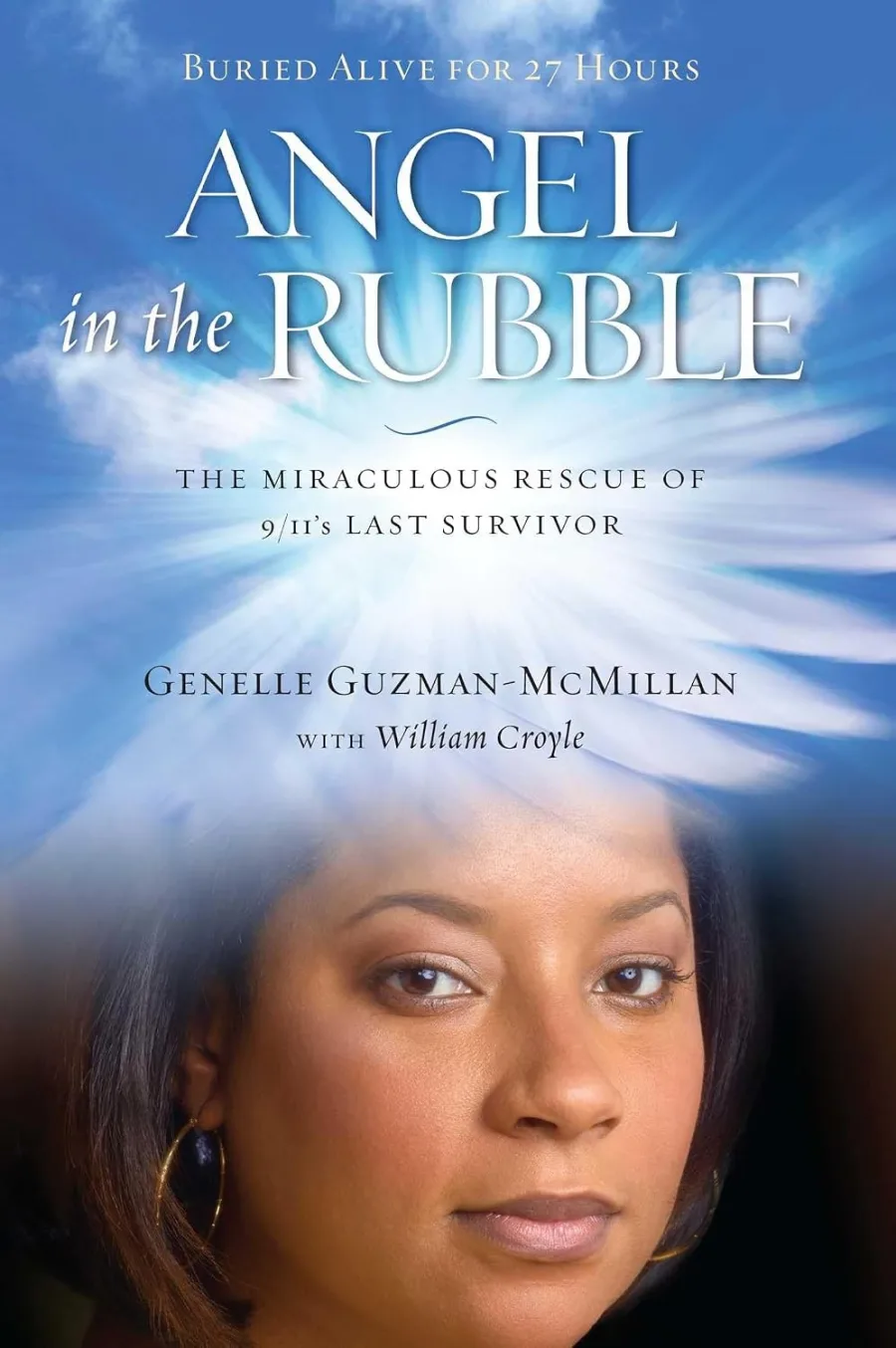
Download Cover Image
Do you want to download the full cover image for Angel in the Rubble: The Miraculous Rescue of 9/11's Last Survivor?